
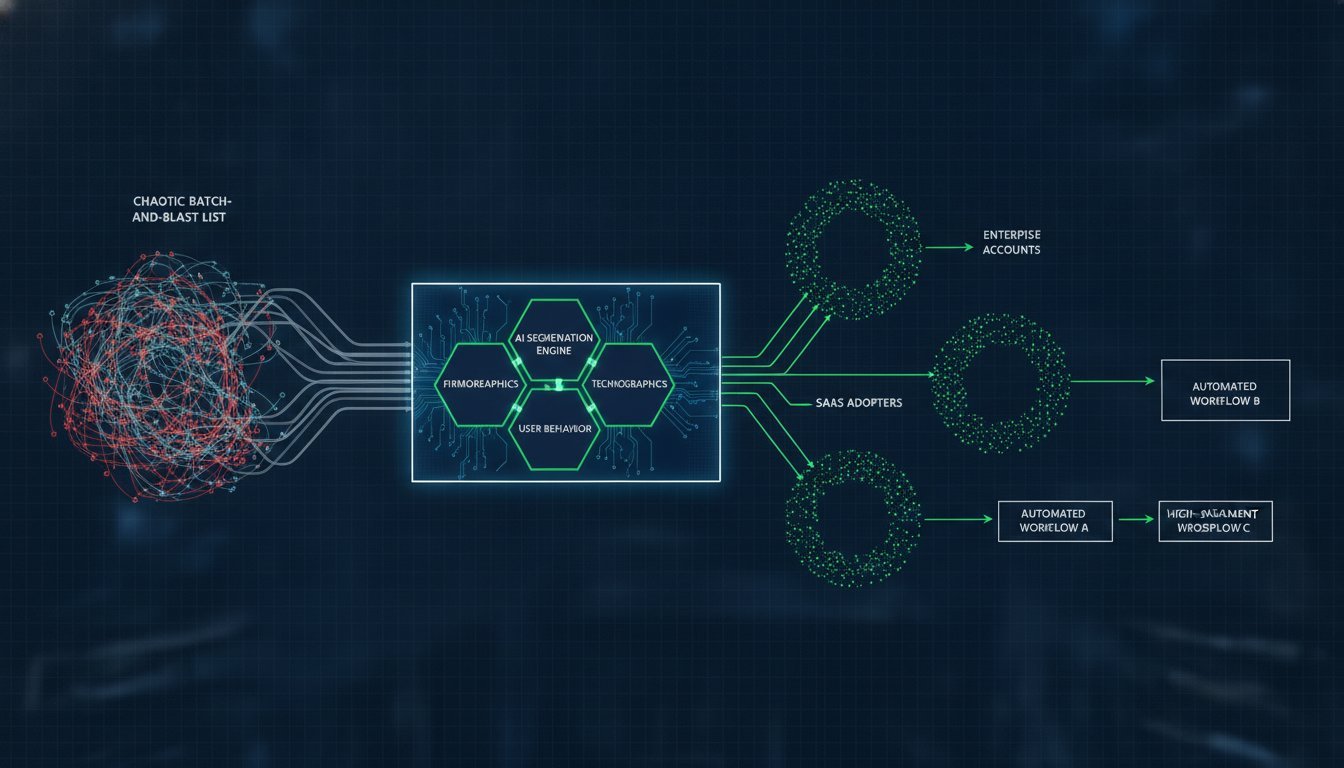
Sending a generic email blast in 2026 isn’t just an outdated tactic; it’s a financial liability that can cost your business up to $53,088 per violation under updated CAN-SPAM regulations. You’re likely seeing the symptoms of a fractured approach already, such as low engagement caused by irrelevant content or a CRM so cluttered that manual list management feels like a full-time job. We agree that your time is better spent on high-level strategy than on fighting with messy data sets that fail to convert.
I’ve put together this briefing to help you implement a high-performance email segmentation strategy that moves the needle on your B2B growth. We’ll move past simple name tags and into the operational frameworks that drive the $42 return for every dollar spent that top-tier marketers now expect. You’ll learn how to automate lifecycle messaging and improve your sender reputation by following a clear, tactical blueprint. We’re going to break down the exact steps to transition your infrastructure from manual lists to AI-driven, behavioral segments that respect your audience’s time and protect your bottom line.
Key Takeaways
- Move beyond the “batch-and-blast” model to protect your sender reputation and transition your database into functional, actionable clusters.
- We outline the four operational pillars of a successful email segmentation strategy, utilizing firmographics and technographics to target high-value accounts.
- Differentiate between static snapshots and dynamic, living segments that update automatically based on real-time user behavior.
- Use our tactical blueprint to audit your existing data hygiene and map segments directly to the B2B buyer journey.
- Learn how to scale conversion rates by aligning your segmentation efforts with broader online marketing operations and performance-based partnerships.
Beyond the Batch-and-Blast: Why Segmentation is Your Only Real Strategy
Email segmentation isn’t a marketing “nice-to-have.” It is the functional division of your database into actionable clusters based on specific data points. In the B2B world, sending the same message to every contact in your CRM is a fast track to the spam folder. By 2026, the “batch-and-blast” approach has evolved from a lazy habit into a direct threat to your business. With the CAN-SPAM Act now carrying penalties of up to $53,088 per separate email violation, the cost of getting your targeting wrong is literally too high to ignore.
To better understand this concept, watch this helpful video:
We need to look at “Segmented ROI” as your primary performance metric. While generic campaigns often struggle to break even, segmented emails generate 58% of all revenue for high-performing brands. Current data shows that a well-executed email segmentation strategy drives an average return of $42 for every $1 spent. If you aren’t seeing those numbers, your data clusters are likely too broad or outdated to resonate with a modern B2B buyer. For a deeper operational breakdown of how to structure these clusters for maximum impact, our guide on email list segmentation strategies for 2026 provides a tactical framework you can implement immediately.
The Technical Impact on Email Deliverability
Major ISPs now use sophisticated engagement signals to decide where your mail lands. If a large portion of your list ignores your messages because they aren’t relevant, Google and Yahoo will start routing your content directly to the “Promotions” or “Spam” tabs. High bounce rates are usually a symptom of poor segment targeting rather than just “bad” emails. Deliverability is the operational foundation of any email strategy.
Relevance vs. Personalization: Clearing the Confusion
Let’s be clear: using a “Hi [First_Name]” tag isn’t a segmentation strategy. True structural relevance goes deeper than superficial personalization. It’s about understanding the recipient’s role, their company’s tech stack, and where they sit in the buyer journey. Modern Marketing Automation tools allow us to build these living segments that update in real-time. If you want to see how these pieces fit into a larger growth plan, check out our A Functional Assessment of Online Marketing Services (2026) for a look at the current landscape.
The 4 Operational Pillars of B2B Email Segmentation
Most advice on segmentation focuses on B2C triggers like birthdays or abandoned carts. In a B2B context, those tactics fall flat because you aren’t selling to a single consumer; you’re selling to a committee within an organization. A high-performance email segmentation strategy requires a shift toward firmographic, technographic, and behavioral pillars that reflect the complexity of the professional buyer journey. If your data isn’t organized around these four areas, your messaging will remain generic and ineffective.
Firmographics: Targeting the Right Organization
Firmographics are the business equivalent of demographics. You need to cluster your database by industry, company size, and annual revenue. I recommend using LinkedIn data and CRM enrichment tools to fill these fields automatically. Company size is a particularly critical field because it dictates the specific pain points you should address. A 50 person startup cares about speed and agility, while a 5,000 person enterprise prioritizes security and compliance. If you’re managing complex partnerships, you might see how this fits into a broader strategic framework for performance growth to ensure your outreach aligns with partner expectations.
Industry leaders often emphasize that modern B2B email marketing strategies must prioritize quality and relevance over sheer volume. This starts with knowing exactly who is on the other end of the server.
Technographics: The Tech Stack Advantage
Technographic data tells you what tools your prospects already use. If your software integrates with Salesforce, your highest value segment consists of companies currently using Salesforce. Sending a “how to integrate” guide to a HubSpot user is a waste of a touchpoint. By segmenting based on existing infrastructure, you can position your solution as a complementary addition rather than a disruptive replacement.
Behavioral Intent: Tracking High-Value Actions
Behavioral data is the most time-sensitive pillar of segmentation. You need to distinguish between low-intent actions, like reading a blog post, and high-intent actions, like visiting a pricing page or downloading a technical whitepaper. We use lead scoring thresholds to trigger movement between segments. When a lead hits a specific score, they should automatically move from a general “nurture” list to a high-priority “sales-ready” cluster. This ensures your most aggressive offers land when the prospect is actually looking for a solution. If your current setup isn’t capturing these triggers, it might be time to audit your email operations for better performance.
Lifecycle Stage: Mapping the Decision Process
You cannot treat a fresh lead the same way you treat a long-term client. Your segments must reflect the recipient’s current stage in the decision making process. Awareness stage content should focus on problem identification, while Decision stage content should focus on case studies and ROI calculators. Keeping these groups separate prevents you from “proposing on the first date” and allows for a more logical progression through the funnel.
Static vs. Dynamic Segmentation: A Functional Comparison
Your email segmentation strategy is only as good as the infrastructure supporting it. In B2B operations, you must choose between static lists and dynamic segments based on the specific goal of your campaign. Static lists act as fixed snapshots in time. Once a contact is added to a static list, they remain there until you manually remove them or they unsubscribe. Dynamic segments, conversely, are living clusters that update in real-time based on predefined criteria. If a prospect’s data changes in your CRM, their segment membership changes automatically.
High-performance operations don’t choose one over the other. They use a hybrid approach. Static lists handle the “one-offs,” while dynamic segments power the automated engine of your lifecycle marketing. Relying solely on static lists leads to data decay, while using only dynamic segments can make it difficult to track historical performance for specific, time-bound events. Maintenance requirements differ significantly between the two; static lists require manual cleaning, while dynamic segments require logic verification to ensure your automation rules remain accurate as your database grows.
When to Use Static Lists
Static lists are the right tool for specific scenarios like event attendance, webinar signups, or legacy customer migrations. If you ran a trade show booth in 2024, that list of attendees shouldn’t change. It’s a historical record. However, the danger of these lists is that they become “stale” very quickly. I recommend a “purge or pivot” policy for any static list older than six months. If those contacts haven’t engaged, they are a risk to your deliverability. You can find more on maintaining a clean technical setup in our functional assessment of online marketing services.
The Power of Dynamic Lifecycle Flows
Dynamic segments are the backbone of lead nurturing. These segments integrate directly with your CRM to ensure real-time sales alignment. For example, if a lead’s status changes from “Marketing Qualified” to “Sales Accepted,” a dynamic segment will immediately pull them out of an educational nurture sequence and stop sending them top-of-funnel content. This prevents the awkward experience of a prospect receiving an introductory email ten minutes after they’ve booked a demo with your team.
Don’t fall for the “set it and forget it” myth. While dynamic segments are automated, they still require quarterly audits. Data fields can break, and CRM syncs can fail. If your logic is “Industry = SaaS” but your sales team starts entering “Software-as-a-Service” into the database, your segment will miss those leads. A quick logic check every 90 days ensures your automation stays grounded in reality and continues to drive measurable B2B conversion growth.

Implementation Blueprint: Building Your First High-Performance Segments
Building a high-performance email segmentation strategy requires a systematic approach. You can’t just throw filters at a messy database and expect to see measurable conversion growth. I’ve broken this down into five logical steps to get your operations running at peak efficiency. This isn’t about creative flair; it’s about building a repeatable framework that your team can manage without constant manual intervention.
- Step 1: Audit your data hygiene. You need to identify which fields are populated and which are empty. If 40% of your contacts are missing an industry tag, your industry-based segments will fail.
- Step 2: Map segments to the buyer journey. Ensure your Top-of-Funnel (TOFU), Middle-of-Funnel (MOFU), and Bottom-of-Funnel (BOFU) contacts are clearly separated. A prospect who just downloaded a checklist shouldn’t receive a hard-sell demo request the next day.
- Step 3: Establish a naming convention. Use a standardized format like [Region]_[Industry]_[LifecycleStage]. This ensures your whole team knows exactly who is in a list without opening the filter settings.
- Step 4: Create a “Control” segment. Always reserve a random 5% to 10% of your audience as a control group. This allows you to measure the actual performance lift of your segmented campaigns against a non-segmented baseline.
- Step 5: Launch and refine. Monitor your engagement metrics weekly. If a specific segment shows a spike in unsubscribes, your logic is likely too aggressive or the content isn’t relevant to that cluster.
Data Hygiene: The Unfiltered Truth
Dirty data is the silent killer of B2B campaigns. If your CRM is filled with duplicate entries or outdated job titles, your automation logic will break. We define segmentation decay as the loss of data accuracy over time. In the B2B world, this happens rapidly as professionals change roles or companies pivot their focus. You should implement automated list cleaning tools that validate email addresses and refresh firmographic data at least once per quarter. If your current database feels like a liability rather than an asset, you can partner with an operations consultant to rebuild your infrastructure from the ground up.
The “Quick-Win” Segments for B2B
You don’t need a hundred segments to start seeing results. Focus on the “Engaged but Not Converted” segment first. These are MOFU leads who have opened multiple emails but haven’t taken a high-intent action. A specific nudge, like a case study relevant to their industry, often moves them to the next stage. Another effective cluster is the “High-Value Lead” segment. Use technographic data to identify prospects using tools that integrate with your solution. These leads are pre-qualified by their existing tech stack, making them prime targets for your sales team to prioritize. Pairing this approach with a disciplined targeted traffic generation strategy ensures the contacts entering your segments are high-intent from the very first touchpoint. For a complete operational playbook on building and scaling these clusters, review our resource on advanced email list segmentation strategies that covers the full spectrum from lead categorization to lifecycle automation.
Optimizing for Performance: How Disousa Scales Email ROI
Scaling a B2B operation requires more than just a list of filters. We treat your email segmentation strategy as a core component of your broader digital infrastructure. At Disousa, we integrate these tactical clusters with our other online marketing services to ensure your messaging isn’t living in a silo. When your email data talks to your SEO and paid performance data, you stop guessing where your next conversion is coming from and start building a predictable growth engine.
The goal is to move from basic segmentation to individualized lifecycle management. This means your system responds to every interaction in real-time without manual oversight. Many B2B firms struggle with this transition because of technical debt. Outdated CRM fields and broken automation rules often lead to strategic stagnation because no one has the time to fix the underlying plumbing. Outsourcing these operations to an expert peer prevents this decay. It keeps your technical engine running while your internal team focuses on high-level decision-making and product development.
If your technical environment includes complex eCommerce setups, Digital Junction can provide the custom WordPress and Shopify development required to ensure your site and email systems work in perfect harmony.
Aligning Email with Affiliate Growth
High-scale affiliate marketing partnerships rely heavily on granular segmentation to maintain ROI. We segment your database by acquisition source to track the long-term quality of leads coming from different partners. This approach allows for a data-driven evaluation of affiliate marketing ROI. If leads from one partner convert at a higher rate than others, we adjust the lifecycle flows to capitalize on that specific traffic. We also build exclusive segments for high-value partner traffic. This ensures those leads receive a tailored experience that matches the context of their arrival, which significantly improves retention rates.
Next Steps: From Strategy to Execution
I recommend starting with a functional audit of your current email segments. You need to identify the “leaks” in your lifecycle funnel where prospects are dropping off. If your open rates are high but your click-through rates are stagnant, your segments are likely too broad or your content isn’t aligned with the recipient’s lifecycle stage. Identifying these gaps is the first step toward building a system that actually drives revenue. Complementing this audit with a focused targeted traffic generation operational plan ensures that the visitors entering your funnel are already pre-qualified before they ever reach your email sequences.
If you’re ready to move beyond generic blasts and build a performance-driven system, contact Disousa for a tactical briefing on your email operations. We’ll help you fix the broken parts of your funnel and implement an operational blueprint that converts.
Execute Your 2026 Operational Blueprint
Your transition to a high-performance email segmentation strategy is an operational necessity, not a creative choice. We’ve established that the “batch-and-blast” model is a financial liability and outlined how to build a blueprint based on firmographics and behavioral intent. Success in 2026 depends on your ability to maintain data hygiene while automating the buyer journey through dynamic lifecycle flows. Don’t let technical debt or messy CRM data stall your conversion growth.
I’ve seen many B2B operations fail because they treat segmentation as a one-time project. It isn’t. It requires constant logic audits and a commitment to performance-driven lifecycle management. If your current tech stack is creating more friction than growth, it’s time to move toward a system that prioritizes structural relevance over superficial personalization. We provide the expertise in B2B conversion optimization and authoritative briefing-style consulting you need to fix broken funnels.
You don’t have to navigate these technical requirements alone. Download our B2B Email Operations Framework to start auditing your infrastructure today. Let’s get your email operations working as hard as your sales team.
Frequently Asked Questions
What is the difference between email segmentation and personalization?
Segmentation is the structural division of your database into clusters based on shared traits like industry or lifecycle stage. Personalization is the tactical execution of tailoring content for the individual within those clusters. Think of segmentation as the foundation of your house and personalization as the finish work. You need a solid email segmentation strategy to make your personalization efforts actually scale across a large database.
How many segments should a B2B email list have?
Most high-performance B2B operations start with three to five core segments. You don’t need dozens of lists to see a return. I recommend focusing on your three primary buyer journey stages first. Once your TOFU, MOFU, and BOFU flows are automated, you can add complexity like technographics or firmographic sub-clusters to further refine your targeting.
Can I segment my email list if I have less than 1,000 subscribers?
You should start segmenting even with a small list. In the B2B world, a single high-value lead is often worth more than 10,000 generic subscribers. Segmenting early ensures your data hygiene is solid as you scale. This prevents the “messy CRM” syndrome that plagues larger organizations and allows you to build a more intimate, high-conversion relationship with your early adopters.
What is the most important data point for B2B email segmentation?
Lifecycle stage is the most critical data point because it dictates the tone of your communication. Knowing if a contact is a cold prospect or a sales-ready lead prevents you from sending aggressive offers too early. Secondary to this is company size. This field helps you align your messaging with the specific operational pain points that an enterprise faces versus a small startup.
How often should I update or audit my dynamic segments?
I recommend a formal audit of your dynamic segments every 90 days. While these lists update automatically, your underlying logic or CRM fields can break over time. A quarterly check ensures that your automation rules are still pulling the correct contacts. It also helps you catch “segmentation decay” before it skews your performance metrics or hurts your sender reputation.
Does email segmentation really improve deliverability?
Segmentation directly improves deliverability by increasing your engagement signals. When you send relevant content to specific clusters, your open and click rates naturally rise. ISPs like Google and Yahoo see these positive interactions as a sign of quality. This makes them more likely to route your future emails to the inbox rather than the promotions tab or the spam folder.
What tools do I need to start an email segmentation strategy?
You need a CRM that serves as your single source of truth and an Email Service Provider (ESP) that supports dynamic logic. I also suggest using a data enrichment tool to automatically fill in firmographic details like industry and revenue. This tech stack allows you to move away from manual list management and toward automated, high-performance lifecycle flows that respect your audience’s time.
Disclaimer
**Disclosure:** Some articles on this website may contain affiliate links. This means we may earn a commission if you purchase a product or service through certain links, at no additional cost to you. We only recommend products, tools, and services that we believe provide value to our readers.
**Disclaimer:** The information provided on this website is for educational and informational purposes only and should not be considered financial, legal, tax, or professional advice. While we strive to keep our content accurate and up to date, we make no guarantees regarding completeness, reliability, or results obtained from using the information provided. Always conduct your own research and consult qualified professionals before making business, financial, or investment decisions.
