
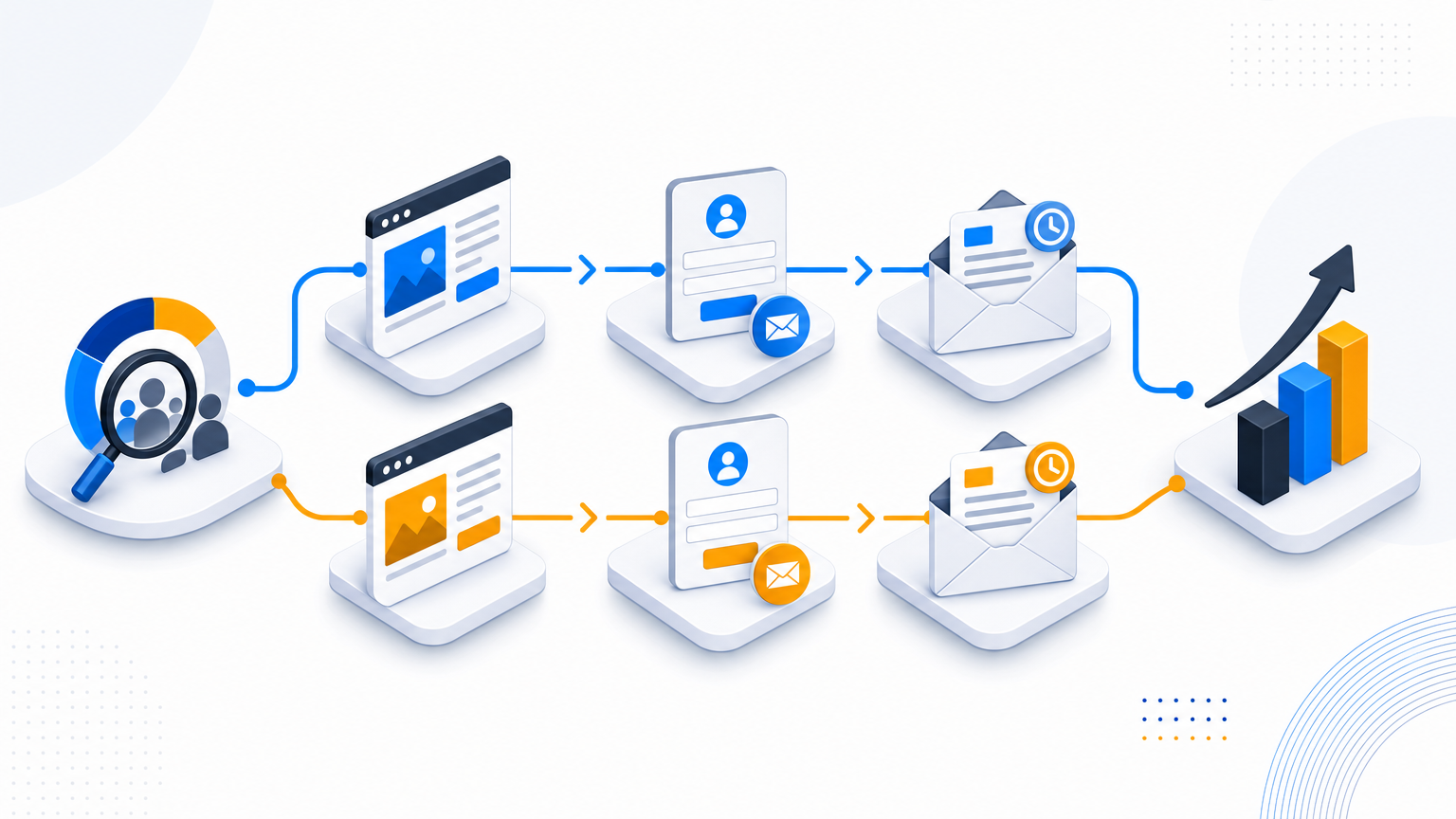
The right sales funnel course should help you understand how to plan, build, and improve a complete path from a prospective customer’s first interaction to a useful next step—not just show you where to click in a software dashboard. Two options worth comparing are ClickFunnels’ Funnel Builder Secrets upgrade, which combines training and resources associated with its platform, and HighLevel’s Certificate Program, a paid education add-on intended to build platform knowledge or validate skills. They are different kinds of offers, so compare their current terms and your learning goals before choosing.
- ClickFunnels describes Funnel Builder Secrets as a bonus upgrade that includes training, templates, and resources; ongoing access depends on having an active ClickFunnels account.
- HighLevel’s Certificate Program is a separate paid add-on for improving platform confidence and product knowledge or validating skills, not an industry-wide marketing qualification.
- These offers are not direct equivalents, so compare what each currently includes rather than judging them by their names.
- A useful course should help you make decisions about the offer, audience, copy, follow-up, measurement, and testing—not only software navigation.
- Verify total costs, cancellation and access terms, refund rules, and the current curriculum before paying.
What a Sales Funnel Course Should Help You Do
A sales funnel is a planned sequence of interactions that helps a potential customer move from an initial point of interest toward an action, such as requesting information, booking a consultation, or making a purchase. The sequence may involve a landing page, a form, follow-up messages, and a sales or checkout step. Its exact shape depends on the offer, the audience, and how people make decisions in that market. Buying software does not, by itself, answer those strategic questions.
Customer Journey Funnel
Awareness
Interest
Consideration
Action
Measure & learn
Use feedback to improve the journey
That distinction matters when assessing a sales funnel course. Platform tutorials can be useful: they may help you find settings, create pages, or understand a tool’s features. But software fluency and funnel strategy are different skills. A polished page can still perform poorly if it speaks to the wrong audience, makes an unclear promise, requests too much information, or sends visitors into a follow-up sequence that does not fit their needs.
Before comparing providers, decide what you need to learn. A beginner may need a step-by-step introduction to offers, audience research, and a first conversion path. A marketer already using a platform may need help organizing a build or learning a specific set of platform features. An agency or consultant may be evaluating a credential as evidence of platform learning, while still needing to demonstrate practical ability through relevant work. Those are distinct goals and may point to different training formats.
Separate the learning goal from the platform choice
Start by describing the outcome you want in terms of work you will be able to do. “Learn ClickFunnels” or “get certified in HighLevel” names a platform or program, not necessarily the business problem you intend to solve. More useful goals might be: plan a lead-capture journey for a particular service, write a landing page that sets accurate expectations, or measure whether follow-up is moving qualified prospects toward a conversation.
Then ask whether the course is intended to teach that outcome or primarily explain a platform. A platform-focused program can still be a good fit if platform fluency is what you need. It should not be treated as a substitute for offer development, customer research, persuasive writing, or careful measurement unless its current course details explicitly support that expectation.
Think in terms of a complete customer journey
A funnel is not simply a sequence of pages. Consider what happens before a visitor arrives, what the page asks them to do, what happens after they respond, and how you will judge whether the process is working. For example, a consultant might attract potential clients with a relevant article, invite interested readers to request a discovery call, provide a clear confirmation, and follow up with useful information. The page builder is only one part of that journey.
For broader learning about reaching and capturing prospects, see our guide to lead generation course options. If you are comparing the funnel skill with other parts of a marketing plan, our overview of digital marketing course options can help place it in context.
The Two Options at a Glance
The most important comparison is the type of offer. ClickFunnels describes Funnel Builder Secrets as a bonus upgrade containing training and resources associated with ClickFunnels. HighLevel presents its Certificate Program as a paid education add-on intended to improve confidence and product knowledge or validate platform skills. One is a training-and-resource bundle; the other is a certificate program. Neither label alone tells you whether the current material matches your needs.
| Comparison point | Funnel Builder Secrets | HighLevel Certificate Program |
|---|---|---|
| Type of offer | ClickFunnels describes it as a bonus upgrade with training, templates, and resources. | A paid certificate program add-on described in HighLevel’s pricing guide. |
| Platform association | Associated with ClickFunnels and its training and resource ecosystem. | Associated with HighLevel (formerly GoHighLevel) and its platform education. |
| Examples of included material | The official Help Center lists Two Comma Club LIVE Encore, funnel and traffic swipe files, Traffic Secrets access, Secrets Trilogy Platform, and Funnel Hack-A-Thon resources. | Check the official program page for the current description and included learning material; do not assume particular modules or curriculum without confirming them. |
| Access considerations | The official description says access is through a special upgrade offer and ongoing access depends on an active ClickFunnels account. | Check current account, program-access, renewal, and cancellation terms before enrolling. |
| Price | Check the current offer and its complete cost; no fixed price is assumed here. | The official pricing guide lists $97 per month or $970 per year for the HL Certificate Program. Pricing and availability can change; verify the current page. |
| Credential or completion details | Check current program terms for any completion recognition or credential. | It is a platform certificate, not an industry-wide qualification or proof of business results. Check current terms for completion details. |
| Best first question | Do I want this specific ClickFunnels-associated bundle, and am I comfortable with its current offer and account requirements? | Do I want structured learning or validation of my HighLevel platform knowledge at the stated current cost? |
The table is a starting point, not a substitute for the providers’ live descriptions. Offers can change, and terms shown in a help article or pricing guide may not answer every question about the specific purchase page presented to you. Read the offer you will actually buy, including its checkout details and policies.
Funnel Builder Secrets: What the Official Description Says
ClickFunnels’ Help Center describes Funnel Builder Secrets as a bonus upgrade that provides training, templates, and resources. Examples named in the official description include Two Comma Club LIVE Encore, funnel and traffic swipe files, access to Traffic Secrets, the Secrets Trilogy Platform, and Funnel Hack-A-Thon resources. The page also states that access is obtained through a special upgrade offer and that ongoing access depends on an active ClickFunnels account. Review the official Funnel Builder Secrets Program information alongside the offer currently presented at checkout.
Those details make the offer most relevant to a marketer who is specifically interested in ClickFunnels-associated learning materials and resources. They do not establish that every buyer will receive the same offer, that the bundle includes a particular subscription period, or that all resources remain available under every account arrangement. Confirm what is included for your purchase and what happens if you cancel or change your account.
It is also important not to confuse Funnel Builder Secrets with a similarly named coaching or certification offer. ClickFunnels has a separate Funnel Builder Coaching & Certification Program page. That is a distinct offering; its existence does not mean that Funnel Builder Secrets itself includes the same coaching or certification. If you are evaluating the separate program, read its own current description and terms rather than transferring details from one product to the other.
Who may find Funnel Builder Secrets relevant?
It may be worth investigating if you already use ClickFunnels, intend to use it, or specifically want to review the training and resources listed in the provider’s current description. The bundle may also appeal if you prefer learning alongside examples and reusable materials. The key is to check whether those materials support the task you need to complete, rather than assuming that a large resource collection necessarily provides a complete marketing curriculum.
It may be a less natural fit if you have no interest in ClickFunnels, need a program built around another tool, or want a course whose primary purpose is a clearly defined credential. Because ongoing access is tied to an active ClickFunnels account according to the official description, someone who wants to avoid platform-related recurring costs should calculate the likely total cost and consider what access will look like if they stop subscribing.
What to verify before purchasing
Open the exact upgrade offer you are considering and record the included resources, price, billing schedule, account requirements, renewal conditions, cancellation process, and refund policy. Check whether the training is available for as long as you expect to use it and whether any named resource is included in your specific offer. If the details are not clear, ask the provider before purchasing and keep a copy of the terms shown at the time of checkout.
A ClickFunnels platform overview
The official ClickFunnels Support tutorial “Creating a Sales Funnel in ClickFunnels 2.0” demonstrates creating and arranging funnel steps in the platform. Watch the tutorial below, or use the direct YouTube link if the video embed is unavailable.
Watch “Creating a Sales Funnel in ClickFunnels 2.0” on YouTube
HighLevel Certificate Program: What to Know
HighLevel, formerly known as GoHighLevel, describes the HL Certificate Program in its official pricing guide as an educational program intended to help users improve platform confidence and product knowledge or validate their skills. The guide lists the program at $97 per month or $970 per year. These prices and availability can change, so confirm the details on the official HighLevel pricing guide before making a decision.
That description supports a careful conclusion: the offer is a platform-related certificate program. It does not, on its own, establish a particular exam format, monitored or proctored assessment, digital badge, public credential directory, curriculum, or guaranteed professional outcome. Do not rely on such details unless they are clearly stated in the current official program information for the version you are buying.
A platform vendor’s certificate can be a way to show that you have engaged with platform learning or completed a provider-defined process. It is not the same thing as an industry-wide qualification, and it is not evidence that a funnel will convert, a campaign will be profitable, or a client will achieve a particular result. If the certificate matters to an employer or client, ask what they recognize and consider sharing work samples that demonstrate how you apply the platform knowledge.
Who may find the certificate program relevant?
The program may be relevant to someone who already works in HighLevel or expects to use it and wants to build confidence with the platform or validate their platform skills. A freelancer, in-house marketer, or agency team member might consider it when platform knowledge is a specific development goal. The value depends on the current material, the learner’s needs, the cost, and whether a provider-issued certificate is useful in the context where the learner intends to present it.
It may be a poor fit if you need a general introduction to marketing funnels across several platforms, are mainly looking for business strategy, or cannot justify the ongoing or annual cost shown in the current guide. It may also be unnecessary if your priority is developing a particular funnel and you would benefit more from focused practice, mentoring, or a course in a missing skill such as copywriting or measurement. Compare the program with those alternatives before treating a certificate as the default next step.
How to Choose Between the Two Options
Because one offer is a platform-associated upgrade bundle and the other is a certificate add-on, begin with the job you need to get done—not with which name sounds more impressive. Write down the project you want to complete, the platform you plan to use, and the evidence that would show you have learned something useful. Then compare the current offer pages against that brief.
Choose based on your immediate project
If you are planning a new funnel, describe its audience, offer, and next action before selecting training. For example, a small business that wants inquiries for a service may need to clarify its value proposition, build a focused landing page, and create a helpful follow-up process. Someone who already understands those elements but needs to navigate a particular platform has a different learning gap. The first person may need broader funnel education; the second may need platform-specific instruction.
Likewise, if you work with clients, clarify whether your priority is learning the platform, improving your delivery process, or signaling knowledge to a prospective client. A certificate might address the last two only to the extent that the provider’s program and the client’s expectations support that use. It cannot replace a clear scope of work, responsible claims, relevant experience, or a demonstration of the results you can actually support.
Choose based on platform commitment and total cost
A course or bundle connected to a particular platform can be more useful when you intend to use that platform. It can be less useful if you are still comparing tools or expect to switch soon. Estimate total cost over the period you expect to use the training, not just the price displayed next to a course name. Include any required software account, recurring subscription, taxes where applicable, and future renewal expenses.
For ClickFunnels, pay particular attention to the stated relationship between ongoing access and an active account. For HighLevel, confirm the current certificate-program price and whether your intended access period is monthly or annual. In both cases, verify what happens when you cancel, whether learning materials remain available, and whether software costs are separate from education costs. Do not assume that a course price includes platform access unless the current offer explicitly says so.
If you are still choosing software, our guide to landing page builder options for affiliate marketing can help you think through tool fit. You can also browse our marketing tools resources as part of a wider evaluation. These resources are starting points, not a substitute for checking each vendor’s current features and terms.
Choose based on learning format and proof of skill
Look for a learning format you will realistically use. Some learners do well with self-paced material and can set their own schedule; others benefit from a defined sequence, exercises, or opportunities to ask questions. Do not infer a particular format from a product name. Check the current program description for the actual lesson format, access period, and any available support.
Also decide what “proof” means for your situation. A completion certificate can document participation or provider-defined completion, while a work sample can show how you approach a real marketing problem. An employer may value one, both, or neither. A client may care more about a relevant example, a clear process, and honest communication about what you have and have not done. Treat vendor credentials as limited evidence of platform learning rather than as universal qualifications or promises of performance.
Evaluate the Course Before You Buy
A useful evaluation checklist focuses on the skills and decisions involved in building a funnel. Use the points below to inspect any course page, including the two options in this comparison. This is a buyer’s checklist, not a claim that either provider teaches each topic. If a topic matters to your goals but is not described in the current curriculum, ask the provider or plan to learn it elsewhere.
1. Offer and intent mapping
A funnel should begin with a clearly defined offer and a reason a particular audience might care. Look for teaching or exercises that help you identify the intended customer, the problem the offer addresses, and the level of interest behind the traffic you expect to attract. A visitor who is researching a problem may need different information from someone ready to request a quote. A useful course should help you think through that distinction rather than treating every visitor as equally ready to buy.
Check whether the material encourages you to state the offer plainly, identify who it is for, and avoid promising outcomes you cannot support. If you sell a service, for example, your page should explain what the service includes and what a prospect can reasonably expect next. If your offer is a downloadable guide, the page and follow-up should make clear what the guide provides and how the subscriber’s information will be used.
2. Page structure and conversion path
A landing page is part of a path, not a standalone design exercise. Evaluate whether a course helps you plan the sequence from source to page to next action. Consider whether the page gives visitors enough context to decide, whether the call to action is clear, and whether the next step after a click or form submission is understandable. These are strategic questions that remain important regardless of which builder you use.
Ask whether the course encourages a simple, focused experience. Extra links, competing calls to action, unclear form fields, or unexplained next steps can distract from the action the page is intended to support. A useful training plan should help you make deliberate choices about what to include and what to leave out, rather than equating more sections or effects with a better funnel.
3. Copy and ethical claims
Funnel copy should accurately describe the offer and make it easier for the intended reader to assess fit. Look for guidance on writing a specific headline, explaining benefits without exaggeration, addressing reasonable objections, and making the next action clear. A course that teaches only page construction may leave you to solve the most important communication problem on your own.
Ethical marketing matters throughout the journey. Claims about income, performance, health, or other outcomes should be accurate, supportable, and presented with appropriate context. Do not use a testimonial, statistic, guarantee, or urgency message simply because it appears in a template. Check whether the content helps you adapt examples to your actual offer and audience rather than copying claims that may not apply.
4. Lead capture and follow-up
When a funnel collects contact information, evaluate what happens after the form is submitted. Is there a clear confirmation? Does the person receive what the page promised? Is the follow-up relevant to the reason they opted in? A course should help you consider the customer experience and the purpose of each communication, even if a separate tool or provider handles the implementation.
For email-specific learning, our overview of email marketing course options can help you compare training focused on that part of the journey. When building a follow-up process, also consider consent, reasonable frequency, accurate sender information, and a straightforward way for recipients to manage their preferences. Platform functionality does not remove the need to communicate responsibly.
5. Measurement, testing, and iteration
A course should help you identify what you will measure and what decisions the measurements can inform. Depending on the project, useful indicators might include relevant page visits, form completion, qualified inquiries, booked calls, or completed purchases. A single conversion rate without context can be misleading: traffic quality, offer price, sales process, and the audience’s readiness all affect how to interpret performance.
Testing is most useful when it answers a specific question. Instead of changing several page elements at once, define a hypothesis, decide which measure would indicate a meaningful difference, and allow enough time or volume to learn something. Small businesses may not have enough traffic for confident statistical conclusions, so avoid over-interpreting minor fluctuations. A sound course should help you think critically about evidence rather than promise that a particular tweak will produce a result.
6. Implementation and realistic scope
Learning sticks when you apply it to a real project. Before purchasing, look for a clear indication of whether you will practice building, receive examples, or work through a project. Confirm what access and support are actually included. If the program is mainly a collection of resources or platform instruction, decide how you will turn that material into a complete funnel plan and test it on your own.
Consider the time required to put learning into practice. A funnel project can involve customer research, copy, design, technical setup, privacy and consent decisions, testing, and follow-up. A course may explain only part of that work. Make a realistic plan for the parts that remain, and seek appropriate professional advice when your project involves legal, regulatory, or technical requirements beyond your expertise.
A Practical Plan for Applying What You Learn
Whether you choose one of these programs or another resource, use a small, measurable project to turn learning into action. A focused first funnel is easier to review than a complicated system built around assumptions. The following process can help you evaluate what you learn without treating a course completion or platform certificate as a business outcome.
Practical Funnel Workflow
Traffic source
Landing page / offer
Set clear expectations
Opt-in or purchase
Confirmation / follow-up
Deliver the promised next step
Measure and improve
Review evidence; refine deliberately
Step 1: Write a one-page funnel brief
Describe the audience, the problem or goal, the offer, the traffic source, and the action you want the visitor to take. Include what the visitor knows when they arrive and what information they need before taking that action. For a local service provider, the action might be to request a consultation. For a digital product, it might be to review the product details and proceed to a purchase page. Keep the brief specific enough to guide page and follow-up decisions.
Add a short list of claims you can substantiate and a separate list of questions you still need to answer. For example, you may know the service’s scope and price range but need to learn which concerns stop prospective customers from booking. That uncertainty is a research task, not a reason to add unsupported guarantees or stronger claims to the page.
Step 2: Sketch the visitor’s path before building
Draw the sequence from the first interaction through the desired next action. Note the source of the visitor, the page they see, any information they provide, the confirmation they receive, and the next communication. Ask whether each step is useful and whether it follows naturally from the previous one. If a step has no clear purpose, simplify the journey before opening the builder.
For instance, a reader arriving from an educational article may need a practical explanation and an invitation to download a related checklist. After opting in, they should receive the promised material and an appropriate next step—not an unrelated sales pitch that ignores why they subscribed. This simple map helps reveal gaps that a visually polished page could otherwise hide.
Step 3: Draft and review the copy
Write the headline, supporting explanation, call to action, form labels, confirmation message, and first follow-up before worrying about decorative details. Read the page from the visitor’s point of view: Is the offer understandable? Is the requested action proportionate to what is being offered? Are any claims ambiguous or stronger than the evidence allows? Ask someone unfamiliar with the project to explain what they think happens after they submit the form or click the button.
Templates can provide a starting structure, but do not copy claims or wording that do not fit your business. Replace generic benefits with accurate information about your actual offer. Make any relevant conditions, limitations, and next steps clear. A trustworthy funnel helps a prospect make an informed decision, including deciding that the offer is not right for them.
Step 4: Build the simplest workable version
Use the platform that best fits your project, budget, and working process. Build only the essential pages and follow-up needed to deliver the offer and measure the intended action. Check the page on common screen sizes, test every link and form, and confirm that messages arrive as expected. If you are using a platform-specific course, distinguish between learning how to operate the tool and deciding whether the tool is the right fit.
Before publishing, review account permissions, integrations, recurring costs, data handling, and any required disclosures or consent language. Test the visitor experience from beginning to end, including the confirmation and follow-up. Keep a record of the version you publish so you can compare later changes against a known starting point.
Step 5: Measure, learn, and improve deliberately
Choose a small number of measures that match the funnel’s purpose. If the goal is qualified inquiries, do not judge success only by raw form submissions; consider whether the inquiries fit the service and whether they proceed to a useful conversation. If the goal is a purchase, look beyond page engagement and understand where customers leave the journey. Interpret each metric in the context of traffic source, audience intent, and the offer.
After you collect enough information to identify a plausible issue, make one focused change and observe what happens. Keep notes on the change, the reason for making it, and the evidence you will use to assess it. Avoid assuming that a single result proves causation, especially with a small sample. The purpose of iteration is to make better-informed decisions, not to chase a guaranteed formula.
Step 6: Evaluate the learning resource as well as the funnel
When you finish a course or module, ask whether it helped you make a decision or complete a task you could not handle before. Identify what you can now do independently, what still needs practice, and which topics were outside the program’s scope. If a certificate is part of your motivation, be precise about what it represents and how you will describe it to others.
This review also helps you decide whether to continue paying for access or a platform account. Compare the value of the material you still use with its ongoing cost and your actual project needs. A program can be useful without being a permanent subscription, and cancelling a tool should be a deliberate decision based on the account terms and your access requirements.
Pro Tips
- Write the project brief before comparing programs. Specify the audience, offer, platform, and intended next action. This makes it easier to distinguish a need for broader funnel strategy from a need for platform instruction.
- Compare the exact checkout offer, not just the program name. Record the price, billing schedule, included resources, account requirements, renewal terms, cancellation process, and refund policy. This is especially relevant when ongoing access depends on an active platform account.
- Separate course costs from software costs. Estimate the total cost for the period you expect to use the material, and do not assume a course price includes platform access unless the current offer explicitly says so.
- Use templates as structures, not as ready-made claims. Adapt wording to your actual offer and audience, and remove testimonials, guarantees, statistics, or urgency messages that you cannot support.
- Map the whole visitor journey before building pages. Include the traffic source, landing page, form or action, confirmation, and follow-up. Make sure each step matches the reason the visitor arrived.
- Keep the first build focused and measure what matters. Choose a small number of measures that match the goal, such as qualified inquiries or completed purchases. Make one deliberate change at a time and avoid drawing strong conclusions from minor fluctuations or small samples.
- Describe certificates accurately. Treat a vendor certificate as evidence of platform learning or provider-defined completion, not as an industry-wide qualification or a promise of results. Pair it with relevant work samples when practical skill is important to the person evaluating you.
Conclusion
The best sales funnel course for you depends on whether you need platform-associated training and resources, a platform certificate, or broader instruction in planning and improving a customer journey. Funnel Builder Secrets and HighLevel’s Certificate Program are not direct substitutes: the former is described as a ClickFunnels-related upgrade bundle, while the latter is a paid HighLevel education add-on. Review the current official details, calculate the full cost, and choose based on the work you intend to do.
Most importantly, judge a learning resource by whether it helps you build sound marketing judgment as well as use software. Define your audience and offer, map the visitor’s path, write accurate copy, plan responsible follow-up, and measure results carefully. Then treat any certificate as evidence of platform learning—not as a promise of conversion, revenue, or professional recognition.
Frequently Asked Questions
What is the difference between Funnel Builder Secrets and the HighLevel Certificate Program?
They are different kinds of offers. ClickFunnels describes Funnel Builder Secrets as a bonus upgrade with training, templates, and resources associated with its platform. HighLevel describes its Certificate Program as a paid education add-on intended to improve platform confidence and product knowledge or validate skills. Compare each program’s current terms rather than treating them as equivalent courses.
Does Funnel Builder Secrets include a ClickFunnels subscription?
The official Help Center describes Funnel Builder Secrets as a bonus upgrade and says ongoing access depends on an active ClickFunnels account. Do not assume a specific subscription period or that software access is included in every offer. Check the current offer and confirm the account requirements, total software cost, and access terms before purchasing.
How much does the HighLevel Certificate Program cost?
HighLevel’s pricing guide lists the HL Certificate Program at $97 per month or $970 per year. Prices and availability can change, so check the official pricing guide for the current amount and any applicable terms before enrolling.
Is a HighLevel certificate an industry-wide marketing qualification?
No. It is a platform vendor’s certificate program, not an industry-wide qualification or proof of business results. It may indicate platform learning or skills validated through the provider’s process, but you should check the current program terms for what completion means and present the credential accurately.
Which option is better for a beginner?
It depends on what you need to learn. If your immediate goal is to explore ClickFunnels-associated training and resources, review the current Funnel Builder Secrets offer and its account requirements. If your goal is to improve your knowledge of HighLevel, inspect the Certificate Program’s current description and cost. If you need general funnel strategy, verify that the curriculum covers your specific learning gaps before buying either option.
What should I check before paying for any sales funnel course?
Confirm the current curriculum, exact price, required software costs, access period, renewal and cancellation terms, refund policy, and support arrangements. Look for learning relevant to your goals, including offer and audience decisions, page structure, copy, lead follow-up, measurement, testing, and ethical claims. Do not rely on unverified claims about credentials, exams, outcomes, or guarantees.
Sources and References
- ClickFunnels Help Center: Funnel Builder Secrets Program. Official description of the upgrade, examples of training and resources, and account-access conditions.
- HighLevel Support: Pricing Guide and HL Certificate Program. Official pricing guide describing the certificate program and its listed price; terms and availability may change.
- ClickFunnels Help Center: Funnel Builder Coaching & Certification Program. Separate ClickFunnels offering; consult its own current description rather than assuming it is included in Funnel Builder Secrets.
- ClickFunnels Support: “Creating a Sales Funnel in ClickFunnels 2.0”. Official tutorial demonstrating how to create and arrange funnel steps.
