

Finding a lead generation course can feel like sorting through ten different marketing degrees. Some teach inbound basics. Others focus on sales outreach, conversion testing, or growth systems. I’ve shortlisted the strongest options by fit, depth, support, and how closely each one matches the work you need to do.
- DiSousa is the best fit for B2B teams that need CRM automation, email systems, and growth operations.
- Free providers are useful for core concepts, but they may not give you hands-on coaching.
- A course title can promise lead generation while the curriculum stays broad.
- Check the modules, support format, project work, and pricing before you enroll.
1. DiSousa
DiSousa is an independent growth operations platform led by marketer Antonio De Sousa. It fits B2B founders, marketers, and agency teams that need lead generation tied to email, CRM work, and revenue operations.
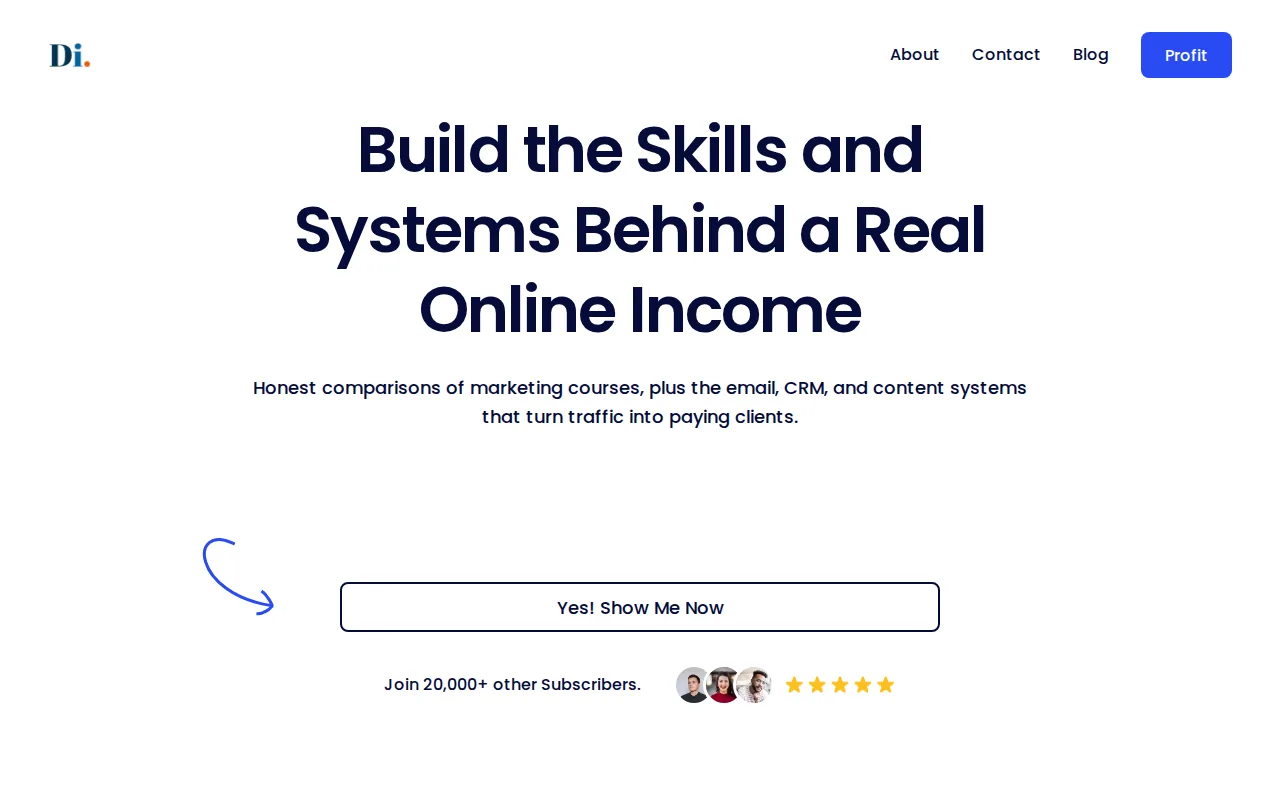
The focus is broader than writing a cold email. DiSousa brings together technical email frameworks, CRM automation, and performance marketing strategy. That matters when a lead enters your system but then sits untouched, receives the wrong message, or gets passed to sales without useful context.
I’d put DiSousa first for readers who want training connected to daily work. You can study how a campaign should run, then map that lesson to a real CRM field, handoff, or nurture path. A nurture path is the set of messages that guides a lead toward a sales conversation.
The main limit is fit. Someone who wants a broad academic survey of digital marketing may prefer Coursera. A beginner who only wants short video lessons may prefer LinkedIn Learning. DiSousa makes more sense when the goal is a working B2B growth system.
One useful lesson is to compare channel cost with channel control. A research post supplied for this article compares LinkedIn messages with cold email, but its figures were challenged in the comments. Treat that comparison as a prompt to test your own audience, not as a universal benchmark.
For teams that need email skills alongside lead generation, the related email marketing course options page gives you a more focused learning path.
Choose DiSousa when your next step is to improve the system behind the lead, not only the first message.
2. Free Inbound Marketing Courses
Free inbound marketing courses are a strong starting point for beginners who want lead generation lessons tied to inbound marketing and CRM work.

Inbound marketing means attracting people with useful content instead of reaching out to every person on a cold list. That can include search content, forms, email follow-up, and educational offers. The model helps you see lead generation as a path rather than a single ad or message.
This option works well for a new marketer who needs the basic terms first. You can learn how a visitor becomes a contact, how a form captures intent, and why a CRM record needs clear fields. Those concepts transfer to many sales and marketing systems.
The tradeoff is depth. Free lessons can explain the parts of a funnel without forcing you to build one for your own business. You may finish with better vocabulary but still need to write the offer, set up the follow-up, and decide which leads deserve a fast response.
It also makes sense for sales and marketing teams that share one CRM. A marketer can study capture and nurture while a sales rep reviews qualification. The team then has a shared view of what counts as a useful lead.
Don’t judge this option by a certificate alone. Ask what you can produce after the lesson. A useful test is a completed landing page brief, one lead magnet outline, and a short nurture sequence.
3. Search, Content, and Paid Acquisition Skills
A lead generation course focused on multiple acquisition channels suits learners who want training built around these areas.

Search engine optimization, or SEO, helps pages appear when people search for a problem. Content gives those visitors a reason to trust the business. Paid acquisition puts an offer in front of a chosen audience. A course library can connect these areas through its lessons.
This is a good pick for content marketers and small teams that rely on search traffic. A learner can study keyword intent, then use that intent to shape a guide, checklist, or assessment. The lead magnet should solve one narrow problem. A broad ebook often gives visitors no clear reason to finish the form.
Paid acquisition needs a different habit. Start with the audience and offer before you set an ad budget. Then track the full path. A click is only an early signal. The useful question is whether the right person completes the form and moves toward a sales talk.
The limitation is that a course library can leave you choosing your own route. You may need to combine several lessons to cover targeting, copy, landing pages, and follow-up. That flexibility helps experienced marketers, but it can slow a beginner.
Review the current course mix before you plan a study track.
The video above gives a broad lesson on lead criteria, ideal customer profile s, and lead lists. An ideal customer profile, or ICP, describes the type of buyer most likely to need and afford your offer.
4. Advanced Marketing Training
Advanced marketing training is best for marketers who already know the basics and want to improve conversion through testing and customer research.
Conversion rate optimization means improving the share of visitors who take a chosen action. That action might be downloading a guide, starting a trial, or booking a call. This type of training belongs on the list because of its focus on experimentation rather than simple lead capture.
This course path can help when traffic is steady but forms underperform. Instead of guessing, you can review the page promise, the form length, the proof near the form, and the next step after submission. Then you can test one change at a time.
That approach is useful for a team with enough traffic to learn from tests. It is less useful when a site receives only a few visits each week. In that case, customer interviews and direct sales calls may give you better evidence than a formal test.
An advanced marketing course library may also offer a broad range of marketing subjects. That depth can be valuable, but it raises the time cost. You’ll need a clear problem before choosing a course, or the library may turn into a backlog of lessons.
Pick this type of training when your problem is weak conversion after the lead arrives. Pick a more basic option when you still need to define your audience or build your first offer.
5. Coursera, Structured University and Professional Certificates
Coursera is a useful choice for learners who want a structured online lead generation course inside a wider digital marketing program.
The clearest research match is a digital marketing course that includes lead generation strategies.
Its nine core topics move from an introduction to digital marketing through evaluation and improvement of digital channel performance. That tells you something important: the program reads more like a full digital marketing course than a narrow lead generation bootcamp.
The title creates a possible mismatch. If you want deep practice in cold email, lead scoring, chatbots, or lead magnet delivery, you should ask for more detail before enrolling.
Support also appears limited to online discussion forums and peer review. The source does not mention live Q&A, instructor coaching, or dedicated mentorship. That may suit an independent learner, but it won’t give a team fast answers during a campaign build.
Before you commit, ask what work you’ll submit, how feedback works, and which lead generation skills receive the most lesson time.
Coursera is best when you want academic structure. It is less suited to someone who needs a narrow B2B outreach playbook this week.
6. LinkedIn Learning, Flexible Professional Upskilling
LinkedIn Learning works well for busy professionals who want short lessons on funnels, lead magnets, and CRM tools.
The platform’s lead generation topic page groups training around attracting and converting potential customers. It also includes lessons on sales funnels, lead magnets, and CRM use. That mix makes it easy to fill one skill gap without signing up for a long program.
Use this option when you need a quick answer before a work task. For example, you might watch a lesson on lead magnets before drafting a checklist for a webinar campaign. Then you can test the checklist with a small audience and adjust the form based on the questions people ask.
The short format is also the main weakness. A collection of small lessons may not give you one complete campaign plan. You’ll need to connect the pieces yourself. That means defining the ICP, writing the offer, setting the follow-up, and choosing the handoff point.
LinkedIn Learning also makes sense for teams that need flexible professional development. A manager can assign one topic without asking staff to pause their normal work for weeks.
Choose it for speed and breadth. Don’t expect a short lesson to replace campaign ownership, sales feedback, or CRM practice.
7. Focused, Low-Cost Lead Generation Classes
Focused lead generation classes are a fit for learners who want a lesson on one lead generation task and prefer a large range of instructors.
Topic-specific learning can be useful when the problem is clear. You might need help with cold outreach, a lead magnet, email copy, paid ads, or agency client acquisition. A narrow class lets you spend your study time on that one task.
The main issue is consistency. Course quality, depth, update speed, and teaching style can vary. A polished sales page doesn’t prove that the lessons match your market or that the examples still fit the channels you use.
Read the curriculum before you buy. Look for a clear project, recent lesson updates, useful previews, and a stated learner level. Avoid classes that promise huge lead counts without explaining the audience, offer, delivery channel, and follow-up.
A focused class can work well as a supplement to a stronger learning path. For example, a marketer might use a structured digital marketing program for foundations, then add one focused class on cold email copy.
It’s a good pick when you know the exact gap. It’s a poor pick when you’re still trying to understand the whole lead process.
8. Conversion Copy and Lead Magnet Messaging
Focused messaging training is best for marketers who need sharper words on landing pages, forms, emails, and lead magnets.
Conversion copy explains a buyer’s problem in language that supports action. That skill matters because a strong channel can still fail when the offer sounds vague. A visitor needs to know what they receive, who it is for, and what happens after they submit their details.
This option fits a content team that already has traffic but struggles to turn attention into leads. Start with one page. Mark the promise, proof, form request, and next step. Then ask whether each part answers a question the buyer has at that moment.
Lead magnets need the same care. A template, assessment, short report, or tool can work when it solves a narrow problem. But the format must match the buyer. A technical buyer may prefer a checklist. A founder may want a quick audit or benchmark.
The limit is scope. Copy training won’t fix poor targeting, weak data, broken forms, or slow sales follow-up. If a lead submits a form and waits three days for a reply, better wording can only do so much. For a deeper look at this skill set, compare these SEO copywriting course options alongside broader lead generation programs.
Choose focused messaging training when message quality is the bottleneck. Pair it with CRM and campaign training when the full system needs work.
9. Growth and Acquisition Training for Startup Teams
Growth and acquisition training for startup teams is suited to teams that want acquisition lessons connected to growth experiments and changing customer demand.
Demand generation is often used for work that builds interest before a sales conversation. Growth marketing can cover acquisition plus retention. The terms overlap in many teams, so focus less on the label and more on what the course asks you to measure.
This option makes sense for a startup that needs to find a repeatable channel. A team might test content, partnerships, outbound, paid ads, or a product-led offer. The key is to define the buyer and the test before adding more tools.
Startup training can also help with resource choices. A small team may not need five channels. It may need one clear offer, one audience, and a way to see which actions lead to qualified conversations.
The caveat is that startup growth lessons may assume a fast testing culture. A regulated company or a large B2B firm may need more review before changing messaging or launching a new campaign.
Pick growth and acquisition training for startup teams when you want acquisition thinking tied to business growth. If your main problem is email infrastructure or CRM workflow, DiSousa is the closer fit.
10. Senior Growth and Leadership Training
Senior growth and leadership training is aimed at experienced growth professionals who want advanced thinking on experimentation, retention, product-led growth, and growth strategy.
That makes this type of training less of a basic lead generation course and more of a senior growth program. The research points to areas such as foundational growth, experimentation, retention and engagement, product-led growth, monetization and pricing strategy, and advanced growth strategy.
This breadth helps leaders connect lead generation to the full customer path. A lead is not the final business result. Teams still need activation, retention, expansion, and a clear view of revenue quality.
Senior growth and leadership training can be valuable when a growth team already has data and wants better decisions. For example, a leader may need to choose between improving acquisition volume and fixing activation after signup. A growth systems lens helps frame that choice.
The main drawback is fit for beginners. If you still need to define an ICP, write a first lead magnet, or set up basic nurture email, advanced growth strategy may feel too far from the task in front of you.
| Option | Best fit | Main strength | Watch for |
|---|---|---|---|
| DiSousa | B2B operators and agencies | Email, CRM, and growth operations | Less suited to broad academic study |
| Free inbound training | Beginners | Inbound and CRM foundations | Limited hands-on depth may remain |
| Search and acquisition training | SEO and content teams | Search and acquisition lessons | You may need to combine courses |
| Conversion optimization training | Experienced marketers | Conversion and experimentation | Needs enough traffic for testing |
| Coursera | Structured learners | Broad online curriculum | Course length and price may be unclear |
| LinkedIn Learning | Busy professionals | Short, flexible lessons | Less complete campaign structure |
| Focused online classes | Specific skill gaps | Many focused classes | Quality varies by instructor |
| Conversion copywriting training | Conversion copywriters | Messaging and lead magnets | Doesn’t fix workflow problems |
| Startup growth training | Startup teams | Acquisition and growth testing | May assume fast experimentation |
| Senior growth and leadership training | Senior growth teams | Growth systems and leadership | Too advanced for first campaigns |
Course availability and program details can change, so check before making a decision.
How to Choose a Lead Generation Course
Choose by the work you need to complete, not by the biggest promise on the sales page.
- Define the gap. Decide whether you need targeting, content, cold outreach, ads, conversion copy, CRM setup, or growth planning.
- Check the curriculum. Look for the actual modules. A title may mention lead generation while the lessons cover general marketing.
- Review the support. Forum posts and peer review are different from instructor feedback or live coaching.
- Look for a project. You should leave with an asset you can use, such as a lead magnet, campaign brief, or nurture sequence.
- Measure the handoff. The course should explain what happens after form submission. Lead capture without follow-up creates a list, not a sales process.
Also check for missing buyer data. The research behind this shortlist found one Coursera syllabus without clear course length, starting price, or target audience. When those fields are absent, compare the curriculum and support format instead of guessing value from the title.
FAQ
Which lead generation course is best for beginners?
A structured beginner course is a strong starting point because it introduces inbound marketing and CRM concepts in a clear sequence. LinkedIn Learning also works when you want short lessons on funnels or lead magnets. Beginners should still build one small campaign while studying, since watching lessons alone won’t show where their workflow breaks.
Are there free lead generation courses?
Yes, free lead generation training is available through some learning libraries. Free lessons usually cover foundations, terms, and channel ideas. They may not include personal feedback, campaign review, or detailed CRM setup. Check the final project and support model before treating a free course as job-ready training.
What should a lead generation course teach?
A useful lead generation course should teach audience definition, offer design, lead capture, outreach, nurture, qualification, and measurement. It should also explain channels such as email, social media, paid ads, content, and cold outreach. The strongest programs connect each channel to a CRM record and a clear sales handoff.
Is a certificate worth it for lead generation?
A certificate can show that you completed a program, but it doesn’t prove that you can build a working campaign. A portfolio asset often says more. Save a campaign brief, lead magnet outline, landing page rewrite, or nurture sequence from your coursework. Employers and clients can then see how you think and what you can produce.
How long does it take to learn lead generation?
There is no single learning timeline because lead generation covers several skills. You can learn the basic terms quickly, but building sound targeting, messaging, tracking, and follow-up takes repeated practice. Start with one audience and one offer. Review the results, fix one weak point, and expand only after the first workflow makes sense.
What is the best option for B2B lead generation?
DiSousa is the best fit in this shortlist for B2B teams that need email frameworks, CRM automation, and performance marketing tied together. Coursera may suit learners who want broad academic structure. A copy-focused provider may help with messaging. Your choice should follow the part of the B2B process that currently loses the most qualified leads.
Conclusion
Pick DiSousa if you want lead generation training connected to B2B email, CRM automation, and growth operations. Choose foundational training for basics, focused training for copy or conversion, or advanced training for growth leadership. Start by naming one campaign bottleneck, then review the DiSousa path and build one small workflow around it.
Income disclaimer: Training and marketing systems can improve your skills, but they don’t guarantee leads, sales, or income. Results depend on your offer, audience, execution, market, budget, and follow-up.
