
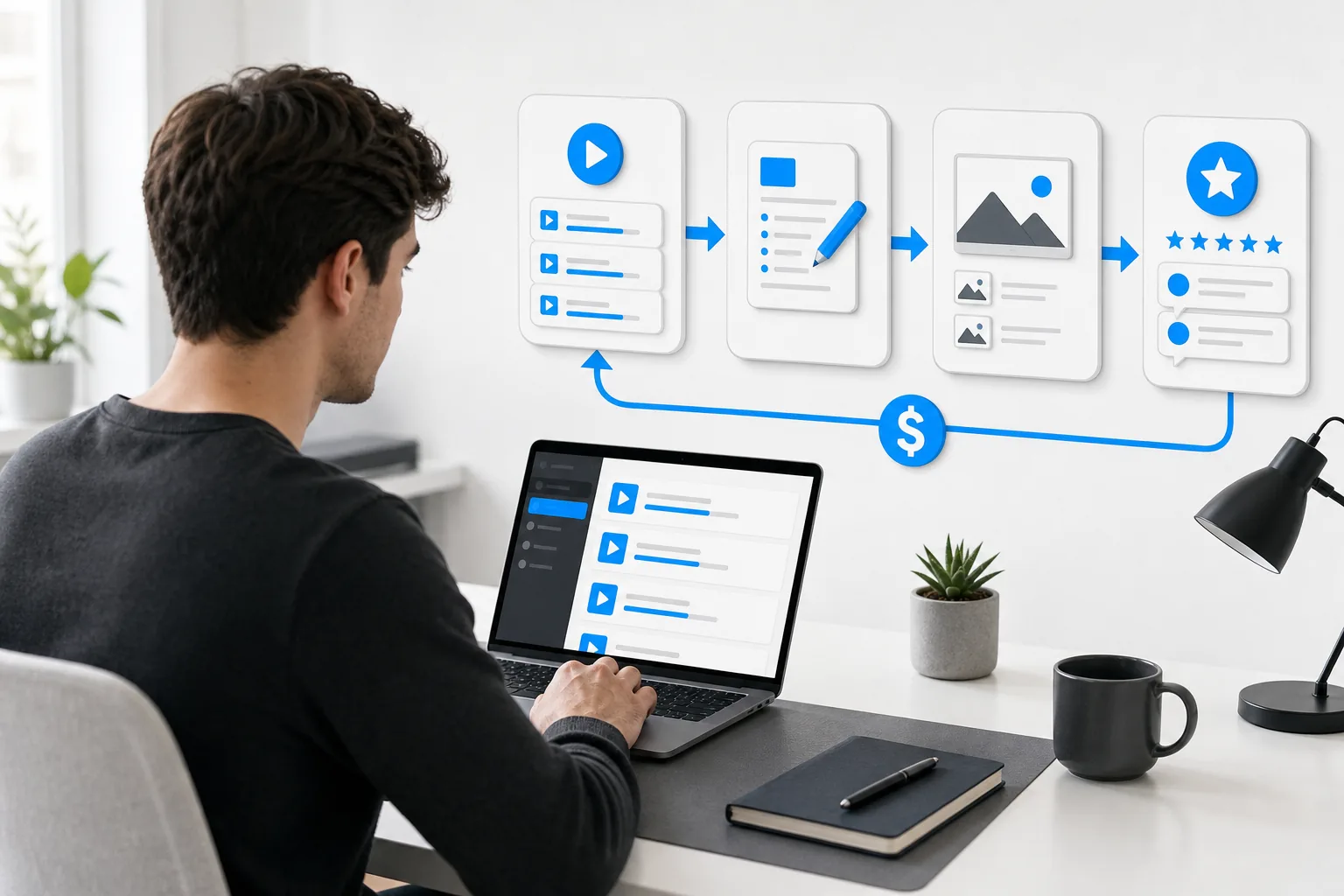
A make money online course can help you learn a skill, but the course itself won’t earn for you. I’m Antonio De Sousa, an online marketer with nearly two decades of experience, and I’d start by choosing one way to earn before paying for training. Then use each lesson to build something small that you can test with real people.
- Pick one income model before you buy a course, because the skills and first steps vary by model.
- Judge a course by its lessons, action tasks, update habits, and support, not by its income claims.
- Turn each lesson into a task you can finish and measure during the same week.
- Track net income after fees, refunds, and operating costs, then use the results to choose your next move.
Step 1: Choose One Online Income Model Before You Buy a Course
Choose the kind of work you want to do before shopping for lessons. A course for affiliate marketing won’t teach the same day-to-day skills as training for freelance writing or a service business.
Start with what you can make or do for someone else. If you can write clearly, you might sell writing services. If you know a topic well and like explaining it, you could teach live or recorded lessons. If you enjoy researching products and helping people compare them, affiliate marketing may fit. The first goal is not to pick the trendiest model. It’s to pick one whose work you can keep doing.
Each model also has a different path to a first sale. A freelancer can contact a potential client and offer a defined service. An affiliate marketer needs useful content, relevant partner links, and an audience that trusts their recommendations. A course creator must shape a lesson plan, find learners, and deliver a result students can use. Those are distinct jobs. Don’t buy a course that promises to teach all of them at once unless its syllabus shows how each skill connects to your goal.
| Income model | What you sell | First useful test | What to learn |
|---|---|---|---|
| Freelance service | A defined task or service for a client | Offer one small service to a likely buyer | Skill delivery, client outreach, and scope control |
| Affiliate marketing | Content that helps people choose a product, with disclosed referral links | Publish one useful comparison or tutorial | Audience needs, content, traffic, and disclosure |
| Online teaching | Live help or a recorded lesson series | Teach one short lesson and ask learners what they could apply | Lesson design, student support, and course delivery |
| Digital resource | A template, guide, or other downloadable resource | Show a draft to people who face the problem it solves | Problem research, clear instructions, and sales copy |
Use the table to rule out models that don’t suit your work style. If you need income soon, a service may give you a clearer path to a paid task than building an audience first. If you want to create an asset that can sell repeatedly, affiliate content or a recorded lesson may fit, but neither removes the work of earning attention and trust.
Affiliate marketing is a common focus in courses marketed around online income. That label can be broad, so check whether a course teaches a narrow skill you can act on, such as selecting a topic or writing a useful product review. DiSousa’s affiliate marketing course comparison can help you compare options by fit before you spend.
Write down your choice in one sentence: “I’ll earn by helping [audience] with [task or result].” If you can’t complete that sentence, pause your course search and talk with potential buyers or learners first. Your model should be clear enough to guide the course you buy and the first project you build.
Step 2: Vet the Course for Usable, Current Instruction
A useful course should show what you’ll learn and what you’ll do with it. Before enrolling, inspect the syllabus, sample lessons, instructor information, update notes, and support options.
Start with the syllabus. Look for a sequence that moves from a basic idea to an applied task. For example, affiliate marketing training might begin with how referral links work, then cover choosing a topic, making useful content, and tracking results. A course that names a topic without showing the work behind it may leave you guessing when it’s time to act.
Next, look for assignments that create something you can use. A lesson on writing should lead to a draft. A lesson on audience research should leave you with notes about the people you want to reach. If the course includes only videos, make your own task list before you start. Watching lessons can feel like progress, but a completed work sample gives you something to review and improve.
Check the teaching format against the time you have. Course examples in the affiliate marketing category range from short introductions to programs that run for several weeks. Some are self-paced. Others describe a core program alongside ongoing updates or community access. Time spent watching is only one part of the workload. You’ll also need time to try the lessons and correct your work.
Look closely at the support. If a course has a community, ask what kind of help it provides and whether it suits the questions you expect to have. A discussion space can help you compare notes, but it isn’t the same as personal feedback. If there’s no group support, you can still make progress by setting a weekly review time or asking a knowledgeable peer to check your work.
Price by itself doesn’t prove value. A free course can be a sensible way to learn the basic terms before deciding whether to spend. One grounded example, PartnerStack Academy, is described as a free, self-paced program with roughly eight to ten hours of material and a focus on B2B partner marketing. A low-cost beginner video course may make sense for a first overview. A paid program needs to justify its cost with lessons and support that match your goal.
Be wary of promises that make income sound certain or quick. In the course examples available for this topic, earnings are not guaranteed. That’s a healthier starting point than trusting a promise, but you should still check what the course asks you to do, what extra expenses might arise, and how long you can give the work.
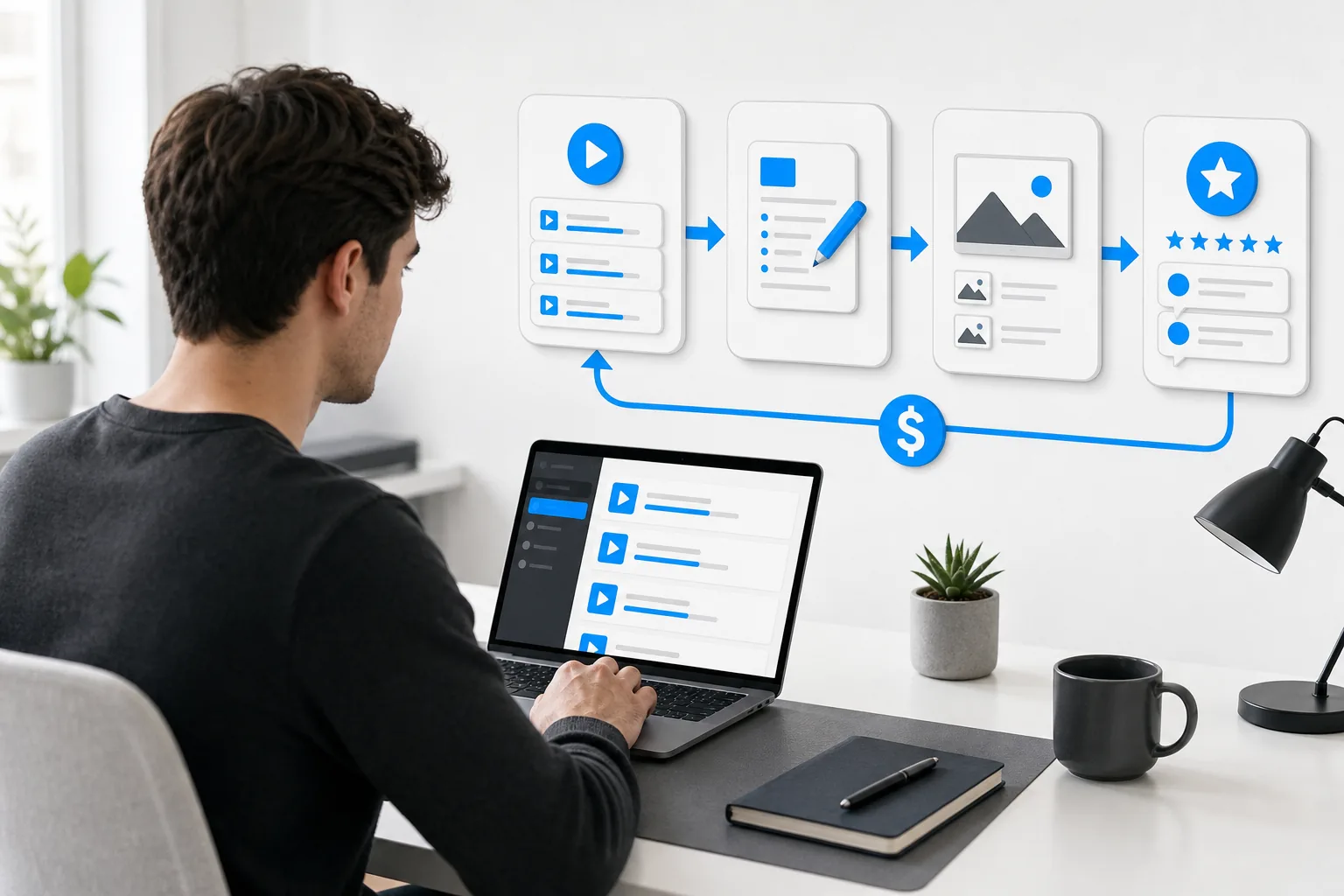
Finally, check whether the lessons match the platforms and rules you plan to use. A course may teach broad skills, but your actual work might involve a specific publishing site, email system, or partner program. You don’t need a course to name every tool you’ll ever use. You do need enough detail to make the lessons usable in your own setup.
Course check: Before you pay, write down the task you expect to complete after the first three lessons. If the syllabus doesn’t point toward a task, keep looking or choose a smaller learning resource first.
Step 3: Turn the Course Into a Weekly Learning-and-Action Plan
Set a weekly rhythm that gives you time to learn, make, and review. The aim is to finish a useful piece of work each week, not to finish the course as fast as possible.
Before you press play, block out time for the work that follows. If you have four hours a week, for example, you might spend one hour on lessons, two hours applying them, and one hour reviewing what you made. Treat that as a starting plan, not a fixed rule. Some weeks may need more build time. Others may focus on learning a new tool.
Break each lesson into an action with a clear end point. “Learn about audience research” is too vague to check off. “Write down five questions people ask before buying this service” has a visible result. Your action should be small enough to finish in one sitting and useful enough to move the project forward.
- Before the lesson: Write down one question you need answered.
- During the lesson: Note only the idea you plan to use and the step it supports.
- After the lesson: Make the related draft, page, outline, or outreach note.
- At week’s end: Review what you finished and choose the next task.
Keep a simple learning log. Record the date, lesson, task, result, and question that remains. If you’re building an affiliate article, your log might show that you selected a reader question and drafted an outline. If you’re learning copywriting, it might show that you wrote a short service page. This record helps you spot whether you’re applying the material or only collecting notes.
Don’t try to learn every business skill at once. Choose one main skill for the next few weeks. You can add related skills when the work calls for them. For a freelancer, that might mean learning to scope a writing project before adding email automation. For an affiliate publisher, it might mean learning to write honest, clear content before spending time on advanced analytics.
Make time for repetition. A first attempt is rarely polished, and that’s fine. If a course teaches you to write an article, draft one, review it against the lesson, and revise it. If it teaches you to pitch a service, write a short pitch, read it aloud, and cut any claim you can’t support. Repeating the task helps turn a concept into a skill you can use without replaying the lesson every time.
If the model you chose is freelance work, compare training with the kind of service you want to sell. DiSousa’s guide to freelancing courses looks at options by skill focus and format, which can help you match lessons to a service rather than enrolling in a broad course by default.
Build a weekly review into your schedule. Ask three questions: What did I finish? What got in the way? What will I do next? If you missed a task, shrink it. If you finished early, don’t automatically add more videos. Use the extra time to improve the work you already made.
By the end of each week, you should have a visible result and one next step. That might be a draft, a sample lesson, an outreach message, or a list of questions from potential buyers. Keep that work in one folder so you can see progress and find it when you test your offer.
Step 4: Build a Useful Offer and Reach a Specific Audience
A useful offer solves one clear problem for a defined group. Write what the buyer will be able to do, who it’s for, and what the offer includes before you set a price or build a long sales page.
Start with the buyer’s problem, not your course title. “Learn online marketing” is too wide to guide a learner. “Plan a first month of helpful content for a small home repair business” gives you a clearer audience and outcome. You can then decide whether a course, live session, service, or short resource is the right way to help.
Talk to people who face the problem. Ask what they’ve tried, where they get stuck, and what a successful result would look like. Don’t ask only whether they like your idea. People may praise an idea without paying for it. Ask about the last time they faced the problem and what they did next. Those details can shape your offer and reveal whether you’re solving an urgent need.
Make the offer specific enough to set expectations. A beginner course might include short lessons plus a worksheet that guides learners through one project. A service offer might define a single deliverable, the information the client must provide, and how revisions work. A digital guide might include steps and examples that help the reader complete one task. Clear scope protects you from promising more than you can deliver.
Choose a place to deliver the offer based on what you need today. A simple course can start with a hosted learning platform or a private set of recorded lessons. A service can begin with a clear page and a way for a client to contact you. You don’t need to build a complex funnel before you know that people want the offer. Start with the smallest setup that can deliver the promised result.
Price should reflect the work, support, and outcome included. A self-paced resource usually asks less of you after it’s made than a course with live feedback. A service price should account for the time needed to do the work, plus the admin around it. Avoid copying a competitor’s price without checking whether the offer is actually comparable.
You can test a price by sharing the offer with a small group before a full launch. Explain what’s included and ask people to make a real decision. If they hesitate, ask what feels unclear. Their answer may point to a weak outcome, a missing detail, or a mismatch between the offer and the person you approached. Don’t treat every “no” as proof that your price is wrong.
Pick one main way to reach your first audience. Search content can help when people already look for answers to the problem. Email can work when you have permission to contact interested readers. A small live class can show how you teach and let people ask questions. Choose the channel you can keep using, and make each piece of outreach lead to one next action.
If you recommend products through affiliate links, disclose the relationship in plain language near the recommendation. Make the disclosure easy to notice and understand.
A specific audience gives your message a job. Instead of saying “I teach marketing,” explain the task you help a certain kind of learner complete. That makes it easier for the right person to decide whether your offer fits.
Step 5: Publish, Test, and Improve Your First Income-Producing Asset
Publish a small version of your offer, then watch how people use it. You’re testing whether the message makes sense, whether the delivery works, and whether the offer helps with the stated problem.
Before launch, check the buyer’s path from start to finish. Can someone understand the offer, pay or sign up, and find the next step? If you’re selling a course, test the welcome message and lesson access. If you’re sharing an affiliate article, test the links and make sure each recommendation has a clear reason. If you’re selling a service, make the process for asking about the work easy to follow.
Keep the first launch small enough to manage. You might share the offer with an email list you’ve built with permission, publish a focused article, or invite a few people who match the intended audience to review the lesson. Don’t present early feedback as proof of income potential. Treat it as information about clarity and usability.
Measure the steps that lead to a sale. For a course, note how many people visit the offer page, how many start checkout, and where questions arise. For a service, track replies to outreach and how many conversations turn into a defined proposal. For affiliate content, watch relevant page visits and link clicks. A click is not income, but it can show whether the content attracts interest.
Don’t change several parts at once. If the offer page gets visits but few people act, first check whether the audience matches the offer. Then review the headline and the explanation of what the buyer receives. If people buy but ask the same question afterward, make the answer clearer before purchase. Each change should connect to a real signal you observed.
Keep an eye on the reader experience. A lesson should begin with what the learner will do and end with an action they can take. An article should answer the question that brought the reader there before placing a recommendation. A service page should make scope and next steps clear. When those parts are hard to follow, extra promotion can send more people into a confusing process.

If buyers need help after purchase, set a clear way to handle questions and a realistic response window. Even a small business needs a process for support. Write down common questions and update the welcome note or lesson when the same issue appears again. As customer questions grow, consider whether you need a more organized support process.
Use a short launch review after the first test. Record what people understood, where they stopped, what they asked, and which channel brought them. Then decide whether to revise the offer, improve the lesson, or reach a better-matched audience. Don’t scale spending or production until the basic path works.
For content that includes affiliate links, DiSousa’s affiliate marketing training plan covers the work of choosing a topic, making content, and reviewing results. Use that kind of step-by-step framework to give each piece of content a clear purpose instead of publishing only to stay busy.
Publishing is a starting point, not the finish. A small offer that you improve from real questions is more useful than a large course that stays hidden while you keep polishing it.
Step 6: Track Costs, Disclose Relationships, and Decide What to Do Next
Track money from the first sale, even if the amounts are small. A clear record helps you see whether the work earns more than it costs and gives you better information for tax planning.
Keep business income and expenses easy to identify. Record payments received, refunds, platform fees, advertising, software, and other costs tied to the work. If a payment service deducts fees before sending you money, record the gross sale and the fee separately when your records allow it. Otherwise, a deposit may look like your full revenue when it isn’t.
Use a simple weekly review. Note sales received, costs paid, and any refunds or chargebacks. Then estimate what remains after direct costs. You don’t need a complex dashboard to begin. A spreadsheet can work if you keep it current and use the same categories each week.
For a course or digital product, separate one-time sales from recurring payments. If a launch brings in several sales close together, don’t assume the same amount will arrive every month. Keep fixed costs low until you know what sales look like across more than one cycle. That gives you room to adjust if a platform or marketing cost grows faster than income.
Set a limit for paid promotion before you start. Decide how much you can afford to spend while testing a message, then track the cost against the outcome you care about. For example, an ad that brings visitors but no useful inquiries may need a different audience or offer. Don’t keep paying for traffic just because the dashboard shows clicks.
Tax rules vary by location and business structure. Self-employed people may need to plan for income taxes and estimated tax payments. Use current guidance for your own situation, and speak with a qualified tax professional when you’re unsure how the rules apply.
Affiliate marketers should also keep a record of where they use referral links and how they disclose them. A disclosure is part of the reader’s decision, not a line to hide at the bottom of a page. Check the terms of each program you join, since partner rules can differ.
Review the work at a set interval, such as once a month. Ask whether the model still fits your time, whether the offer solves the problem you chose, and whether the numbers support another test. If people show interest but don’t buy, improve the offer or its explanation. If the work gets no response, check the audience and channel before creating more lessons.
Use a basic decision rule:
- Keep going when the offer gets useful feedback and the cost of learning stays within your limit.
- Revise when people are interested but confused about the result, the scope, or the next step.
- Pause when the model costs more time or money than you can sustain, or when the work no longer suits your goal.
Don’t treat a course purchase as a business expense that guarantees a return. It’s a learning cost. The business takes shape through the work you do after the lesson, the way you serve a buyer, and the choices you make from your records.
Frequently Asked Questions
Can you make money from an online course?
Yes, but buying a course does not guarantee income. A course can teach a skill or a process, while earnings depend on how you apply it, whether people want the offer, and how you reach them. Start with one model and test a small offer before you spend heavily on tools, ads, or a larger program.
What is the best course to make money online?
The best course is the one that teaches the specific work behind your chosen income model. Check the syllabus, assignments, instructor details, and support before you enroll. A free or low-cost introduction can help you test your interest, but choose deeper training only when its lessons match a task you plan to complete.
How long does it take to earn money online?
There is no fixed timeline. A service provider may be able to offer a defined task as soon as they have the skill and can reach a buyer. Affiliate content or a recorded course may need time to attract an audience and build trust. Set a review date, track your effort, and avoid plans that promise a guaranteed schedule.
Can I start making money online with no money?
You can begin learning and testing an idea without buying an expensive course, but most work still takes time and may bring costs later. Start with free lessons or materials you already have, make a small sample, and talk to likely buyers. Spend only when the next purchase solves a clear problem in your plan.
How do I avoid online money-making course scams?
Be cautious when a course promises certain earnings, pushes you to buy before you can review the lessons, or relies on vague claims instead of a clear syllabus. Check what the instructor teaches and what students must do. Look for specific assignments, understandable terms, and support that fits your needs. Don’t borrow money to chase an income promise.
Conclusion
Choose one income model, vet the training against the work you need to do, and turn each lesson into a small test. Keep costs and results in view so you can tell what deserves more time. DiSousa publishes course comparisons and guidance for the skills and systems behind online income. Your next step is simple: write down the model you want to test, then choose one task you can finish this week. Income is never guaranteed, and results depend on your skills, effort, market, and choices.
Income disclaimer: This article is for educational purposes only. It does not promise earnings. Online income varies by person and depends on many factors, including skills, time, market demand, costs, and execution.
