
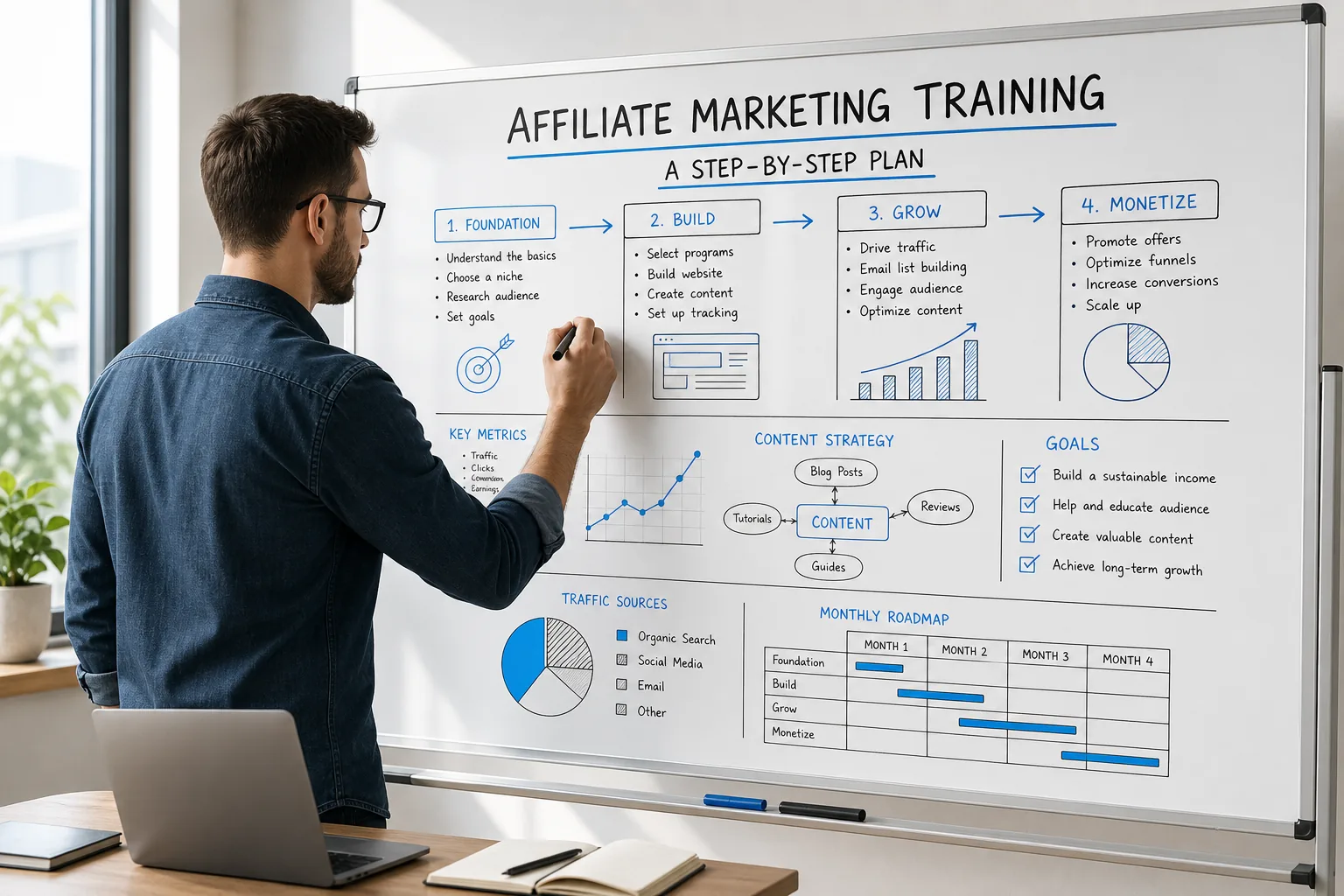
Feeling lost in the sea of affiliate courses? Here’s a clear plan you can follow today to pick the right lessons, build hands‑on experience, launch campaigns, and track earnings.
Step 1: Define Your Affiliate Marketing Training Goal and Starting Point
Start with a single goal: what do you want to earn from affiliate marketing? Maybe it’s $500 a month, a side‑hustle while you keep your day job, or a full‑time income. Write that number down. Next, audit what you already know. If you’ve run a blog before, you probably understand basic SEO. If you’ve never sold anything online, you’ll need to learn the fundamentals first.
Knowing your starting point helps you choose a course that matches your skill level. For beginners, DiSousa’s free guide walks you through the basics and points you to the Best Resources to Learn Affiliate Marketing. For those with some experience, the Best Affiliate Marketing Course: 7 Top Picks breaks down which programs dive deep into traffic generation and conversion tracking.
ClickBank’s own data describes a large active affiliate base worldwide and commissions paid over time (ClickBank). That scale tells you the network has reliable tracking and on‑time payments, which are important for any new marketer.
By now you should have a numeric earnings target and a clear view of your current knowledge gaps.
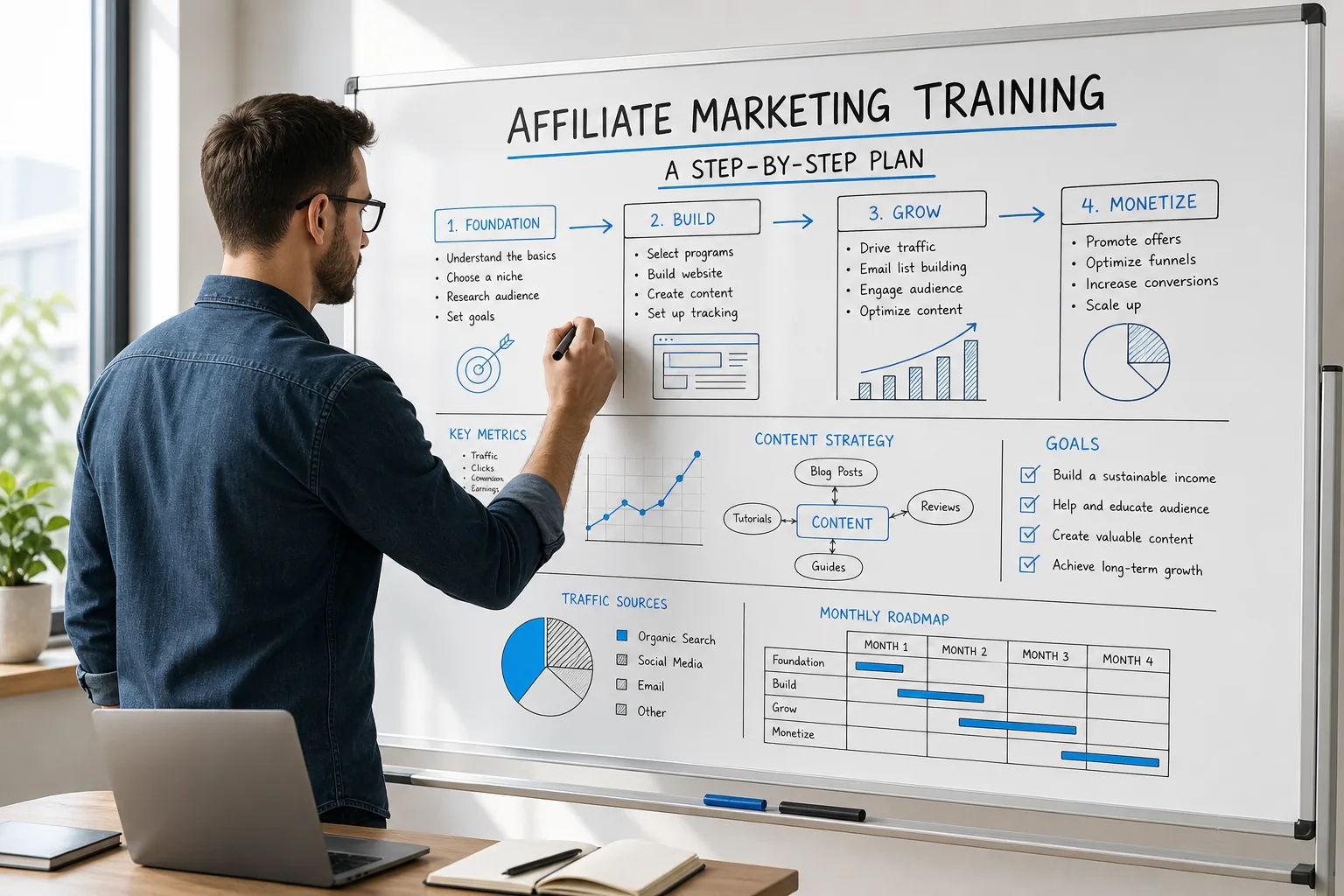
Step 2: Evaluate an Affiliate Marketing Course Before You Enroll
Look for three things: curriculum depth, community support, and update policy. A deep curriculum means you’ll learn everything from niche research to link placement. Community support, like a private Facebook group or weekly Q&A, keeps you from getting stuck. Regular updates ensure the material reflects the latest affiliate networks and compliance rules.
DiSousa’s comparison page lists each program’s key features and price range. It shows that The Affiliate Lab, for example, offers a step‑by‑step blueprint plus a members‑only Facebook group for around $997 (DreamGrow). If you’re on a tighter budget, I.M. for Newbies costs under $10 and still covers the basics.
Only two of the twelve programs name the affiliate networks they cover; ClickBank training lists ClickBank, while the Coursera specialization lists Amazon Associates and other networks.
Once you’ve matched a course to your goal, you’ll know exactly what you’ll learn.
Step 3: Build a Small Affiliate Marketing Practice Project
Pick a narrow niche you enjoy, say, beginner guitar lessons. Create a simple WordPress site, add a few well‑written articles, and insert affiliate links from a program you’ve joined.
Use the Amazon Associates program as a sandbox. A practical affiliate marketing course can explain how to select products, write reviews, and track clicks. Follow its step‑by‑step assignments to launch your first page.
While you build, record every metric: page views, click‑through rate, and any sales. This data becomes the feedback loop for future improvements.
By the end of this step you’ll have a live site that proves the concepts you learned actually work.
Step 4: Apply the Training to Content, Traffic, and Conversions
Now turn theory into results. Start with content: each post should target one long‑tail keyword that matches a buyer’s intent. Use on‑page SEO basics, title tags, meta descriptions, and internal linking, to help Google surface your pages.
Next, drive traffic. Combine free sources like SEO and social media with paid options such as paid search advertising. A full digital‑marketing syllabus can include SEO, PPC, and email. Pick the channels that fit your budget and audience.
Finally, conversion. Use clear calls‑to‑action, concise product summaries, and trust signals like reviews. Track conversions in Google Analytics and adjust headlines or button text based on what moves the needle.
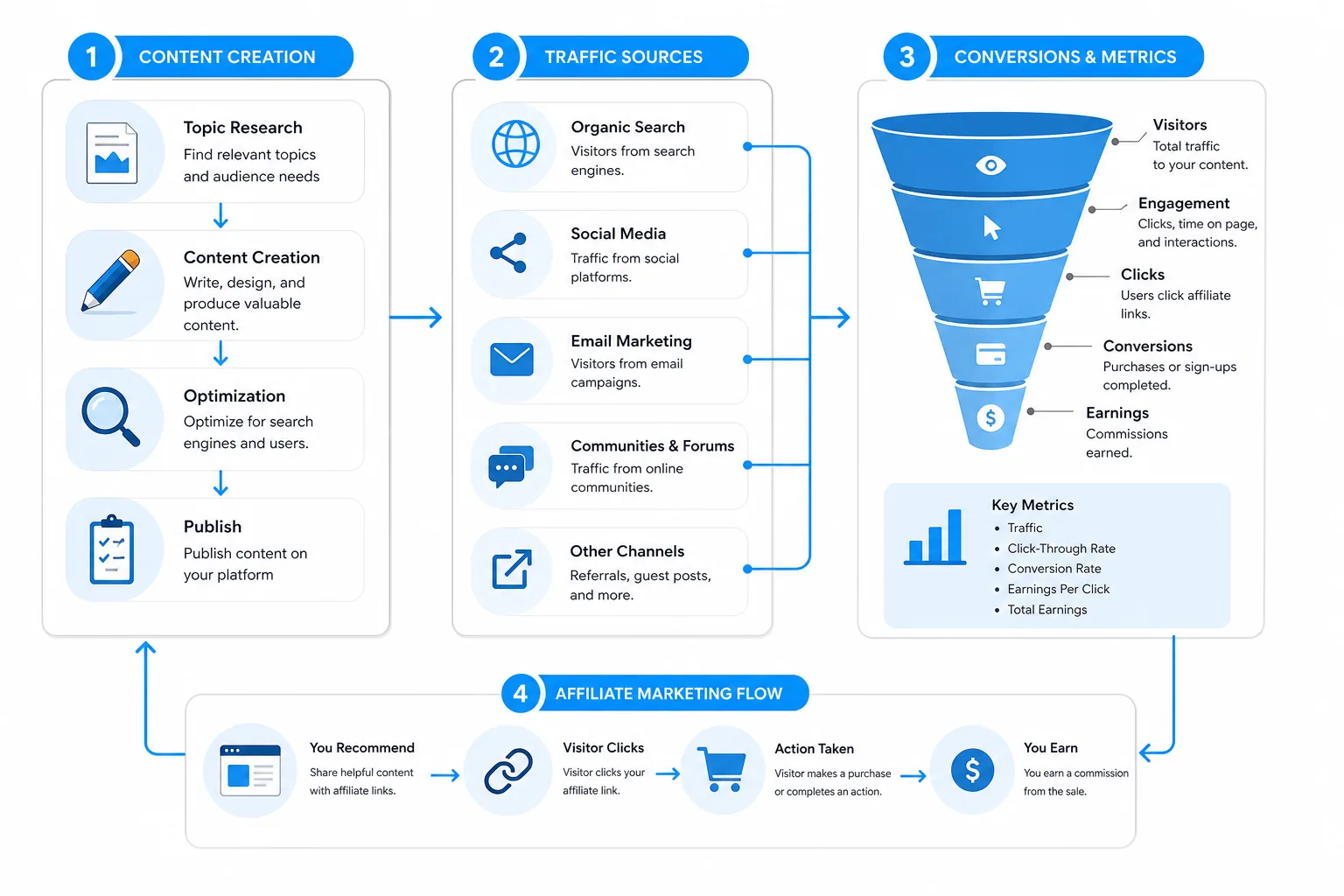
Step 5: Review Results, Follow Affiliate Rules, and Improve Your Training Plan
Pull your data together. Look at earnings, click‑through rates, and the cost of any paid ads. Spot patterns: maybe product reviews earn more than listicles, or Facebook drives more clicks than Pinterest.
Compliance matters. The FTC requires a clear disclosure whenever you use affiliate links (FTC). Place the disclosure near the link, use plain language, and make it noticeable.
Take the insights you’ve gathered and loop them back into your training plan. If you’re still missing depth in SEO, enroll in a deeper SEO course. If traffic costs outweigh earnings, shift budget to organic strategies.
By now you should have a measurable revenue stream, a compliant disclosure, and a roadmap for the next round of growth.
Frequently Asked Questions About Affiliate Marketing Training
What is the best way to pick an affiliate marketing course?
The best way is to match the course’s curriculum to your specific goal, check for active community support, and verify that it’s kept up‑to‑date with current network policies.
Do I need a big budget to start affiliate marketing?
No, you can begin with free resources, a low‑cost domain, and free traffic sources like SEO; many beginners earn their first commissions without spending a dime.
How long does it take to see the first payout?
First payouts can appear within a few weeks if you choose high‑converting offers and drive targeted traffic, but most marketers see consistent earnings after three to six months of steady effort.
Which affiliate networks are beginner‑friendly?
ClickBank and Amazon Associates are popular for beginners because they have easy sign‑up processes, a wide range of products, and reliable tracking.
Do I have to disclose my affiliate links?
Yes, provide a clear, conspicuous disclosure on every page that contains affiliate links.
How can I track my performance?
Use Google Analytics together with UTM parameters on each affiliate link; most networks also provide their own dashboards that show clicks and sales.
Conclusion
Start with a clear earnings target, choose a curriculum that fits that target, build a tiny test site, drive traffic, and then fine‑tune based on data and FTC‑compliant disclosures. Ready to act? Grab the free checklist on DiSousa’s Affiliate Marketing Course: How to Choose One page and launch your first affiliate post today.
