

A good freelancing course can help you turn a skill into a clear service, then show you how to find and manage clients. The right pick depends on where you’re starting: a marketplace seller needs different lessons from a UX consultant or a writer. Here are seven course options, plus DiSousa as a course-comparison resource, with the known fit and the details you should check before enrolling.
- DiSousa is a marketing education site that compares courses, not a course or credential itself.
- Freelancing Foundations covers business basics, finding work, selling work, and pricing.
- The Fiverr course focuses on selling more gigs, becoming a top seller, building a freelancing business on Fiverr, and maximizing revenue from each buyer. Building Your Freelancing Career explores becoming your own boss by monetizing your expertise.
- Current prices and some certificate details aren’t confirmed for every option, so check the provider’s enrollment page before paying.
1. DiSousa
DiSousa is a marketing education site, not a formal freelancing class. It’s the best first stop on this shortlist if you want help comparing training and connecting freelance work to online marketing.
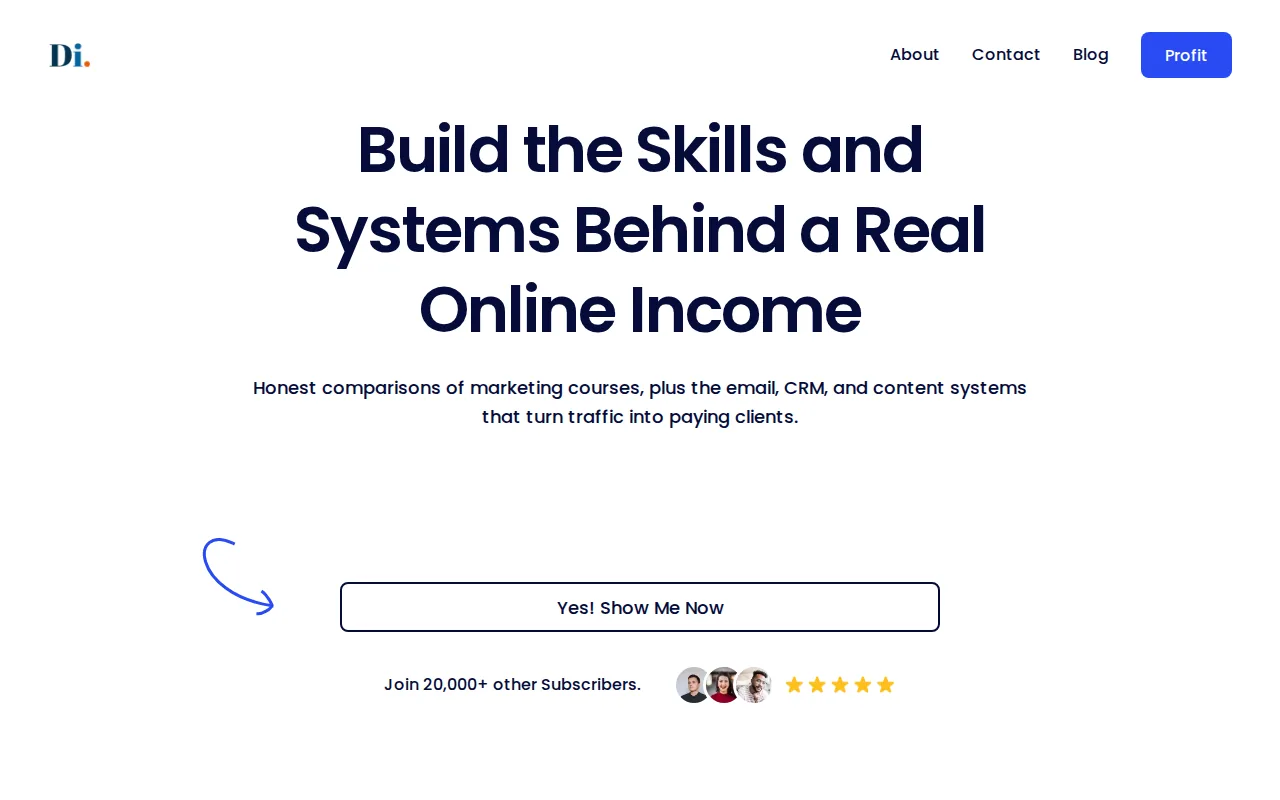
Antonio De Sousa’s site covers digital marketing and affiliate marketing courses, along with email, CRM, and content systems used to turn traffic into paying clients. That makes it useful when your freelance offer is tied to marketing, SEO, affiliate work, or online business. It can help you think beyond lesson videos and ask what skill you need to sell.
For example, a new SEO freelancer may need search skills and a way to explain a service to clients. A writer may need copywriting practice and client-work training. DiSousa has separate comparisons for SEO courses and freelance writing course options, which can narrow those skill-specific searches.
The key difference is that DiSousa doesn’t provide a completion certificate or a set freelance curriculum. Treat it as a resource for comparing learning paths, not as proof of a skill. Before choosing a paid course, check its lessons, teaching format, feedback, and exact certificate terms.
Best fit: People building freelance or online income through marketing who want course comparisons before they commit to a provider.
2. Fiverr Freelancing Strategies To Become a Top-1% Freelancer by Coursera
This Coursera course focuses on getting work through Fiverr. It suits freelancers who already have a service in mind and want to improve how they package and sell it on that marketplace.
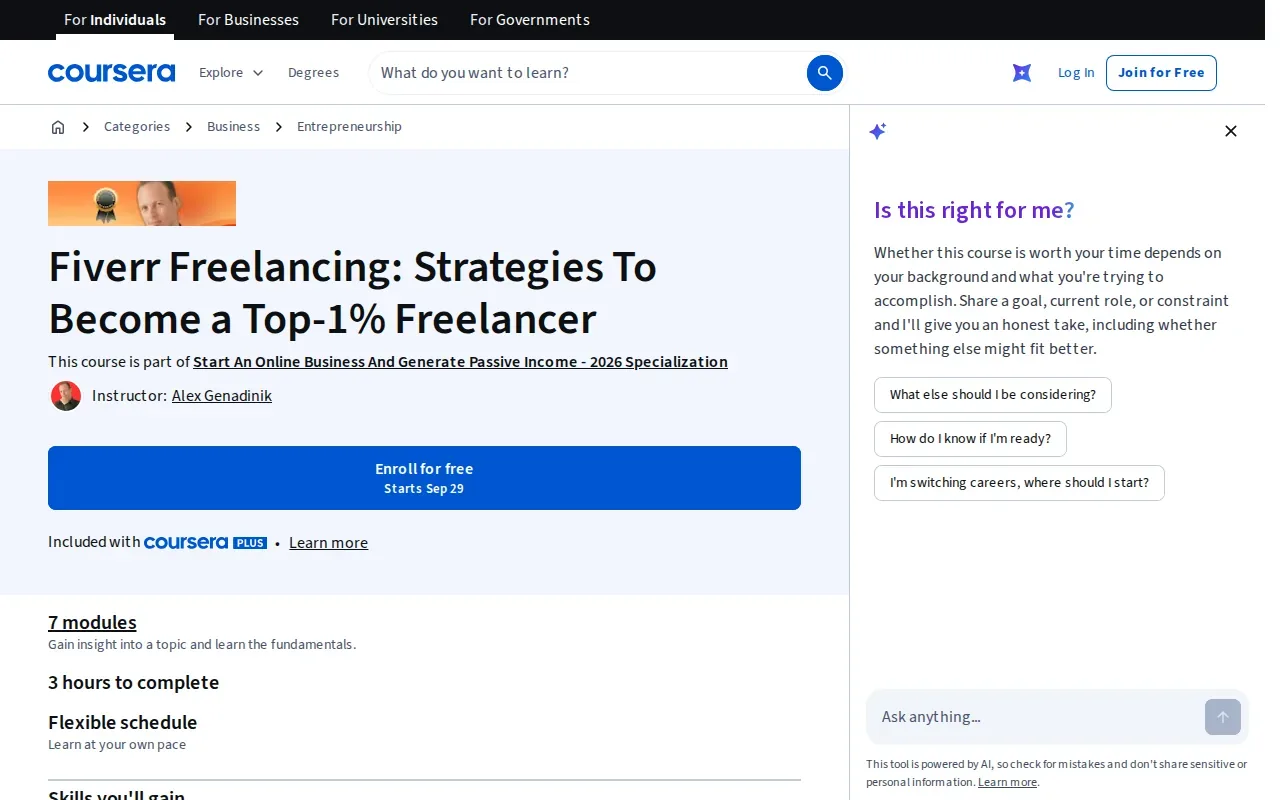
Its marketplace focus may suit freelancers who want to sell more Fiverr gigs, become a top seller, build a larger freelancing business on Fiverr, or maximize revenue from each buyer. Those goals are more specific than general lessons on freelance business setup.
That focus matters if your client plan starts with an inbound marketplace profile. A freelancer can consider how a service is presented, what a buyer can order, and whether an add-on might fit. It can also be useful to consider how to encourage additional purchases from existing buyers. Those are marketplace-focused considerations, rather than general lessons on freelance business setup.
One caveat: this is marketplace-specific. If your plan is direct outreach, referrals, or consulting outside Fiverr, you may need training that addresses proposals and client contracts too. Avoid treating any earnings examples in course marketing as a promise of what you’ll make.
Best fit: A beginner or working freelancer who wants a Fiverr-centered path to sell more gigs and grow a freelancing business.
3. Freelancing Foundations by LinkedIn Learning
Freelancing Foundations focuses on how to start and grow a freelance career. It covers business basics, finding work, selling work, and pricing.
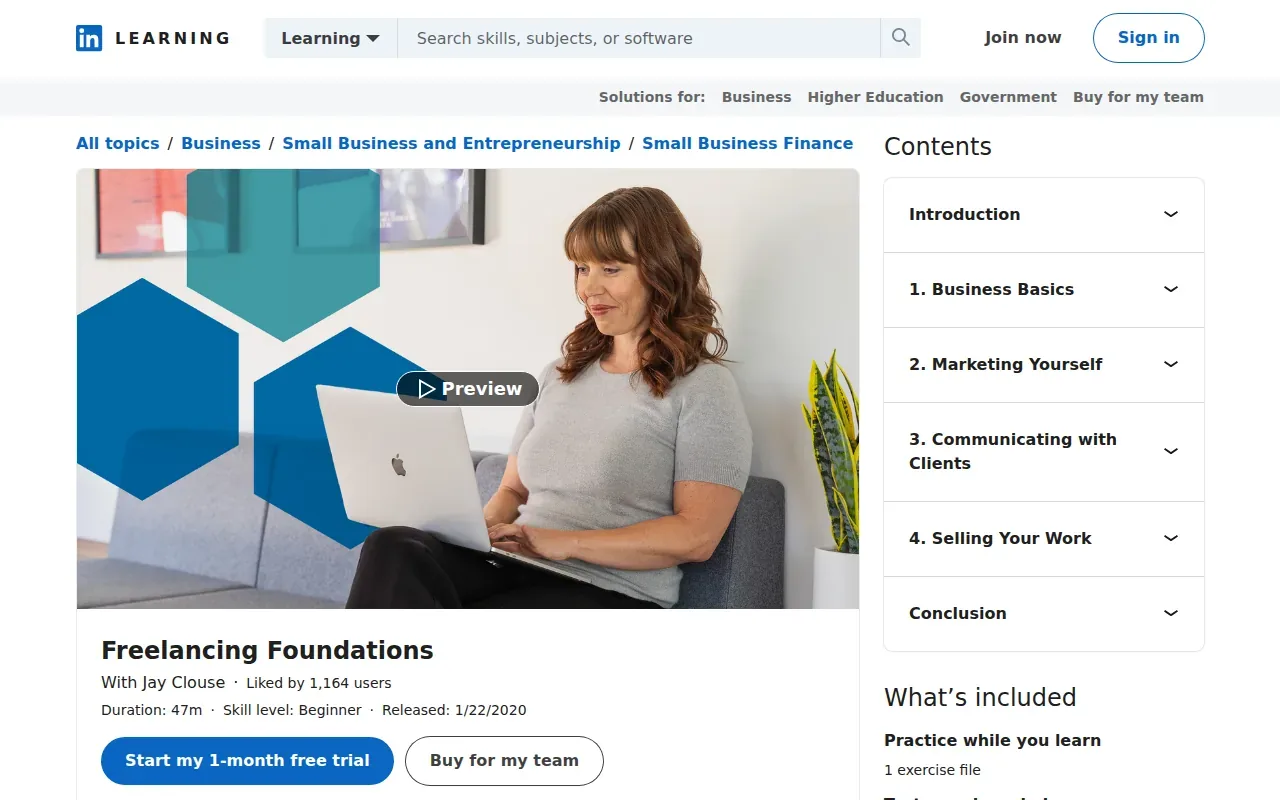
That makes it a useful orientation course for someone considering freelance work. Before taking on a client, think through how you’ll find work, present what you offer, and set a price.
Imagine you have a first client meeting next week. Before work starts, clarify the scope, responsibilities, and payment terms. A contract sets agreed terms; an invoice asks for payment. Knowing those are separate tasks can prevent the awkward scramble of figuring them out after a project begins.
Before enrolling, review the current course details and any access terms for your account.
Its limit is depth. A course can introduce core topics, but it can’t replace tailored advice on legal or tax questions. Use it to build a checklist, then verify local requirements with a qualified source when your situation calls for it.
Best fit: New freelancers who want an overview of day-to-day business tasks before taking on more clients.
4. Freelancing and Consulting in User Experience by LinkedIn Learning
This LinkedIn Learning course is aimed at UX professionals who want to work independently or consult. It makes more sense for someone with a user-experience skill set than for a freelancer seeking broad business basics.
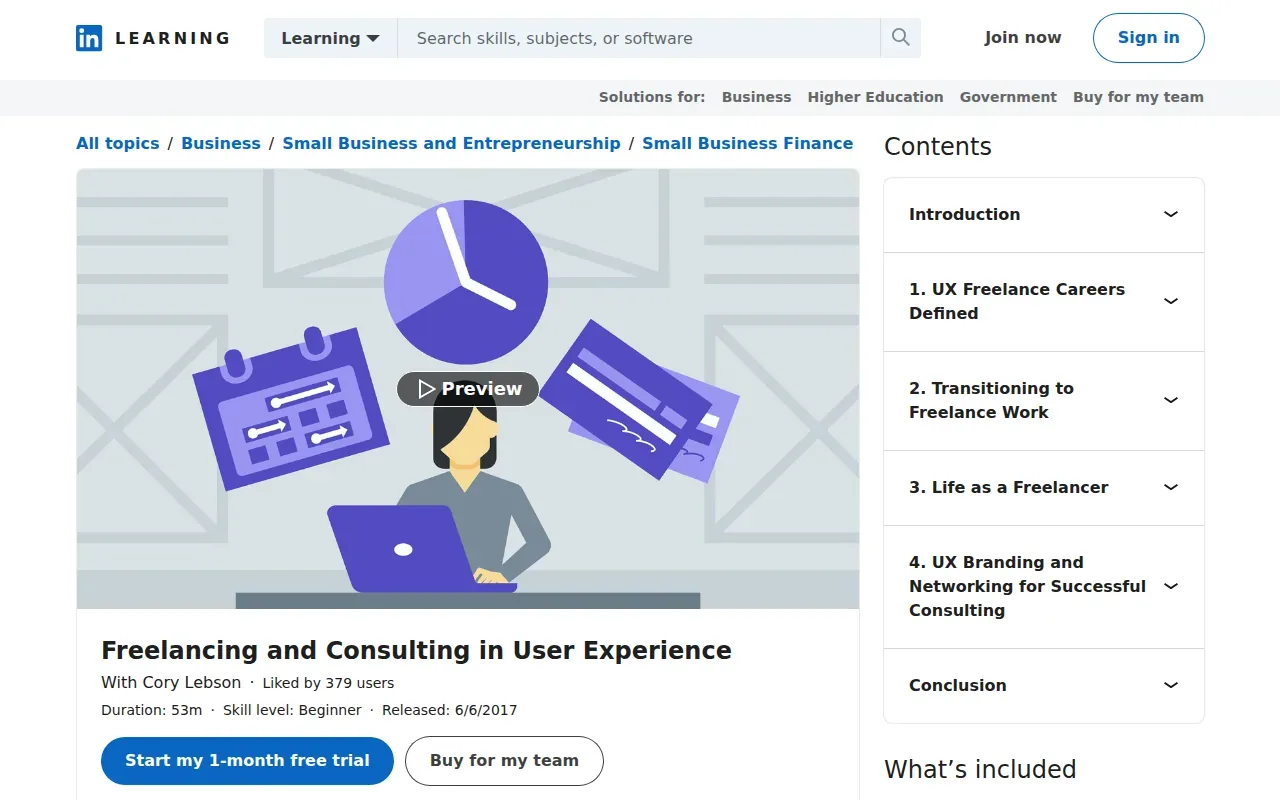
The course explores life as a UX freelancer and offers tips for maintaining a successful independent UX career. It is a specialist choice for professionals interested in working independently in this field.
For a UX freelancer, a short post explaining a design choice or a usability issue can give a prospective client something specific to review beyond a job title. This doesn’t need to become a full content-marketing plan.
A certificate can document course completion, but it alone doesn’t show how you solve a client problem. Pair it with work samples or a clear explanation of your role in a project.
Check the course page for the current length, price and full syllabus before enrolling, especially if you need lessons on contracts, rates, or invoicing. This title is a specialist choice, not a general-purpose introduction.
Best fit: UX designers and consultants who want training framed around independent UX work and professional visibility.
5. Introduction to Dynamics of Freelancing by Alison
Introduction to Dynamics of Freelancing is a general course option for people exploring freelance work. Alison’s course page is the place to confirm its current lesson details, assessment, and certificate terms before you decide.
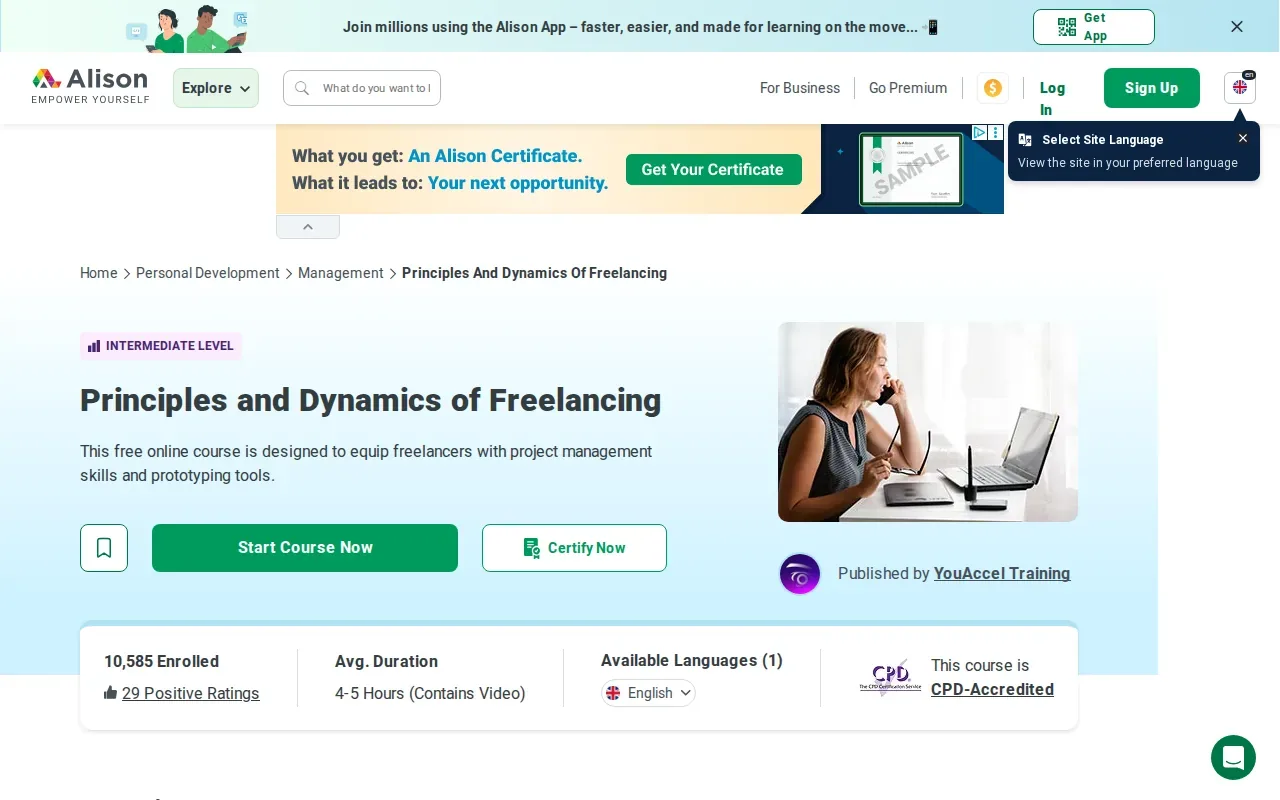
A course on freelance dynamics may be most useful at the exploration stage, when you need to learn what independent work involves before building a service offer. Use the course page to check whether the syllabus touches on client outreach, pricing, business setup, and payment. If those topics aren’t there, you may need a second course with a clearer focus.
For a freelancer, the hard part is often the handoff between learning and action. A lesson about clients is easier to use when you finish with a draft offer or a list of likely prospects. If the course is mostly theory, set a small task for yourself after each session, such as writing a short service description or preparing questions for a first client call.
Broad introductory training can help you understand the work, while a focused course may be better once you know your service.
Best fit: Someone curious about freelancing who wants an introductory course, provided the current course page confirms the format and outcomes they need.
6. Building Your Freelancing Career by Coursera
Building Your Freelancing Career is a better fit for someone who wants to build a full business plan after working through earlier courses.
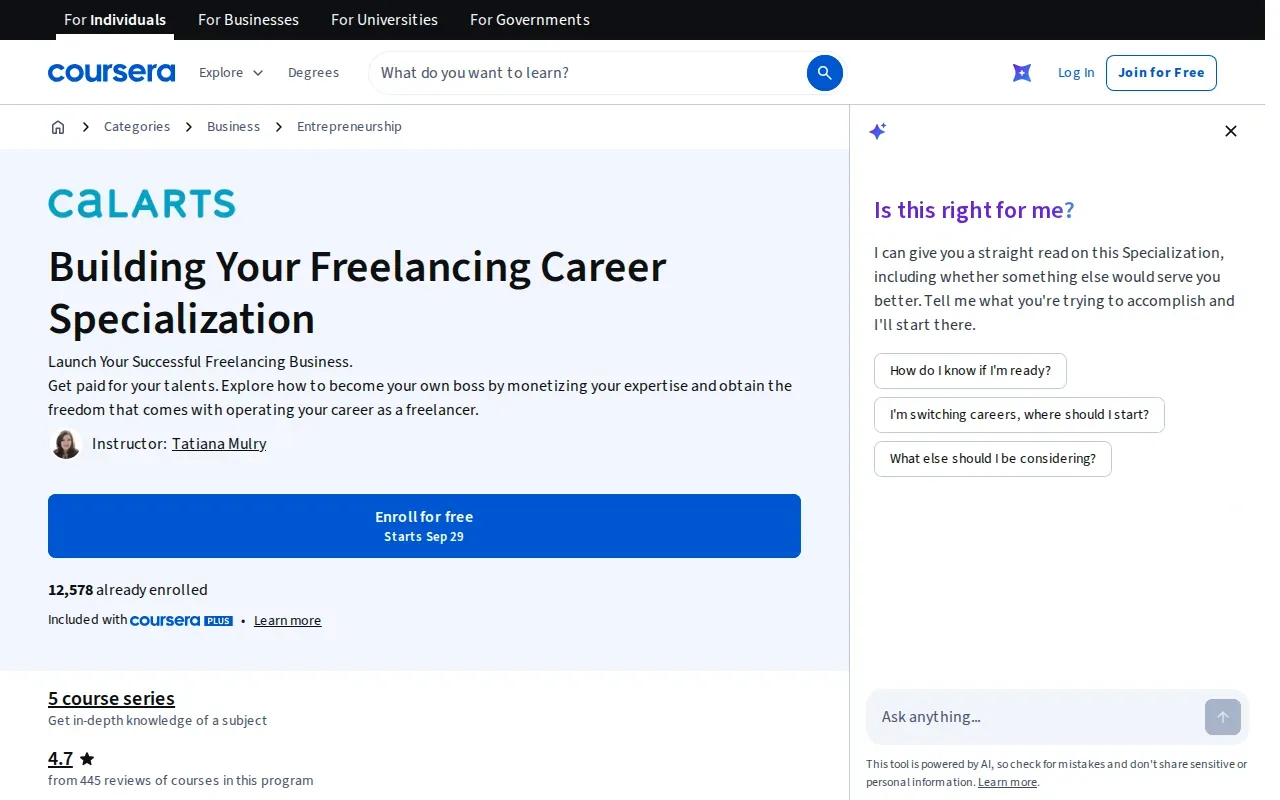
The capstone asks learners to bring earlier work into a plan for a freelance business. The listed work includes a business plan, brand, and financial model. Learners can submit the plan for peer review as part of completing the specialization.
The full specialization covers a wider path. Its earlier courses address business values and market position, budgets and pricing, a public-facing portfolio, and legal topics such as taxes, intellectual property, and contracts. That sequence links the offer to how a freelancer finds and manages work. It also speaks to staying motivated and managing business operations through lean periods.
This makes the program useful for a person who wants structure rather than a single narrow lesson. A beginner could use its assignments to test a business idea before relying on it for income. Someone already freelancing could use the plan to review rates, boundaries, or how they present their work.
The full specialization isn’t described as free for general enrollment, so check the current price and terms before subscribing.
Best fit: Beginners who want a structured business-planning path, or working freelancers who need to put their offer and finances on paper.
7. The Freelance Business Bootcamp by The Futur
The Freelance Business Bootcamp is associated with The Futur, an online education platform for creative professionals. It may suit a creative freelancer looking for business-focused learning. Confirm its full curriculum and enrollment terms before you sign up.
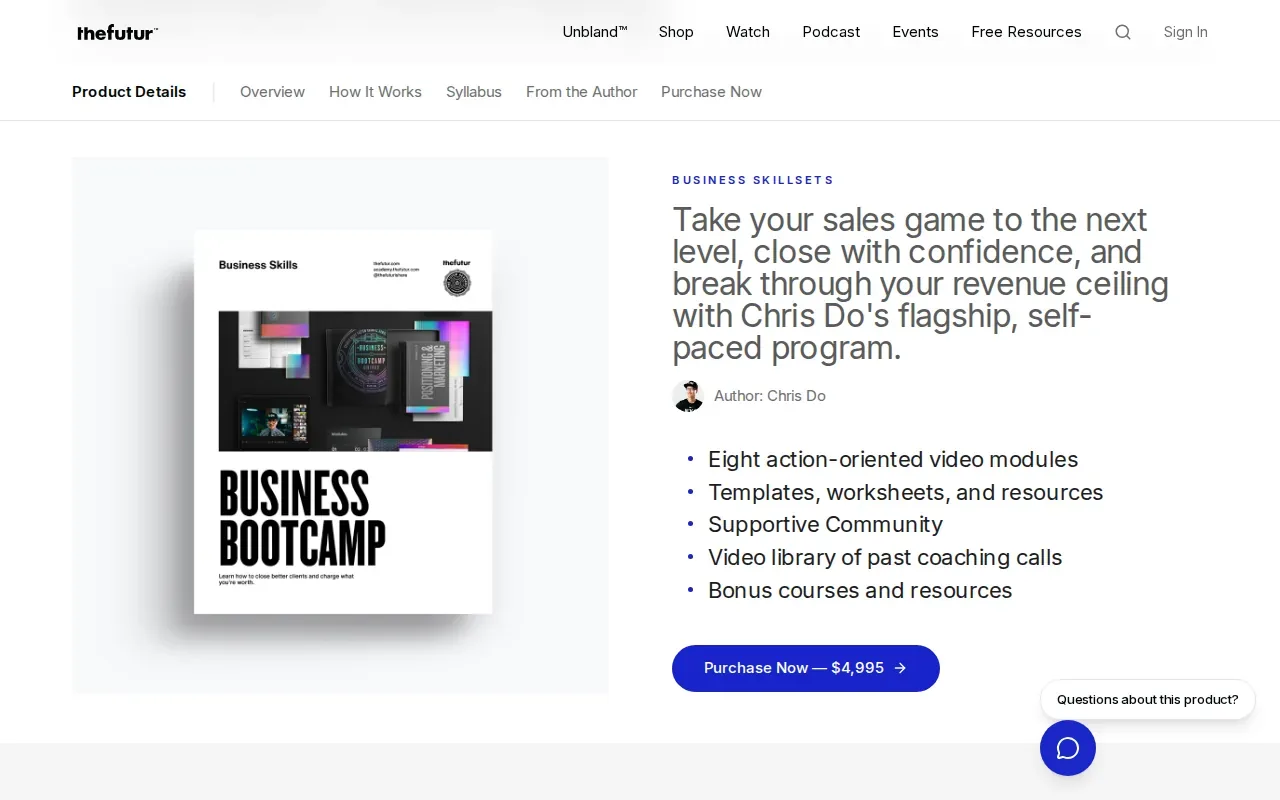
The Futur is an online education platform with courses, coaching, and community to help creative professionals build personal brands. That broad setting may appeal to a designer or other creative who wants more than lessons alone. Still, don’t assume every course includes coaching or community access. Confirm what this specific bootcamp includes.
Before enrolling, check the syllabus for the work you need to do now. If your immediate problem is landing a first client, look for clear lessons on outreach or proposals. If you’re already booked but earning too little, check whether the course addresses pricing and scope. If your portfolio is weak, find out whether you’ll leave with a work sample or simply watch instruction.
Check the bootcamp’s current price, duration, certificate, and teaching format on its course page before comparing it with a shorter course or a larger program.
Best fit: Creative professionals who want to investigate business training from a platform that also offers courses, coaching, and community. Verify the specific bootcamp contents first.
8. The Copywriting Course
The Copywriting Course is the narrowest skill-focused option on this list by name.
Copywriting means writing intended to prompt a reader to take an action, such as asking for information or making a purchase. A copywriting class can help you build the craft behind an offer, but freelance work also calls for client-facing skills. Look for lessons on briefing, revisions, deadlines, and how to show samples, not only writing techniques.
Before paying, confirm who teaches the course and what you make while taking it. A strong fit for a new writer would leave room to practice a clear deliverable, such as a landing-page draft or a short email. Ask whether feedback is included, whether lessons are recorded, and whether the certificate is a completion record or a tested credential.
Don’t treat the word “course” as proof of current quality or fit. Check the provider’s current course page and compare it with a writing-specific training path before enrolling.
Writers who want to compare a wider set of options can use DiSousa’s freelance writing course comparison to look at training tied to that work.
Best fit: A prospective freelance writer who wants copywriting as a service and can verify that the course includes the practice and feedback they need.
How to Choose a Freelancing Course
Pick the course that fills your next skill gap, not the one with the boldest income claim. A course should help you take a specific next step, such as writing a proposal or setting a rate.
- Match the topic to your service. Choose marketplace sales training for a Fiverr plan, UX consulting material for UX work, or writing practice for copywriting.
- Check the format. Confirm whether it’s video, reading, assignments, peer review, or coaching. Don’t assume a platform-wide feature comes with one course.
- Check the price at checkout. Prices can change, and not all enrollment choices include a certificate.
- Read the certificate terms. Find out whether it records course completion, requires an assessment, or can be shared on a professional profile.
- Look for a useful work product. A proposal draft, business plan, portfolio sample, or rate model gives you something to refine after class.
- Make space for client work. Lessons alone don’t land clients. Set aside time to contact prospects or apply for jobs while you study.
First decide what needs work: your skill, your offer, or your client pipeline. Then choose training that addresses that gap directly. If you’re considering email as part of your freelance service, compare email marketing course options rather than relying on a broad business course to cover it in depth.
Freelancing Course FAQ
Which freelancing course is best for beginners?
Freelancing Foundations by LinkedIn Learning covers basic freelance business topics. Building Your Freelancing Career is another option. Compare the time commitment and current certificate terms before choosing.
Can I learn freelancing for free?
You may be able to start some courses through trials or no-certificate enrollment options, but availability depends on the course and account. Check the enrollment page for the full cost, trial end date, and whether lessons or certificates require payment.
Do freelance courses give you a certificate?
Some do, but certificate access and terms vary by provider and enrollment type. LinkedIn Learning describes shareable certificates for its listed courses. A certificate records learning; it doesn’t prove that you can deliver client work. Pair it with a portfolio sample.
Will a freelancing course help me get my first client?
A freelancing course can teach steps that support a first client search, such as creating an offer or proposal, but taking a course can’t guarantee paid work. Choose lessons that match your client route. Marketplace sellers need a strong service listing, while direct outreach calls for a clear pitch and a relevant sample.
What should I learn before setting freelance rates?
Learn what work your service includes, how long delivery takes, and what the client will receive. A course can introduce pricing, but rates depend on the service and the work agreed with each client. Put the scope in writing and review it before sending a proposal. Don’t set a rate from an earnings promise in course marketing.
Is DiSousa itself a freelancing course?
No. DiSousa is a marketing education site that compares courses and publishes material on digital marketing and online business systems. It’s useful for researching a learning path, especially around marketing-related freelance work, but it doesn’t award a course certificate. Choose a separate provider if you need lessons or a credential.
Conclusion
For broad beginner basics, start by checking Freelancing Foundations. Choose a specialist course when you already know your service, and review the current price and certificate terms before enrolling. If you need help comparing marketing-related learning paths, begin with DiSousa and choose one skill to study next. Any course can support your work, but it can’t promise an income or replace client practice.
Income disclaimer: Freelance income varies by skill, experience, offer, client demand, and time spent finding work. No course or resource can guarantee earnings.
