

A copywriting course for beginners should help you understand persuasive writing and give you a reason to practice. These five picks have different aims, from conversion copy to marketing materials and business foundations.
We analyzed 38 comments and questions from YouTube and Quora about copywriting courses for beginners and found that 29% mentioned free, ad-free, concise content.
DiSousa compares course options for people building skills for freelance work or an online business. Use this shortlist to match the course’s focus to the work you want to write.
- Copy School by Copyhackers is the clearest fit here for conversion copywriting, with a library of more than 20 courses.
- The Copywriting Course by Kopywriting Kourse is a multi-part program built around writing techniques and formulas.
- Copy Posse Launch Pad and The Copywriter Accelerator both speak to skill-building with support or business foundations.
- Copywriting Course by The Writers’ College focuses on marketing materials for clients.
- Before enrolling, confirm the current curriculum, format, cost, and support for the specific course you want.
1. Copy School by Copyhackers: A broad conversion-copywriting course library
Copy School by Copyhackers is a library of more than 20 courses centered on conversion copywriting. It’s the strongest match for a beginner who wants to study how copy supports a reader’s next action, especially on web pages and in email.
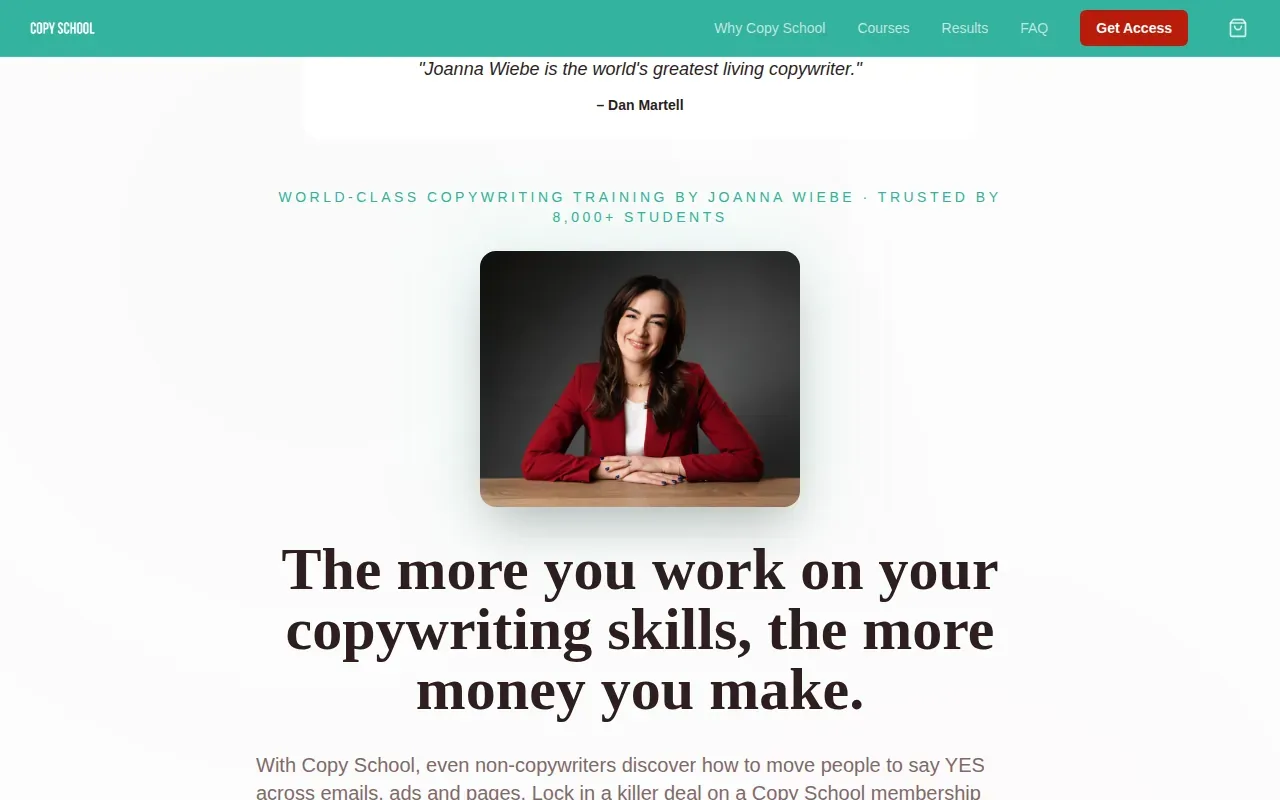
The available course description says the library comes from the inventor of conversion copywriting and notes that more than 8,000 students have joined. It also names Amazon and Shopify among brands that trust the work. Those are details about the provider’s own positioning, not a promise that a learner will get a job or achieve a particular result.
For a newcomer, a broad library can be useful when the goal is to compare copy types instead of learning one narrow format. Before enrolling, find the specific course that matches your first project. A landing page needs different decisions than an email sequence. A set of lessons is easier to use when you know which deliverable you want to write.
One useful way to test a lesson is to apply it to a real page. Pick a business you know, identify who the page addresses, then note the promise and the next action it asks for. You don’t need to claim that your draft improved sales. The exercise is to explain why each part of the copy is there.
This option is best for learners who want conversion copywriting as their main subject. If your immediate goal is to write general promotional material for a range of clients, compare its course scope with the broader marketing focus of the fifth pick.
2. The Copywriting Course by Kopywriting Kourse: Formula-led lessons and writing techniques
The Copywriting Course by Kopywriting Kourse is a multi-part course about the mental approaches, techniques, and formulas used to develop sales copy. It may suit a beginner who wants a structured way to think through a draft instead of facing a blank page.
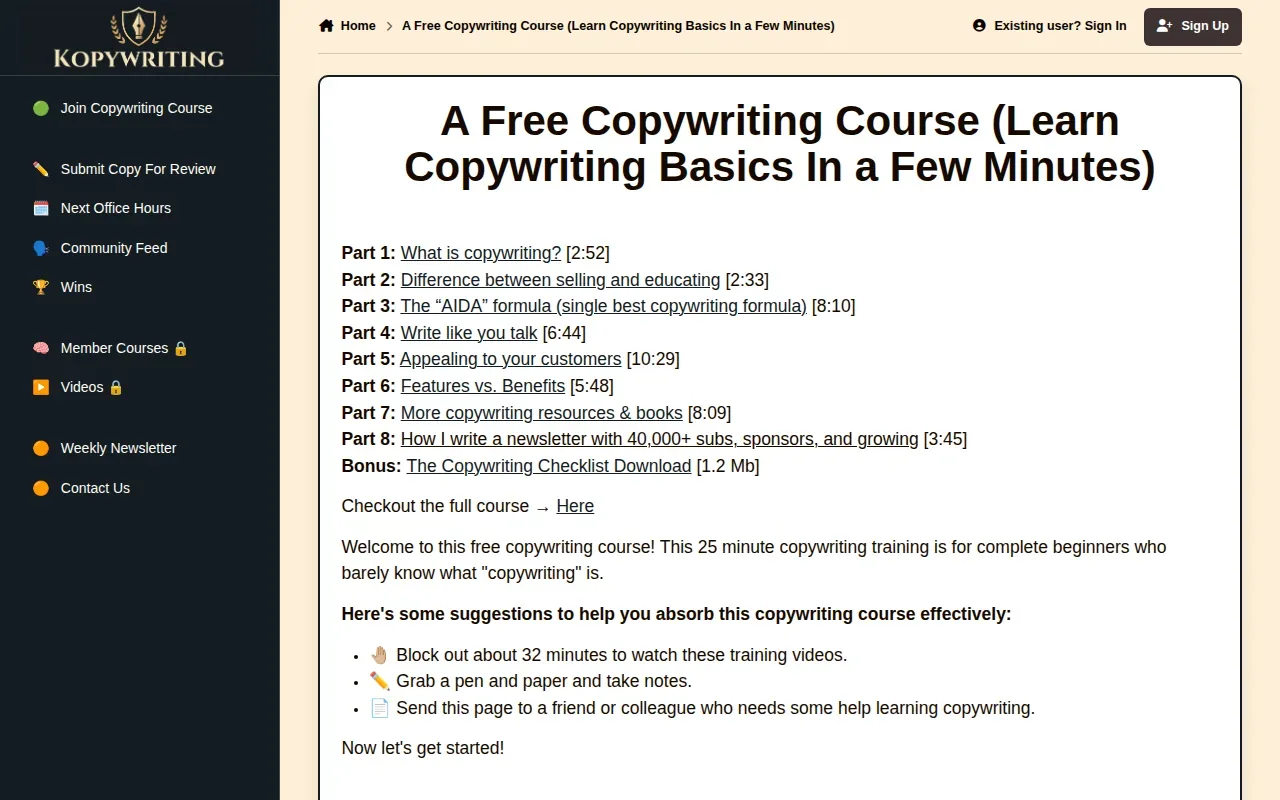
Formulas are useful as starting points. They give each part of a message a job. For example, a simple structure can help you open with a reader’s concern, explain why it matters, then present a next step. A formula shouldn’t replace research into the audience or the offer. It’s a frame for your reasoning, not a fill-in-the-blank answer.
Before enrolling, check which kinds of copy the current course teaches and whether you’ll write during the lessons. A formula has more value when you can use it on a page, an email, or an ad, then review the draft for clear claims and a single next action.
Treat the video as one lesson in a larger study plan: watch a segment, pause, and write a short sample using the idea you just learned. Then revise it without looking at the lesson. That second pass helps you see whether you understand the structure or are only copying its labels.
The provider’s course description emphasizes techniques and formulas for high-selling copy. It does not establish that a formula will produce a particular result for every product or audience. For a beginner, the useful test is whether a lesson helps you make a clearer argument for one specific reader.
If formulas are new to you, start with one. Add another only after you can explain when the first one fits. Learning a short set well is more useful than collecting acronyms without knowing what each paragraph needs to do.
3. Copy Posse Launch Pad: A structured option with a stated support focus
Copy Posse Launch Pad is presented as a place to learn copywriting skills with support from people who do the work. It may fit a beginner who wants instruction to feel connected to a learning group, rather than studying alone.
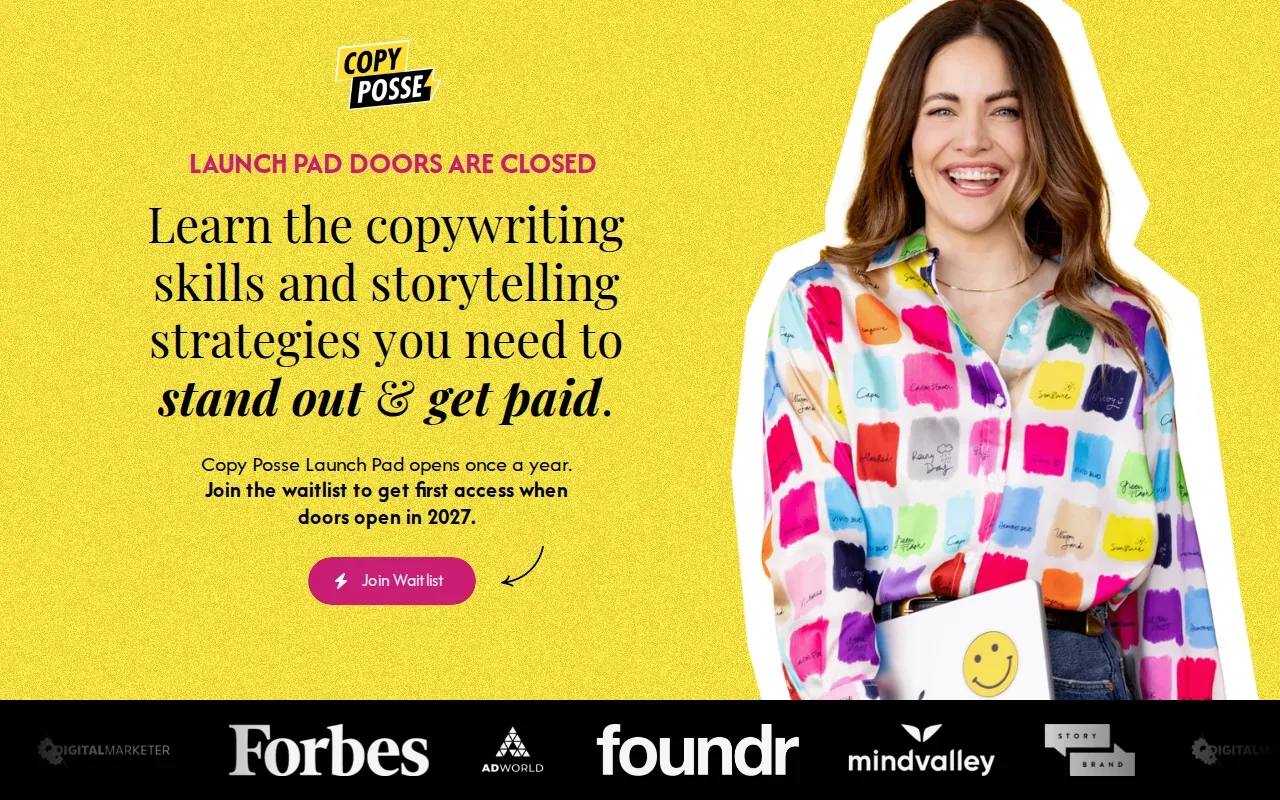
Support can mean different things in different programs. Check the current course details to see what it includes, such as peer discussion, feedback, or live sessions. Don’t assume the word support means individual edits or direct access to an instructor. Match the stated support to the kind you’d actually use.
Imagine you’ve drafted a short product email. Helpful feedback should let you identify a specific change: perhaps the opening takes too long to reach the reader’s concern, or the call to action asks for two things at once. General praise can feel good, but precise notes give you a next edit.
Before choosing this course, ask yourself how you learn best. If you keep going when others can discuss the work with you, a support-focused option may be appealing. If you prefer quiet, independent study, compare the lesson format and planned interaction with your own habits.
Use any community as a place to ask focused questions. Share a short draft and explain the audience, offer, and goal. That gives other learners a fair chance to respond to the writing rather than guess what the copy is meant to do.
Copy Posse Launch Pad’s support focus is its main point of difference in this shortlist. Check the current program description for the exact form of that support before you commit your time.
4. The Copywriter Accelerator: A business-building option for newer copywriters
The Copywriter Accelerator by The Copywriter Club is a three-month program for building a business foundation, including for newer copywriters. It may suit someone who has started learning the craft and now wants a course aimed at the business side of copywriting.
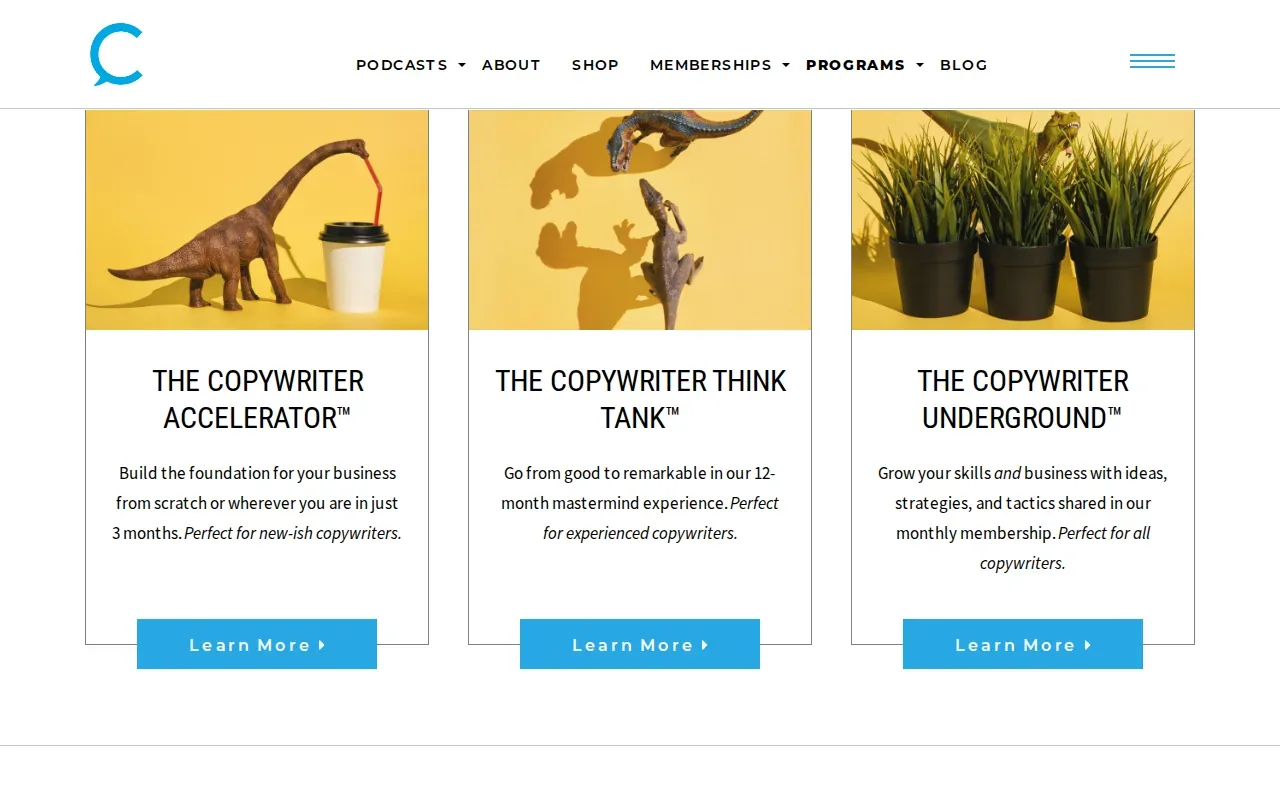
That focus matters because knowing how to draft copy and knowing how to present a service are separate skills. A new freelancer may need to explain what a project includes, set a clear scope, and respond to revision requests. A business-focused program could be a better fit than a course focused only on writing technique, if those are the gaps you want to address.
The stated timeline is three months. Use that fact as a planning point, not a forecast of when you’ll earn money or feel ready for every client. Before you enroll, check the current schedule and decide how much time you can set aside for the work alongside other responsibilities.
A small business exercise can make the learning easier to assess. Draft a short service description that names the kind of copy you want to write, who it helps, and what the client receives. Then check whether the course’s current content addresses the parts you found hard to explain.
This pick is positioned for newer writers who want to build a business foundation. If you have no copywriting practice yet, check whether its current lessons also address the writing basics you need, rather than assuming a business program covers every part of the craft.
5. Copywriting Course by The Writers’ College: A course positioned around client-ready marketing materials
Copywriting Course by The Writers’ College trains learners to write marketing materials for clients around the globe. It may suit a beginner who wants to build skills around the kinds of materials a client might ask a copywriter to prepare.
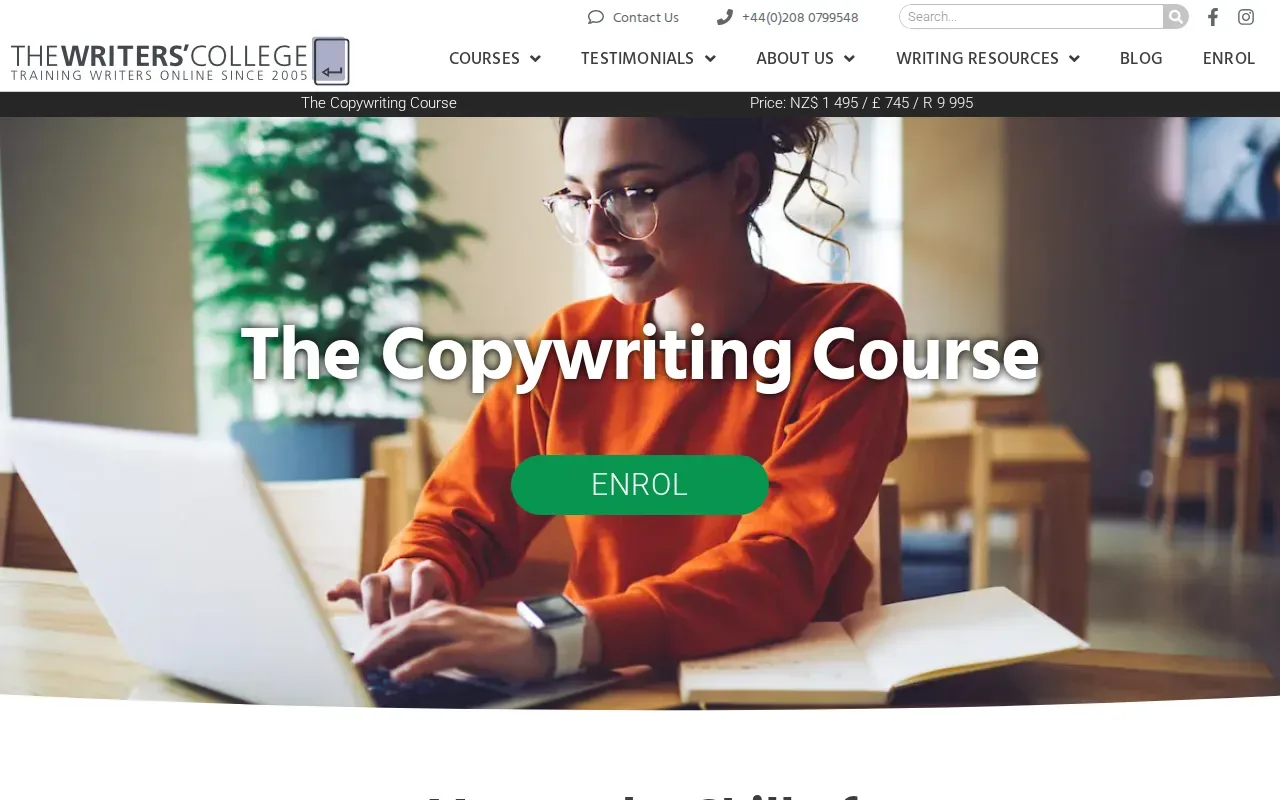
The provider’s description connects the course with upskilling and working as a copywriter. That makes the intended direction easy to understand, but it’s still worth checking the actual syllabus. Look for the specific formats you want to write, such as a web page, an email, or a promotional message. A course title alone can’t tell you which assignments you’ll complete.
Before enrolling, consider what “client-ready” means for your first goal. You might want to leave with a clear sample, a repeatable way to revise it, or a better grasp of how to respond to a brief. These are useful learning targets, but don’t assume the course guarantees client work or income.
Try a basic brief before you choose. Write down the audience, what the offer does, the main concern it answers, and the action the reader should take. If the course curriculum shows how learners move from those facts to a finished piece, you can judge whether its approach matches your needs.
This option’s focus is marketing material for clients. Compare that with your planned work. If you want conversion-focused web copy, weigh it against Copy School by Copyhackers. If your main concern is how to start a freelance business, compare it with The Copywriter Accelerator.
For more help matching writing training to freelance goals, DiSousa’s freelance copywriting course comparison looks at both skill-building and finding clients.
Compare the five copywriting courses at a glance
This table compares each course by its focus, the learner it may suit, and a useful point to check before enrolling. It doesn’t assume that a course is free or paid. Confirm current cost and format on the relevant enrollment page.
| Course | Stated focus | May suit | Check before enrolling |
|---|---|---|---|
| Copy School by Copyhackers | More than 20 courses focused on conversion copywriting | Learners focused on conversion copy | Which course matches your first writing project |
| The Copywriting Course by Kopywriting Kourse | Multi-part lessons on writing techniques and formulas | Learners who want a formula-led approach | Which formats and exercises the current course includes |
| Copy Posse Launch Pad | Copywriting skills with a stated support focus | Learners who value support while studying | What type of support the program provides |
| The Copywriter Accelerator | Business foundations, with a stated three-month timeline | Newer copywriters working on business basics | Whether the course also covers the writing skills you need |
| Copywriting Course by The Writers’ College | Marketing materials for clients | Learners focused on client work | Which client deliverables appear in the curriculum |
For a wider view of course types and skill levels, DiSousa’s copywriting course roundup compares additional training choices. Use this list for the five options named here, then check the current course page for details that affect your decision.
A beginner’s checklist for comparing course fit
A good course fit depends on what you want to write next. Before you enroll, compare the curriculum, teaching format, cost, and support with that goal.
- Curriculum: Look for lesson topics that match a real task you want to do. If you want to write a landing page, a syllabus about unrelated formats may not help with that first project.
- Practice: Check whether you’ll write original work during the course. Watching lessons can introduce an idea, but a draft shows what you can apply.
- Feedback: Find out whether feedback is part of the program and what form it takes. If it matters to you, check who reviews the work and whether feedback is individual or group-based.
- Format and pace: Decide whether recorded lessons, scheduled sessions, or a mix would fit your week. Confirm the current course format before paying.
- Cost: Check the full current cost and any terms that apply to your enrollment. Compare that with the number of lessons you plan to use and the kind of work you want to produce.
- Instructor background: Review the instructor’s work history and the subject they teach. A course about conversion copywriting should be judged against that skill, not only against broad claims about marketing.
- Prerequisites: Look for any stated experience or required earlier lessons. If you’re starting from scratch, choose a course whose opening lessons make sense to you.
- Outcomes: Be precise about what completion means. A finished sample or a certificate is not the same as paid client work.
Review the curriculum and the instructor’s background when evaluating a course. Treat income claims with care. A course can teach skills, but your results depend on what you learn, practice, and do with those skills.
Pro Tips: Turn course lessons into practice, proof, and client readiness
Course lessons work best when you use them to make and improve a piece of writing. Keep your practice small enough to finish, then save the result and the thinking behind it.
Use one framework to get started
A planning structure can give a draft four jobs: earn attention, give the reader a reason to care, show the value of the offer, and make the next action clear. Use it as a planning aid, not a claim that every reader follows the same path.
PAS is another common structure: Problem, Agitation, Solution. Start with a problem the audience recognizes, explain the cost or frustration without overstating it, then present a relevant solution. The framework should help you organize a true message. It shouldn’t lead you to invent pain or make a claim the product can’t support.
Write a short sample from a clear brief
Pick a product or service you understand. Note the audience and the action you want readers to take. Then write a short email or page section. Keep the central promise clear, and remove any sentence that doesn’t help explain the offer or move the reader toward that action.
Use headline formulas as prompts, not rules. A useful headline tells readers what the piece is about or gives them a reason to continue. Draft several versions, then choose the one that is clearest and most accurate. Avoid claims about savings, outcomes, or urgency unless the facts support them.
Build proof without pretending a sample is client work
Label practice pieces honestly. If you wrote a sample for a made-up business, say it’s a sample. If you revise a public page for practice, don’t suggest the business hired you. You can still show your thinking by including the brief, your draft, and a short note about why you made each choice.
When you ask for feedback, give the reviewer context. Explain who the copy is for and what it should help the reader do. Ask one clear question, such as whether the opening makes the offer understandable. Focused feedback is easier to use than a request to “make it better.”
Use AI as a helper, then check the work
An AI writing tool can help you outline questions, suggest alternate headlines, or flag a sentence that sounds vague. It can’t confirm facts about a product unless you provide accurate material and check the result. Don’t paste confidential client details into a tool unless you have permission and understand how that tool handles information.
Keep your own judgment in the loop. Compare any suggestion with the brief and the source facts. If the tool adds a benefit, proof point, or guarantee that wasn’t in the material, remove it. Your job is to make the message clear without making it less truthful.
Set a routine you can repeat
Choose a small block of time for practice and a defined task for each session. One day, study a piece of copy and mark its structure. Next, write a new draft with a different offer. Later, revise it for clarity. A simple schedule lowers the friction of starting because you don’t have to choose a new project every time.
Keep a swipe file of examples you’re allowed to save. Add a note about what each example does: how it opens, what proof it uses, or how it asks for action. Don’t copy someone else’s wording into client work. Study the choices, then write original copy for the audience in front of you.
Start a small path toward client work
First, choose one kind of deliverable to practice. Then make a sample and ask for specific feedback. Once you can explain your choices, prepare a short description of the work you can take on. Your first outreach should be honest about your experience and clear about what you can deliver.
Don’t use income stories from course marketing as a personal forecast. Results vary, and no course can promise that you’ll find clients or reach a target income. A stronger early goal is to finish a sample you can explain and revise.
Course lesson → short draft → clear feedback → revised sample → honest service description
Use the course to support this work, not replace it. A steady set of small drafts gives you more to review than a folder of lessons you watched once.
Conclusion
Choose the option whose stated focus matches the first kind of copy you want to write. Before enrolling, verify the current curriculum, format, cost, and support. Then start with one short sample and revise it using a lesson from the course. DiSousa’s copywriting practice plan can help you turn study into a repeatable routine.
Income Disclaimer
Copywriting courses can teach skills, but they don’t guarantee clients, earnings, or business success. Your results depend on many factors, including your practice, offer, and ability to find and serve clients.
Frequently Asked Questions
Can I learn copywriting as a complete beginner?
Yes, you can begin without prior copywriting work. Start with a course whose lessons match your current skills, then write short samples as you learn. You don’t need to master every formula before practicing. Focus on one audience, one offer, and one clear action, then revise your draft using feedback.
Are copywriting courses free?
Some copywriting training is free, while other programs charge for lessons or support. The descriptions for the five picks here don’t establish a current price, so check each provider’s enrollment page before making a choice. Compare the full cost with the curriculum and support you’ll use, not just the headline price.
What should a beginner copywriting course teach?
A beginner course should explain audience research, clear offers, persuasive structure, and calls to action. It should also give you a chance to write. If you want a certain kind of work, such as email or web copy, check that the curriculum includes that format and gives you a way to review your draft.
Do I need a certificate to become a copywriter?
No, a certificate isn’t the only way to show what you can do. A clear writing sample can show your thinking and your ability to follow a brief. If a course offers a certificate, check what it represents. A completion record and an assessed qualification are different things.
How do I practice copywriting without clients?
Write sample copy from a simple brief. Choose an audience, describe an offer using accurate facts, and decide what action the reader should take. Label the work as a sample, not paid client work. Ask someone to review one specific part, then revise the draft and keep a note about what changed.
Can AI help me learn copywriting?
AI can suggest outlines or alternate wording, but you still need to check every claim against reliable source material. Use it to question your draft, not to invent product facts or replace audience research. Keep private client information out of tools unless you have permission and understand the tool’s data terms.
Sources and References
- A marketing framework can help organize a message.
