
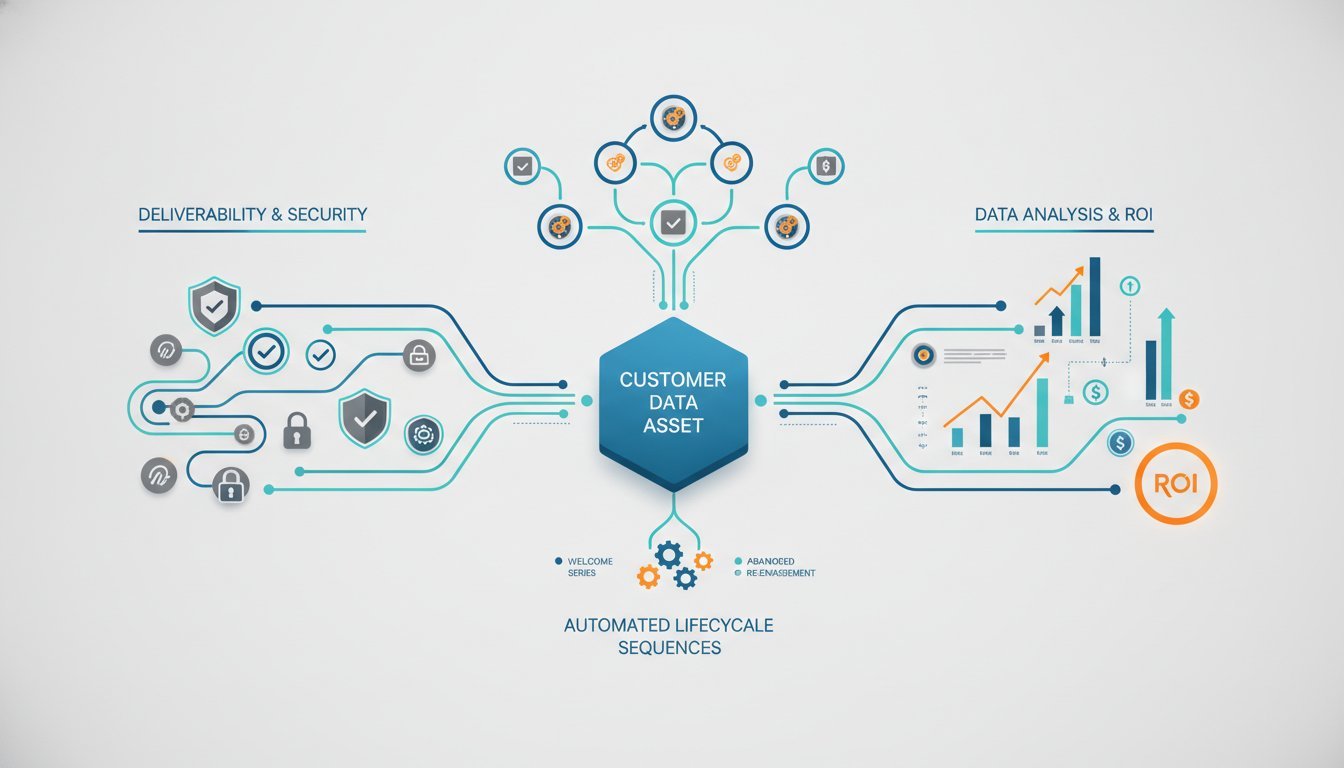
Your email marketing list is probably the most undervalued asset on your balance sheet because you’re treating it like a megaphone instead of an engine. In 2026, the era of “batch and blast” isn’t just ineffective; it’s a liability that actively damages your sender reputation and wastes capital on disengaged contacts. You likely recognize the frustration of watching engagement rates slide while providers like Gmail and Yahoo tighten their technical requirements. It feels like you’re working harder just to stay in the inbox, let alone see a measurable return on your investment.
I’ve put together this briefing to help you shift from basic communication to a high-performance operational framework. You’ll learn how to stabilize your deliverability, repair fragmented automation workflows, and turn your list into a predictable driver of customer retention. We’re going to move past the marketing fluff and look at the technical blueprint required to manage email as a high-yield asset with transparent ROI tracking.
Key Takeaways
- Reframe your list as a performance asset and owned media to gain full control over your distribution logic and revenue potential.
- Secure your infrastructure by implementing SPF, DKIM, and DMARC protocols to meet the rigorous 2026 deliverability standards.
- Replace generic newsletters with automated lifecycle sequences that deliver high-value touchpoints at the most critical stages of the customer journey.
- Focus on click-through and click-to-open rates as your primary success metrics since privacy changes have made traditional open rates unreliable.
- Determine the most efficient way to scale your email marketing operations by comparing the overhead of in-house management against a specialized agency model.
Defining Email Marketing as a Performance Asset
Stop thinking about email as a messaging channel. If you want to see actual growth in 2026, you have to treat email marketing as a high-precision operational system. At its core, this isn’t about “staying in touch” with customers. It’s the strategic deployment of personalized, permission-based communications designed to drive two specific outcomes: retention and revenue. When we manage email correctly, we’re managing a performance asset that appreciates over time as your data matures.
The most critical distinction you need to make is between rented media and owned media. When you run ads on social platforms, you’re renting an audience. You don’t control the distribution logic, the algorithm, or the cost of reach. Email is different. It is the only channel where you own the distribution logic and the direct link to the customer. This control is why the Data and Marketing Association consistently reports an ROI of approximately 3600%. This number persists because the cost of delivery remains low while the precision of the message increases with every data point you collect; for a practical look at an online retail platform that manages a diverse product ecosystem, you can check out SUZANA SHOP.
We’ve moved past the “batch and blast” era. Sending the same generic message to every person on your list is an operational failure that leads to high unsubscribe rates and damaged sender reputations. The new standard is “segment and solve.” We use behavioral data to identify exactly where a contact sits in the customer journey, then we send the specific information they need to solve their current problem. You can learn more about how this fits into a broader strategy in our functional assessment of online marketing services.
The Core Objectives of Modern Email Operations
To run a successful operation, your team must focus on three distinct functional pillars:
- Customer Acquisition: This involves using lead magnets and automated sequences to move cold leads into a qualified state without manual intervention.
- Retention and Loyalty: We maintain brand salience by providing ongoing value. The goal is to keep your brand at the top of their mind without causing “inbox fatigue.”
- Direct Conversion: We use transactional triggers, such as abandoned cart reminders or specific content downloads, to push the user toward a final purchase decision.
Why Email Outperforms Social Media for B2B
In a B2B context, email marketing remains the dominant force for several empirical reasons. First, you have algorithm independence. You don’t have to worry about a platform update suddenly hiding your content from 90% of your followers. Your message lands in the inbox because you’ve maintained the technical protocols to be there.
Second, the data granularity is unmatched. We can track individual click-paths to see exactly what topics a specific prospect cares about. This allows for a level of personalization that social media ads simply can’t replicate at scale. Finally, we must respect the reality of the professional workspace. The inbox is the primary environment where B2B buyers make decisions. It is a focused, task-oriented space, unlike the distracted environment of a social feed.
The Structural Anatomy of a High-Performance Email Ecosystem
Your Email Service Provider (ESP) is the engine of your operation, but your data is the fuel. You can have the most expensive engine in the world, but if the fuel is contaminated, the machine will stall. In 2026, the technical infrastructure behind your email marketing campaigns is non-negotiable. Major providers like Gmail and Yahoo now enforce strict authentication protocols that determine whether your message hits the inbox or the junk folder. If your setup is flawed, even the best copy won’t save your ROI.
We’ve moved past the point where a siloed ESP is acceptable. Your email ecosystem must be integrated with your CRM to create a unified view of the customer. This integration allows you to trigger messages based on actual sales stages or website behavior rather than just time-based intervals. When your data flows freely between systems, you can stop guessing what your audience wants and start responding to what they actually do. If you’re struggling to align these technical layers, we can help you audit your current email marketing infrastructure to ensure everything is connected properly.
Technical Foundations for Deliverability
Success starts with your sender reputation. If you’re moving to a new platform or a dedicated IP, you must follow a strict IP warming schedule. This involves gradually increasing your send volume over several weeks to prove to ISPs that you’re a legitimate sender. To stay out of the “Promotions” tab, keep your HTML code clean and avoid excessive image-to-text ratios. DMARC is the primary protocol for preventing domain spoofing by telling receiving servers how to handle mail that fails authentication. Without SPF, DKIM, and DMARC properly configured, you’re essentially flying blind.
Database Management and Growth
List hygiene is now more important than list size. A list of 50,000 disengaged contacts is a financial and operational liability that drags down your deliverability. It’s far better to have 5,000 active, high-intent subscribers. Focus on collecting “Zero-Party Data” by asking users about their preferences directly during the signup process. This allows for immediate personalization. Never buy a database; it is the fastest way to get your domain blacklisted. Instead, implement a standard procedure for list scrubbing that automatically removes or re-engages subscribers who haven’t interacted with your content in the last six months.
Lifecycle Management: Beyond the Basic Newsletter
Your audience doesn’t want another newsletter. They want solutions to their specific problems at the exact moment those problems arise. In a high-performance email marketing operation, we shift the focus from broad broadcasts to lifecycle touchpoints. This means every email sent is a deliberate response to a user’s stage in the journey, rather than a generic update sent to everyone on a Tuesday morning.
I’ve found that the Welcome Sequence is the most critical asset in your journey. This is where you establish the “rules of engagement” for your relationship. Data shows that welcome emails have significantly higher engagement rates than standard campaigns because the user’s intent is at its peak. If you’re only sending a single “thanks for signing up” message, you’re missing an opportunity to qualify the lead and move them toward a conversion. See our Lead Nurturing Email Campaigns for deeper lifecycle strategies.
We must also distinguish between transactional and marketing communications. Transactional emails are functional; they’re triggered by a specific action like a password reset or a purchase receipt. Marketing emails are promotional or educational. In many jurisdictions, transactional emails are exempt from certain opt-out requirements, but you can’t use them to sneak in marketing content. Keeping these systems separate ensures your critical operational mail always reaches the inbox, even if a user has opted out of your promotional list.
Automation Frameworks that Drive Revenue
Automation is the mechanism that allows your strategy to scale. We use behavioral triggers like site visits or content downloads to fire off messages. These triggers ensure the message is relevant to the recipient’s current intent. Drip campaigns then take over to provide educational touchpoints. This approach effectively does the heavy lifting for your sales team. Refer to our Customer Win-Back Email Campaigns for churn reduction.
Segmentation Strategy for B2B Operations
Effective B2B email marketing requires firmographic data. You shouldn’t send the same message to a freelancer that you send to a CTO. Their operational pains are different. We also segment by engagement level to protect sender reputation. The “Personalization Paradox” shows that simple name tags aren’t enough anymore. Modern personalization is about context. It’s about sending a use case that mirrors the recipient’s specific reality.
Data-Driven Optimization: Metrics That Drive Decision Making
If you’re still using open rates as your primary success metric, you’re looking at a distorted map. Since the implementation of Apple’s Mail Privacy Protection (MPP) and similar privacy updates, open rates have become a vanity metric. These systems often pre-load images in the background, which triggers a “false open” that doesn’t reflect actual human engagement. To run a high-performance email marketing operation in 2026, we have to look deeper into the funnel.
We focus on Click-Through Rate (CTR) and Click-to-Open Rate (CTOR) because they represent verified intent. CTR tells you what percentage of your total list took action, while CTOR reveals how effective your content was for the people who actually saw it. Beyond these, you must implement robust conversion tracking. By using UTM parameters and connecting your ESP to your CRM, you can trace a specific email click directly to a bottom-line transaction. This empirical link is the only way to justify your budget and prove the ROI of your efforts.
A/B testing is our primary tool for incremental gains. We don’t guess which subject line works; we test them on a small segment before rolling out the winner to the full list. This tactical approach applies to CTA placement, button colors, and even the “from” name. If you’re ready to move beyond basic metrics, we can provide a specialized email marketing assessment to help you identify where your current strategy is leaking revenue.
The Unfiltered Truth About Common Failures
Most campaigns fail because of a lack of relevance and excessive frequency. If you send too many messages that don’t solve a specific problem for the recipient, they’ll stop engaging. This creates “zombie subscribers,” who are contacts that stay on your list but never interact. These inactive users are dangerous because ISPs like Gmail interpret low engagement as a sign of spam, which eventually pushes your mail into the junk folder. Review our Functional Assessment of Online Marketing Services for broader context on how to avoid these operational pitfalls.
Advanced Optimization Protocols
High-volume senders should utilize multivariate testing to analyze several variables simultaneously. This allows you to optimize for mobile-first consumption, which is the 2026 standard for B2B professionals who manage their inbox on the move. While CTR measures the effectiveness of your reach, CTOR is a superior indicator of content quality because it isolates the percentage of readers who found your message compelling enough to take action after opening it. Every piece of data should lead to a specific operational adjustment; otherwise, you’re just collecting numbers for the sake of it.
Executing Your Strategy: Internal vs. Managed Operations
Deciding whether to build an in-house team or partner with an agency is a logistical decision that impacts your bottom line. An internal team offers proximity, but the overhead is often higher than realized. Salaries aren’t your only cost. You’re also paying for specialized tool stacks, often researched via SuggestMeTech for the latest comparisons, ongoing training on 2026 deliverability standards, and the management time required to keep the operation running smoothly. A managed model provides immediate access to a technical team that already understands the distribution logic we’ve discussed throughout this briefing.
At Disousa, we focus on the entire operational lifecycle. We don’t just send messages; we integrate your strategy with automation and performance tracking to ensure every send is a measurable event. If you are evaluating your options, consult our strategic framework for performance growth to understand the criteria that matter for high-stakes operations. Your first step should be a thorough audit of your current infrastructure to ensure you’re ready for the technical requirements of the coming year.
Standard Procedures for Campaign Deployment
A campaign shouldn’t go live without a rigorous pre-flight checklist. Mistakes in email marketing are expensive because you can’t “unsend” a broken link once it’s in 50,000 inboxes. We follow a strict protocol before any deployment to mitigate risk:
- Verification of all destination URLs and UTM parameters.
- Rendering tests across major clients like Outlook, Gmail, and Apple Mail.
- Validation of dynamic content and personalization tags.
- Check for dark mode compatibility and image alt-text.
After deployment, we move immediately into post-campaign analysis. We don’t just look at who clicked; we look at where the friction occurred in the conversion path. This data becomes the foundation for your next iteration, allowing for the incremental gains that drive long-term ROI. You can follow our functional assessment to see how we structure these performance audits.
Next Steps for Performance Growth
Don’t try to fix every metric at once. Define your primary KPI for the next 90 days. If your deliverability is sagging, focus on list hygiene and technical authentication. If your engagement is low, focus on behavioral triggers. I recommend allocating your budget to technical infrastructure and data hygiene before you spend a dollar on new creative content. Clean data and a solid technical foundation will always outperform flashy design on a broken system. If you’re ready to stop managing the technical friction yourself, contact Disousa to optimize your email operations.
Transitioning to High-Performance Email Operations
Transitioning your strategy to a high-performance model requires a fundamental shift in how you view your list. You shouldn’t treat your subscribers like a generic audience. High-performance operations require a technical ecosystem where data hygiene and lifecycle automation drive every decision. By treating email marketing as a core operational system rather than a creative project, you protect your sender reputation and ensure long-term ROI. We’ve established that technical protocols and behavioral triggers are the primary drivers of engagement in 2026.
If you’re managing complex B2B cycles or global digital strategies, the overhead of maintaining this infrastructure in-house is often significant. Our team specializes in performance-based growth and managing technical complexity. We provide the global coverage and B2B expertise needed to scale your operations without the friction of fragmented workflows. You can leverage our experience to stabilize your deliverability and improve customer retention through precise automation.
Optimize your email operations with Disousa. You have the blueprint; it’s time to start the execution.
Frequently Asked Questions
What is the average ROI of email marketing in 2026?
The average ROI of email marketing remains approximately 3600% according to the Data and Marketing Association. This high yield persists because the cost of digital distribution is low compared to the high precision of targeted messaging. You achieve these numbers by treating your list as a performance asset rather than a generic broadcast channel. Focus on personalized value to maintain this ratio over time.
Is email marketing still effective for B2B companies?
It is the most effective channel for B2B because the inbox is the primary environment where professional decisions are made. Unlike social media, you own the relationship and aren’t subject to algorithm shifts. B2B buyers value direct, high-utility information that helps them solve specific operational problems. This direct access makes it a critical tool for long-term lead nurturing and conversion.
How often should I send emails to my list without being annoying?
You should prioritize relevance over a fixed schedule. While many B2B operations find success with one or two high-value sends per week, your behavioral triggers should handle the bulk of your volume. If you send content that solves a current problem, frequency is rarely an issue. Monitor your unsubscribe rates to find the specific saturation point for your unique audience segments.
What is the difference between an ESP and a CRM?
An ESP is the technical engine used to send and deliver your messages to an audience. A CRM is the central database where you manage the entire lifecycle of your customer relationships and data. For high-performance operations, you must integrate these two systems. This ensures your email marketing triggers are based on actual sales data rather than just time-based intervals.
How can I improve my email deliverability rates?
You improve deliverability by securing your technical infrastructure and maintaining strict list hygiene. Implement SPF, DKIM, and DMARC protocols to verify your domain to receiving servers. Simultaneously, remove inactive “zombie” subscribers who haven’t engaged in six months. High engagement signals to ISPs like Gmail that your content is wanted, which keeps your messages out of the junk folder.
Is it legal to buy an email list for my marketing campaigns?
Buying a list is an operational failure that will likely get your domain blacklisted by major ISPs. Most reputable ESPs strictly prohibit the use of purchased data because it triggers high complaint rates. Even if it isn’t strictly illegal under certain local laws, it damages your sender reputation and wastes capital. Focus on organic growth through high-value lead magnets to ensure your recipients actually want your mail.
What are the most important email marketing metrics to track?
You should focus on Click-Through Rate (CTR) and Click-to-Open Rate (CTOR) as your primary performance indicators. Open rates are no longer reliable due to privacy updates like Apple’s MPP that trigger false opens. Tracking the conversion rate from a specific click to a bottom-line transaction is the only way to measure actual ROI. Use these metrics to iterate on your content and CTA placement.
How do I start an email marketing campaign from scratch?
Start by establishing your technical foundations, including your ESP selection and domain authentication. Create a lead magnet that solves a specific problem for your target B2B audience to begin building your list. Your first automated asset should be a multi-stage welcome sequence. This sequence qualifies the lead and sets the standard for the value you’ll provide in future communications.
Disclaimer
**Disclosure:** Some articles on this website may contain affiliate links. This means we may earn a commission if you purchase a product or service through certain links, at no additional cost to you. We only recommend products, tools, and services that we believe provide value to our readers.
**Disclaimer:** The information provided on this website is for educational and informational purposes only and should not be considered financial, legal, tax, or professional advice. While we strive to keep our content accurate and up to date, we make no guarantees regarding completeness, reliability, or results obtained from using the information provided. Always conduct your own research and consult qualified professionals before making business, financial, or investment decisions.
