
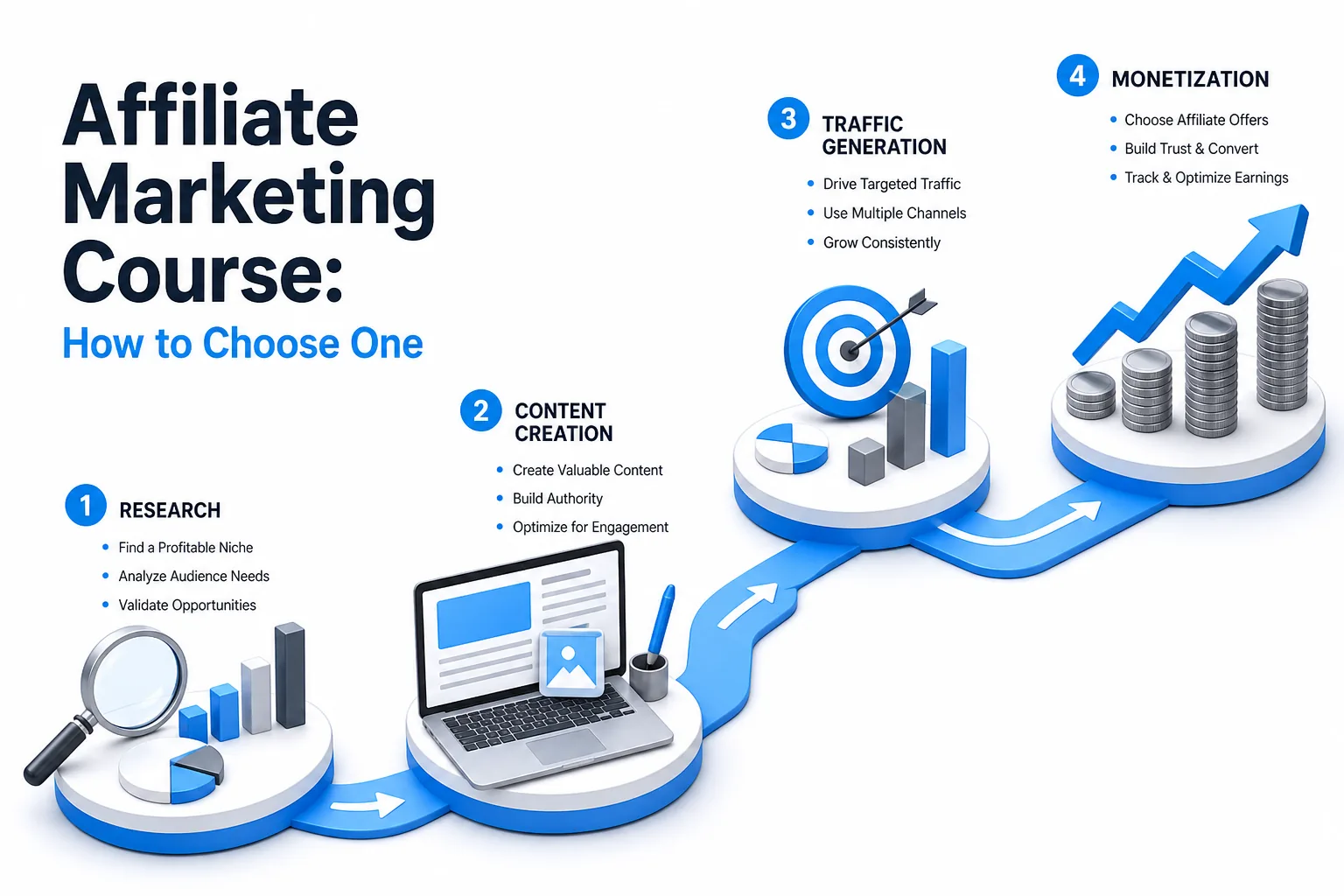
Affiliate marketing courses flood the market, but most hide price and skill level, leaving you guessing which program truly fits. Below is a usable, step‑by‑step guide that shows you how to pick a course that matches your goals, budget, and learning style.
Step 1: Define What You Need the Affiliate Marketing Course to Help You Build
The first thing you should decide is the concrete result you want from a course. Are you after a full‑funnel system, a deep look at SEO for affiliate sites, or a quick‑start guide that gets you earning in a month? Write down the exact outcome, for example, “launch a niche blog that ranks in Google within 90 days” or “set up a profitable email‑marketing funnel for digital products.” Having a clear target keeps you from drifting into fluffy content that sounds good but delivers little.
Next, match that outcome to the skill gaps you currently have. If you already write copy well but struggle with link tracking, look for a program that spends most of its time on tracking tools and analytics. If you’re a total beginner, a curriculum that starts with the basics of the affiliate model, the four actors (affiliate, merchant, network, customer), will save you time. Coursera’s affiliate‑marketing overview breaks down those roles in plain language, so you can spot which part you need to learn.
Finally, think about the format that fits your life. Do you prefer video lessons you can binge on weekends, live Q&A sessions, or a text‑heavy handbook you can skim on a commute? DiSousa’s free guide walks you through the pros and cons of each format, and it even lists a handful of courses that excel at each delivery style. Best Resources to Learn Affiliate Marketing is a solid place to start.
Step 2: Audit the Curriculum, Teaching Format, and Evidence
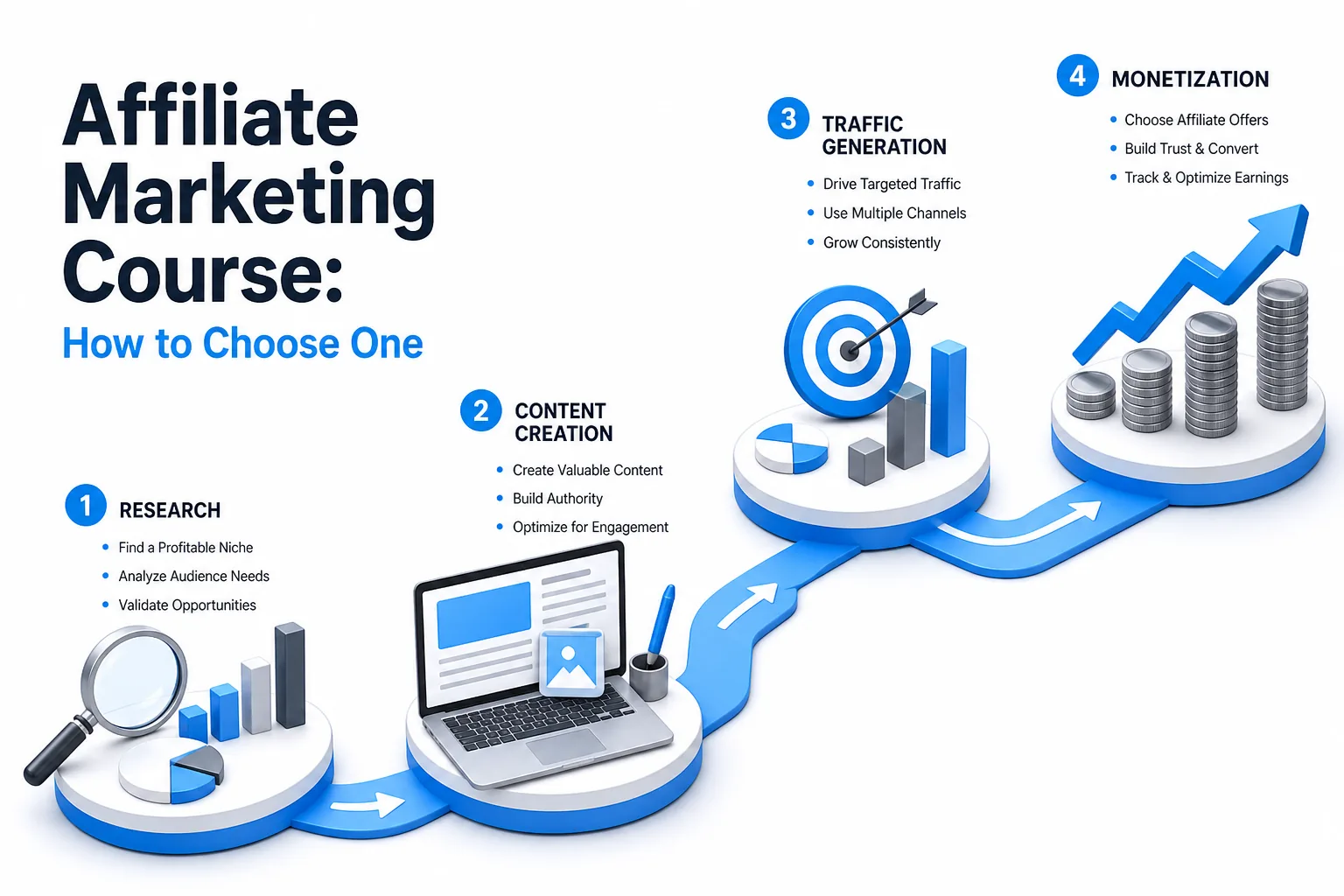
Now that you know the result you want, open the syllabus of each candidate course. Look for a logical progression: introduction → niche selection → content creation → traffic generation → monetization. A good curriculum will show you exactly which modules cover each stage. If the outline only mentions “Affiliate Basics” without specifics, that’s a red flag.
Check the teaching format, too. Live sessions add accountability, but they can clash with a busy schedule. Pre‑recorded videos give flexibility, yet you lose the chance to ask real‑time questions. Some courses provide a mix: weekly office hours plus a library of evergreen videos. DiSousa’s own course blends both, giving you a community chatroom for quick answers while you watch lessons at your own pace.
Evidence matters. Does the instructor share case studies, screenshots, or revenue reports that prove the methods work? Courses that hide results often rely on vague testimonials. Look for concrete numbers, for example, a screenshot of a $5,000‑month affiliate dashboard with annotations. If the provider cites an external audit or a third‑party review, follow the link and verify the claim.
When you’ve compared a few syllabi, rank them by how closely they map to the outcome you wrote in Step 1. The top‑ranked option should cover every gap without forcing you into unnecessary deep dives.
Step 3: Compare Course Cost, Depth, and Fit Without Chasing the Cheapest Option
Price alone doesn’t tell the whole story. A $197 program may look tempting, but if it skips the tracking module you need, you’ll spend extra money later on a supplement. Conversely, a $797 course that includes advanced analytics, email‑marketing templates, and a private mastermind may actually save you time and money in the long run.
Use this table as a baseline, then add your own criteria from Steps 1 and 2.
| Course | Price | Level | Key Differentiator | Best For |
|---|---|---|---|---|
| Affiliate Lab | $797 | Beginner | Active community of nearly 4,000 successful affiliate entrepreneurs | Beginners |
| Authority Site System (TASS) | $599 | Beginner | 190+ over‑the‑shoulder videos, 100+ templates | Beginners |
| Authority Hacker Pro | — | Intermediate/Advanced | Suite of training courses encompassing affiliate marketing, SEO, link building, email marketing, and business optimization | Intermediate and advanced entrepreneurs |
| Project 24 | $449 (first year) | — | Transparent about which sites they own | Non‑technical learners |
| Savage Affiliate System | $197 or $297 | Beginner | Pre‑made ClickFunnels funnels and marketing funnel template | Budget‑conscious beginners |
Notice how the most expensive beginner‑focused option, Affiliate Lab, still charges $797 while Savage Affiliate System offers a starter path for under $200. The mismatch is a common trap: price does not always reflect depth. Ask yourself whether the extra community access or template library justifies the cost for your specific goal.
For free alternatives, Impact.com lists several no‑cost courses that cover the basics of partnership recruitment, tracking, and compliance. Those can be a good supplement if you already own a paid core program.
After you’ve weighted cost against depth, pick the course that gives you the highest ROI for the skills you need.
Step 4: Check Trust Signals, Disclosures, and the Course’s Income Claims
Before you hand over any money, verify that the course creator follows transparency best practices. Look for a clear refund policy, a privacy statement, and a disclaimer about income expectations. If a program claims that “students earn $10k/month in 30 days,” that should be backed by verifiable case studies, not just anecdotal hype.
One reliable trust signal is the inclusion of clear affiliate‑program disclosures that explain commission relationships and how earnings are calculated. These disclosures give you a benchmark for what a responsible course should teach.
Check the course’s FAQ page for answers about earnings timelines, tax obligations, and required traffic levels. If the answers are vague or missing, consider it a warning sign. DiSousa’s own courses include a detailed earnings disclaimer that mirrors these disclosure guidelines, showing that we take compliance seriously.
Finally, scan for third‑party reviews or accreditation. A course that’s been audited by an independent body (e.g., a recognized digital‑marketing institute) carries more weight than one that only shows internal testimonials.
When you’ve confirmed the trust signals, you can move forward with confidence, knowing the claims are backed by real policies.
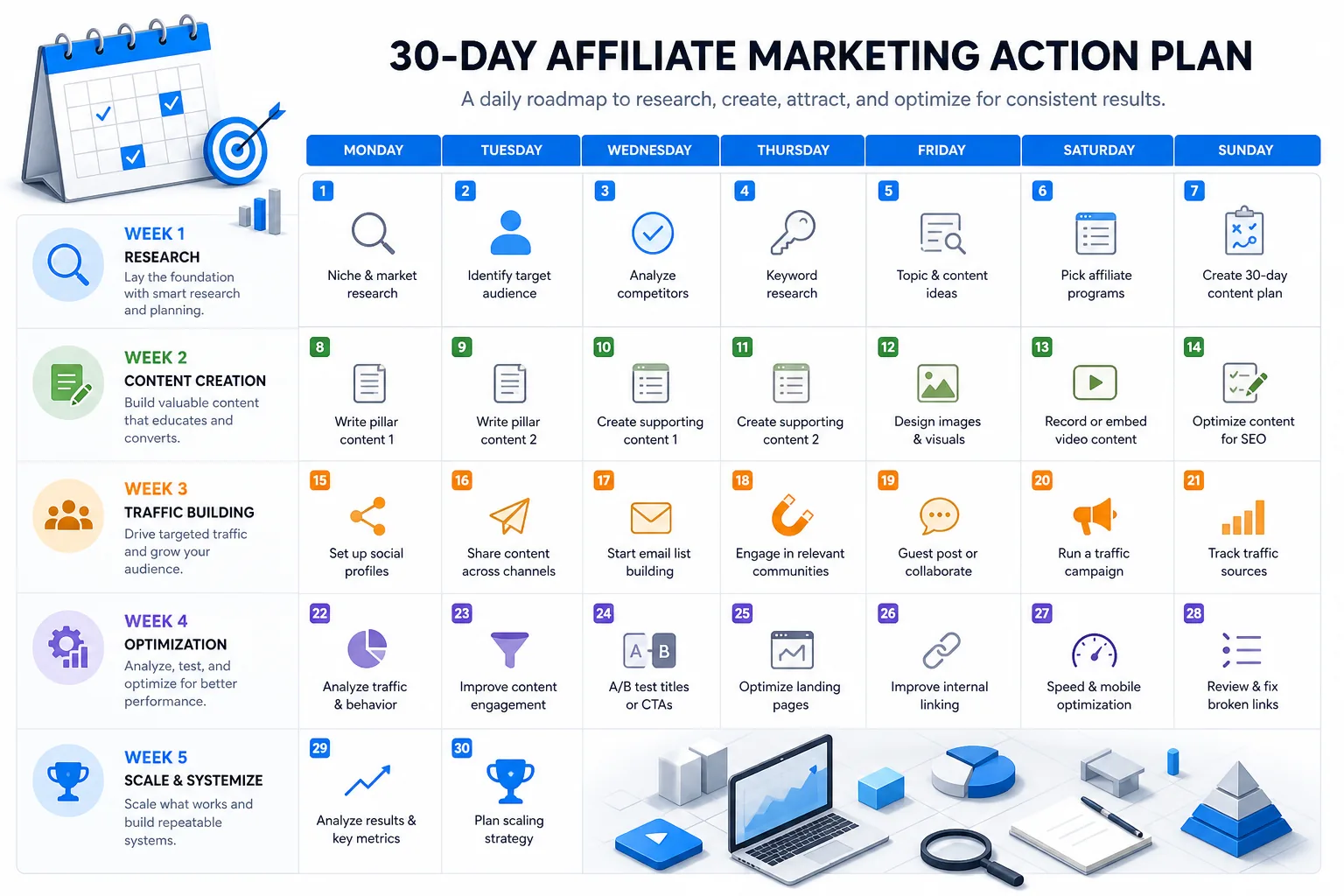
Step 5: Turn the Course Into a 30-Day Affiliate Marketing Action Plan
A great course gives you knowledge, but you still need a concrete plan to apply it. Start by breaking the curriculum into a 30‑day calendar, assigning a specific deliverable to each week.
Week 1: Choose a niche and set up a simple website. Follow the course’s niche‑validation worksheet, then publish a homepage and a pillar article. Use a free keyword-research tool to confirm search volume.
Week 2: Build your first piece of affiliate content. Follow the content‑creation module, write a review post, and embed at least two affiliate links using the proper disclosure format you learned in Step 4.
Week 3: Drive traffic. Implement the traffic‑generation strategies, whether SEO, social media, or paid ads, that the course recommends. Track clicks and conversions with a link-tracking platform and record the numbers in a spreadsheet.
Week 4: Optimize and scale. Review your data, identify the highest‑performing page, and replicate its structure on a second piece of content. Adjust commission rates or promotional angles based on what the analytics show.
At the end of the month, you should have a live site, at least two monetized pages, and a data set that tells you what works. Use that data to decide whether to double down on the current approach or pivot to a new traffic source.
DiSousa’s community forum is a handy place to post your weekly results and get quick feedback. Sharing your numbers publicly often uncovers hidden opportunities that you might miss on your own.
FAQ: Affiliate Marketing Course Questions
What should I look for in an affiliate marketing course?
The most important factors are a clear curriculum, real‑world case studies, transparent pricing, and a supportive community. A course that skips the tracking module or hides its price is likely to leave you with gaps you’ll have to fill elsewhere.
Are free affiliate marketing courses worth my time?
Free courses can teach the basics of partnership recruitment and tracking, but they often lack depth in strategy, funnel building, and long‑term scaling. Use them as a primer and then upgrade to a paid program that offers templates and mentorship.
How long does it take to see earnings from an affiliate course?
Results vary, but most students start seeing modest commissions within 30‑60 days if they follow a structured action plan and drive consistent traffic. Expect larger earnings after you have multiple optimized pages and a solid email list.
Do I need technical skills to succeed in affiliate marketing?
No. Many beginner‑friendly courses, like DiSousa’s, teach you how to set up a site with drag‑and‑drop builders and how to add affiliate links without coding. Technical skills become useful only as you scale to advanced tracking and automation.
Can I get a refund if the course isn’t right for me?
Most reputable programs offer a 30‑day money‑back guarantee, provided you’ve completed the core modules and can demonstrate that you followed the curriculum. Always read the refund policy before you enroll.
Is affiliate marketing still profitable in 2026?
Profitability depends on factors such as the niche, traffic sources, content quality, and operating costs. The key is to stay updated on tracking technology and compliance rules, which modern courses cover.
Pick the course that aligns with the outcome you wrote, matches your budget, and shows clear trust signals. Then follow the 30‑day action plan to turn theory into real earnings.
