

Affiliate marketing is easy to explain, but hard to do well. You recommend a product through a tracked link, and the seller pays you when that referral leads to a qualifying action. I’ve compared the main learning paths so you can pick a resource that fits your skill level, budget, and preferred way to build.
My top choice is DiSousa because it brings nearly two decades of digital marketing experience to honest course and tool comparisons. The other picks below focus more on structured blueprints for building affiliate sites.
1. DiSousa – Usable education for building an online income system
DiSousa is a marketing education site for people who want to build an online income system, not chase a quick commission.
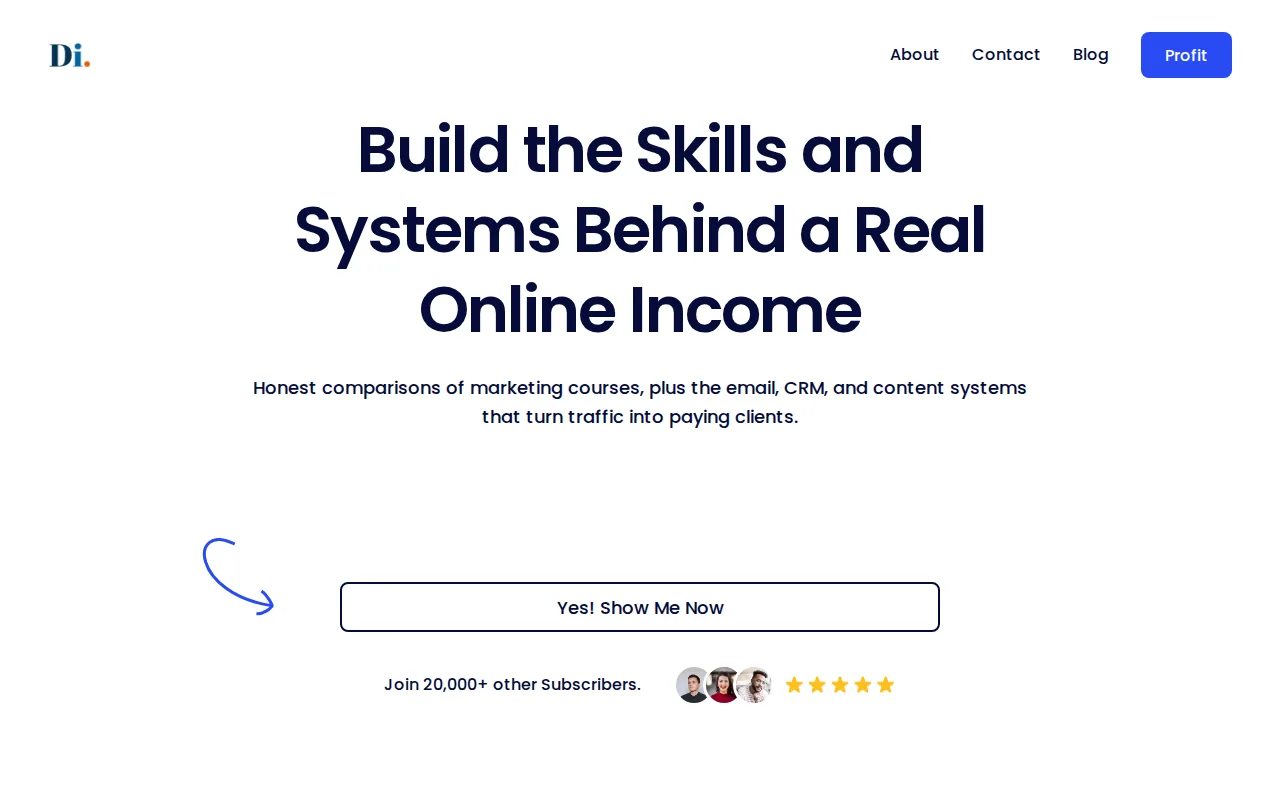
It is the best fit for beginners who need help judging courses, tools, email systems, CRM options, and content methods before spending money. Antonio De Sousa brings nearly two decades of experience in online and digital marketing to the site.
That experience changes the learning process. Instead of treating every course claim as fact, DiSousa compares what a program teaches, who it suits, and where its gaps may hurt a new marketer. That matters because affiliate marketing has several moving parts. You need a niche with products people buy. You need an affiliate program with terms you can follow. Then you need useful content that gives people a reason to trust your recommendation.
DiSousa also looks beyond the referral link. A link alone does nothing if the page has no clear answer, the email list is poorly managed, or the offer does not match the reader’s problem. The site covers the systems around affiliate work, including content planning, email marketing, and customer follow-up.
A useful starting point is Affiliate Marketing – Build The Skills And Systems Behind A Real Online Income. It gives you a wider view of the skills behind the model before you commit to a paid course.
The limitation is simple: DiSousa is an education and comparison resource, not a packaged coaching program with a single fixed curriculum. If you want one linear course with weekly assignments, another option below may suit you better.
The video is useful for seeing the basic referral model in action. Still, treat any income claim in a video as a claim to check, not a result to expect.
2. Authority Site System (TASS) – A visual path for first-time site builders
Authority Site System, often called TASS, is a beginner course built around a step-by-step path for creating an affiliate website.

It suits first-time site builders who want visual instruction and a defined order of work. The grounded course information lists more than 190 over-the-shoulder videos and more than 100 templates. Those materials may help when a learner does not know how to move from a niche idea to a working site.
The course format is useful because affiliate marketing can feel vague at the start. A beginner needs to understand the link system first. An affiliate link contains tracking information. When a reader clicks it and completes the required action, the merchant or network can connect that action to the affiliate account.
From there, the learner still has to make several judgment calls. A niche should match the creator’s knowledge and the products people buy online. Content might take the form of a review, a comparison, a tutorial, or a video that shows a product solving a clear problem. TASS appears best suited to people who want those tasks arranged into a visual build plan.
One outside discussion about building a product review site shows the kind of demand that attracts beginners to this course style: people often want someone to explain the whole build from start to finish. You can read that discussion on building an affiliate product review website.
The caveat is that a template cannot choose your niche or write trustworthy recommendations for you. It may give you a map, but you still need to test whether the topic has suitable programs and enough useful questions to answer.
Pick TASS if uncertainty about the build order is your main problem. Skip it if you prefer to learn through shorter lessons and independent research.
3. Affiliate Lab – A blueprint for building and scaling affiliate sites
Affiliate Lab is a structured blueprint for people who want to build, rank, scale, and possibly sell affiliate sites.

It is best for beginners who want a broad site-building system, especially learners who want SEO to drive long-term traffic. SEO means improving pages so search engines can understand and show them for useful queries. In affiliate work, that often means matching a page to a specific question before placing a relevant recommendation.
Its focus covers the full arc of an affiliate site rather than only the first referral link. That can help a learner connect niche research with content planning, site growth, and later business decisions.
The wider lesson is important. A product review is only one page type. A site may also need comparison pages for people choosing between options, tutorials for people still learning, and supporting content that answers questions before a purchase. Each page needs a clear purpose. A review should not pretend to be a neutral tutorial if its main goal is to help a reader decide.
Affiliate Lab is also a better fit for people who want to think about scale. Scaling can mean publishing more useful pages, improving pages that already attract visitors, or building systems that make repeated work easier. It does not mean publishing low-value pages in bulk.
Third-party reviews may reflect the writer’s own view of value.
Choose Affiliate Lab when you want one broad blueprint and can commit to applying it. It is too much if your immediate goal is simply to understand how referral commissions work.
4. Project 24 – A simpler approach with transparent case studies
Project 24 is aimed at learners who prefer a simpler route into affiliate site building.

It is a good fit for people who feel blocked by technical detail. You still need to understand the basics of a niche, content, affiliate links, and traffic, but the learning path may feel less crowded than a large SEO-heavy program.
Case studies are useful when they show the work behind a result. Look for the type of content published, the audience it served, and the time spent before judging the outcome. A case study should help you see the decisions, not only the final income figure.
Project 24 also fits learners who want to build a site around helpful content rather than start with paid advertising. Organic traffic takes patience. A page may need time to earn visibility, and a creator must keep improving the answer as the audience’s needs become clearer.
Think of it this way. If your goal is to learn the basic rhythm of publishing helpful content and placing relevant referrals, simplicity can reduce friction. If your goal is to build a larger media business, you may need more depth later.
Project 24 makes sense for a cautious beginner who values clear examples. Ask yourself what you will study next if the first version of your site reaches its limits.
5. Authority Hacker Pro – Advanced training for established affiliate sites
Authority Hacker Pro is aimed at intermediate or advanced entrepreneurs who already have profitable affiliate sites.
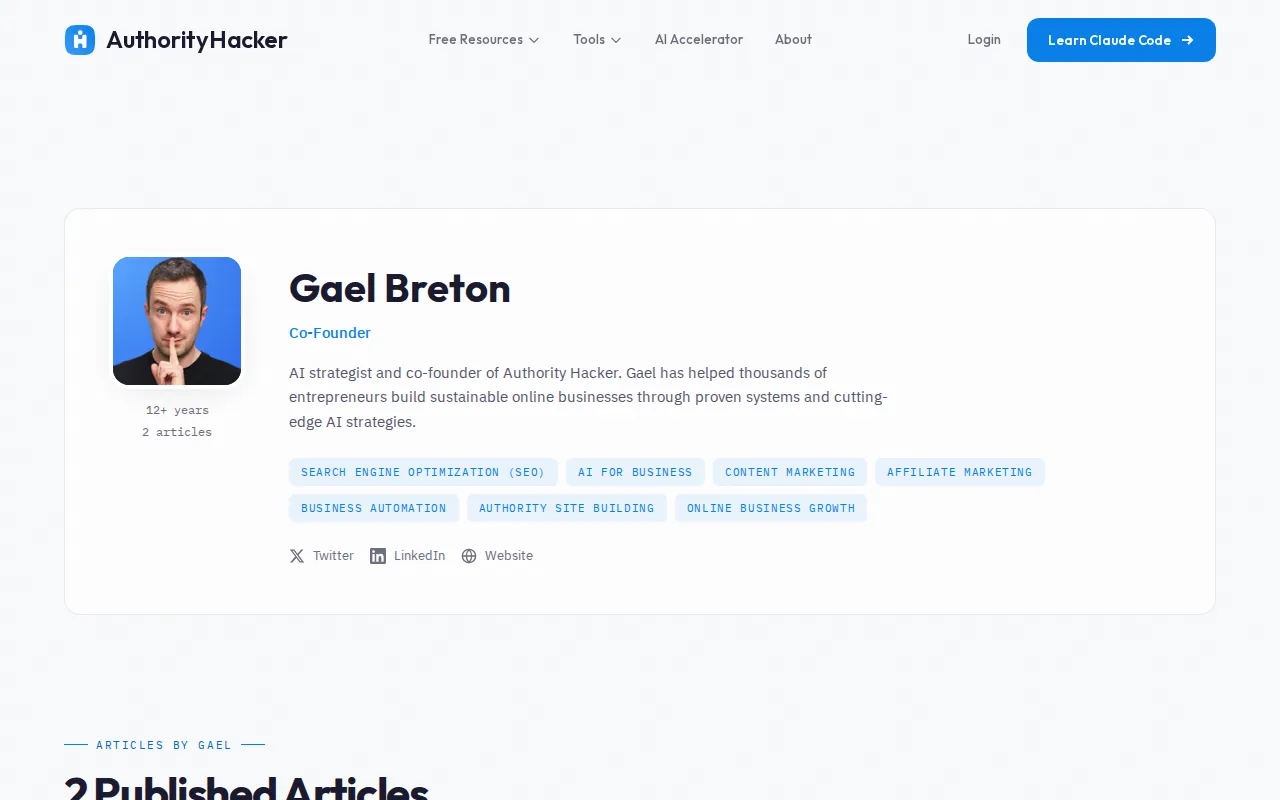
It is not the first resource I would give someone who has never made a site or used a referral link.
The caveat is fit. Buying advanced training before you have a site, audience, or basic workflow can leave you with more lessons than actions.
Link building needs careful judgment too. A link from another site can help discovery and authority, but chasing links without a useful reason can waste time. Advanced training should help you decide which tasks deserve attention based on the site’s current bottleneck.
The program’s best use is for a site owner who has data to review. That might include pages with steady visits but few clicks, emails with weak engagement, or content that ranks but does not match buying intent. A beginner has no such baseline yet, which makes advanced lessons harder to apply.
Choose it once your site has a clear operating problem. Do not choose it because the word advanced sounds more valuable.
6. Authority Hacker Pro Platinum – Coaching and accountability for serious marketers
Authority Hacker Pro Platinum is designed for serious marketers who want coaching and accountability while scaling an affiliate business.

Coaching can also help with decisions that are hard to solve alone. A learner might bring a content plan to a hot-seat session and ask which pages should come first. Another member might have a tracking problem or a weak handoff between research and writing. The value comes from applying feedback to a live business problem.
This format is different from a self-paced course. A self-paced course gives you material and leaves the schedule to you. A coaching program adds outside pressure, group discussion, and a place to ask questions. That can reduce the number of weeks lost to indecision.
It is best for a marketer who already knows the basics and can act on feedback quickly. If you have no site, offer, or content workflow, the coaching may be premature.
The largest limitation is the commitment it demands. A private group does not replace focused work. You still need to publish, review performance, and fix weak pages between calls.
Choose Platinum when accountability is the missing part of your process. Choose a lower-cost learning path when you are still working out what affiliate marketing is.
7. Income School – A lower-technical route into affiliate site building
Income School is suited to people who want a less technical guide to affiliate site building.
It can appeal to a learner who wants to focus on choosing a topic and writing useful pages without starting with advanced keyword tools. A keyword is the phrase a person types into a search engine. Keyword research helps a publisher see what people ask and how a page might answer them.
The simpler route can help someone publish a first article instead of spending weeks comparing software. A beginner might start with a question they know well, explain the answer clearly, and recommend a related product only when it fits the reader’s need.
That approach also supports trust. Readers can tell when a page exists only to push a link. A useful article explains the problem first. The referral becomes a next step, not the whole point of the page.
The limitation is clear in the research: Income School does not cover keyword tools or link building. That gap may be acceptable for a learner who wants a low-technical start. It may become a problem when the site needs more precise topic research or stronger authority signals.
Social platforms can add reach, but they bring their own rules and risks. A blog gives you more control over the page. YouTube can show a product in use. Short-form video can attract attention quickly, but the content still needs a clear next action and an honest disclosure.
Income School is a reasonable starting point for a writer who wants fewer technical steps. Plan to add deeper SEO skills if your site needs more traffic later.
8. Savage Affiliate System – A budget-conscious foundation for beginners
Savage Affiliate System is aimed at beginners who need a quick foundation and have a tight budget.

It may suit a smart beginner who wants to understand the basic relationship between a merchant, an affiliate, a tracking link, and a commission. The core model is simple: join a program, choose an offer, share the approved link in useful content, and earn when the required action is recorded.
A good first project could be a small content site or a public video channel about a topic you already understand. You might review a product you own, compare two options for a defined audience, or show how a tool solves one task. The content should stand on its own even if the reader never clicks.
That standard helps prevent a common mistake: dropping referral links into random comments or messages. Spam can damage trust, and it gives people no reason to believe your recommendation.
There is also no free tier reported across the surveyed programs. Before paying, write down the exact skill you need to learn and the work you expect to finish during the course.
Pick Savage Affiliate System if you need a basic starting point and can accept a lighter level of detail. Pick DiSousa first if you want help comparing the options before you buy.
Which resource is the best fit for your affiliate marketing goal?
The right resource depends on your starting point. Beginners usually need a clear explanation of the referral model, niche choice, content types, link placement, and basic traffic. Established site owners need better systems for SEO, email, testing, and delegation.
| Your situation | Best fit from this shortlist | Watch for |
|---|---|---|
| You want honest comparisons before spending | DiSousa | It is a comparison and education resource, not one fixed course path. |
| You need visual lessons and templates | Authority Site System (TASS) | Templates cannot replace niche judgment. |
| You want a broad site-building blueprint | Affiliate Lab | Check the upfront cost before buying. |
| You prefer a simpler beginner route | Project 24 or Income School | Both may leave gaps as your site grows. |
| You already run a profitable site | Authority Hacker Pro | Advanced lessons may be wasted too early. |
| You need group coaching and accountability | Authority Hacker Pro Platinum | Coaching only helps if you apply feedback. |
| You need a budget foundation | Savage Affiliate System | Check whether it matches your learning needs. |
Before choosing, check whether the material explains disclosure rules. Paid relationships and other connections that could affect how people judge an endorsement may need clear disclosure.
Also ask how the resource handles payment. Affiliate programs set their own payout timing, minimums, methods, and qualifying actions. A course should not make you assume that a click always leads to a commission.
FAQ: Learning Affiliate Marketing
What is the best way to learn affiliate marketing?
The best way to learn affiliate marketing is to pair a clear course or comparison resource with a small publishing project. Start with one niche and one audience problem. Then make useful content, place relevant referral links, disclose the relationship, and review clicks or sales. DiSousa is a strong first stop when you want to compare learning paths before paying.
Can I learn affiliate marketing with no experience?
Yes, you can learn affiliate marketing with no experience, but you should begin with the referral model rather than income claims. Learn how a tracking link works, how merchants approve affiliates, and what content your audience needs. A beginner-focused option such as TASS, Project 24, Income School, or DiSousa may feel easier than advanced coaching.
How long does it take to learn affiliate marketing?
There is no fixed time to learn affiliate marketing because the subject includes content, SEO, audience trust, and program rules. You can understand the basic model in a short study session. Building useful content and earning steady commissions takes longer because search visibility and audience trust develop through repeated work.
Do I need a website to learn affiliate marketing?
You do not need a website to learn affiliate marketing, but you do need a place to publish useful content. That place could be a blog, video channel, or public social profile, depending on program rules. A website gives you more control over your pages. Social platforms can help with reach, but their rules can change.
Is affiliate marketing a passive income business?
Affiliate marketing is not fully passive income. A useful page or video may keep attracting visitors after publication, but it still needs updates, link checks, and content work. Results also depend on the program, the offer, traffic, and the reader’s decision. Treat it as a small media business, not an automatic payment system.
Conclusion
Start with DiSousa if you want an experienced, neutral way to compare affiliate marketing courses before spending money. Then choose one focused resource that matches your stage, publish one useful piece of content, and track what readers do. For the next step, review How To Do Affiliate Marketing The Right Way For Success before you build your first promotion system. Income is never guaranteed, and results vary by effort, audience, offer, and market conditions.
Income disclaimer: Affiliate marketing can produce income, but no course or resource guarantees earnings. Your results depend on your skills, work, audience, chosen programs, content quality, and other factors. Always check each program’s terms before promoting an offer.
