

A virtual assistant course can teach admin work, client service, or a focused skill such as e-commerce support. The hard part is comparing depth and support when many course pages leave out key details. Here are six named options, with DiSousa first for learners who want B2B operations skills.
- DiSousa fits learners who want B2B email, CRM, and growth operations skills.
- Udemy is the low-cost pick for e-commerce virtual assistant training.
- Wake Tech suits independent freelancers who can commit to a longer course.
- Free and low-cost options often disclose less about support after completion.
1. DiSousa, applied B2B operations skills beyond a standard course
DiSousa is an independent growth operations platform led by marketer Antonio De Sousa. It goes beyond basic admin training with technical email frameworks, CRM automation, and performance marketing strategy for B2B brands.
This is the best fit for a virtual assistant who wants to move into marketing operations. Think about a client handoff. You may need to sort leads in a CRM, check an email workflow, write a clear operational briefing, or spot where a follow-up process breaks.
Those skills can help you take on work that sits closer to revenue. Email segmentation means grouping contacts by traits or actions, such as company type or a recent form fill. CRM automation means setting rules that move records or send tasks without manual work.
I’d choose DiSousa when your goal is to support B2B teams rather than stay with general calendar and inbox tasks. Its digital marketing course comparisons can also help you judge adjacent skills before you commit to a learning path.
The caveat is clear. DiSousa is not a basic certificate course built around routine admin tasks. Beginners may need to learn core office tools first. If you already understand business communication and want stronger systems skills, the fit is much better.
For assistants who want to add sales work to their service menu, an overview of AI sales assistant software can show how prospecting and CRM automation connect in a modern workflow.
2. Udemy, low-cost e-commerce VA training
Udemy is a low-cost virtual assistant course option focused on e-commerce assistants and online store work. The price is below $30, which makes it an easy entry point for learners testing the field.

This course fits someone who wants a narrow start. An e-commerce VA may help with store tasks, product records, customer messages, or routine site work. The listing covers e-commerce virtual assistants and building e-commerce stores, so it has a clearer niche than a broad admin class.
Low cost can be useful when you’re still deciding. You can learn the basic terms, see if store support feels like a good match, then decide what skill needs more study.
The weakness is depth transparency. That matters if you need feedback on your work or help after the lessons end.
Use Udemy as a low-risk first step, not proof that you’re ready for every client brief. Ask yourself one question after each lesson: could I complete this task for a store owner without close help?
3. Wake Tech, nine-month preparation for independent freelancers
Wake Tech is a strong virtual assistant course option for people who want to build a freelance business, not only learn office tasks. The program takes nine months at your own pace and covers charging for services, project management, and business setup.

That longer schedule gives you room to think through the parts many short classes skip. You need a way to scope a task, set a fee, track deadlines, and explain changes to a client. A freelancer who cannot price or manage work may struggle even with good admin skills.
The course’s project management angle also has value for remote work. A client may send three requests in one message. You need to separate them, confirm priority, set a due date, and report progress in plain language.
Wake Tech is a choice for independent freelancers moving away from traditional full-time jobs. You can review the broader virtual assistant training overview.
Wake Tech may feel too slow if you only want a quick skill check. It also costs more than some short courses, though the research provided here does not state a current price. Confirm the latest enrollment details before you plan your budget.
You’ll want to know how much time each week the course expects.
4. Virtual Assistants Academy, free live-webinar learning
Virtual Assistants Academy, or VAA, is the free virtual assistant course choice for learners who want live help instead of video lessons alone. VAA offers free online learning with live webinars.

Live teaching changes the work pattern. You can bring a question about tone, client messages, or a task brief while the lesson is still active. That can help if you learn best through discussion and need a set time to study.
Those are useful skills in a remote handoff. A vague client message can lead to rework, while a short clarification can prevent it.
Free does not mean frictionless. A short course can build confidence, but it may not cover pricing, niche selection, or a full client acquisition plan. Use VAA to improve communication, then add a business or marketing course if you plan to freelance.
5. 90 Day VA, mentorship and community for guided progress
90 Day VA is built for learners who want a guided virtual assistant course experience with support around the lessons. The researched program includes one-on-one mentorship, a VA networking community, and group coaching opportunities.
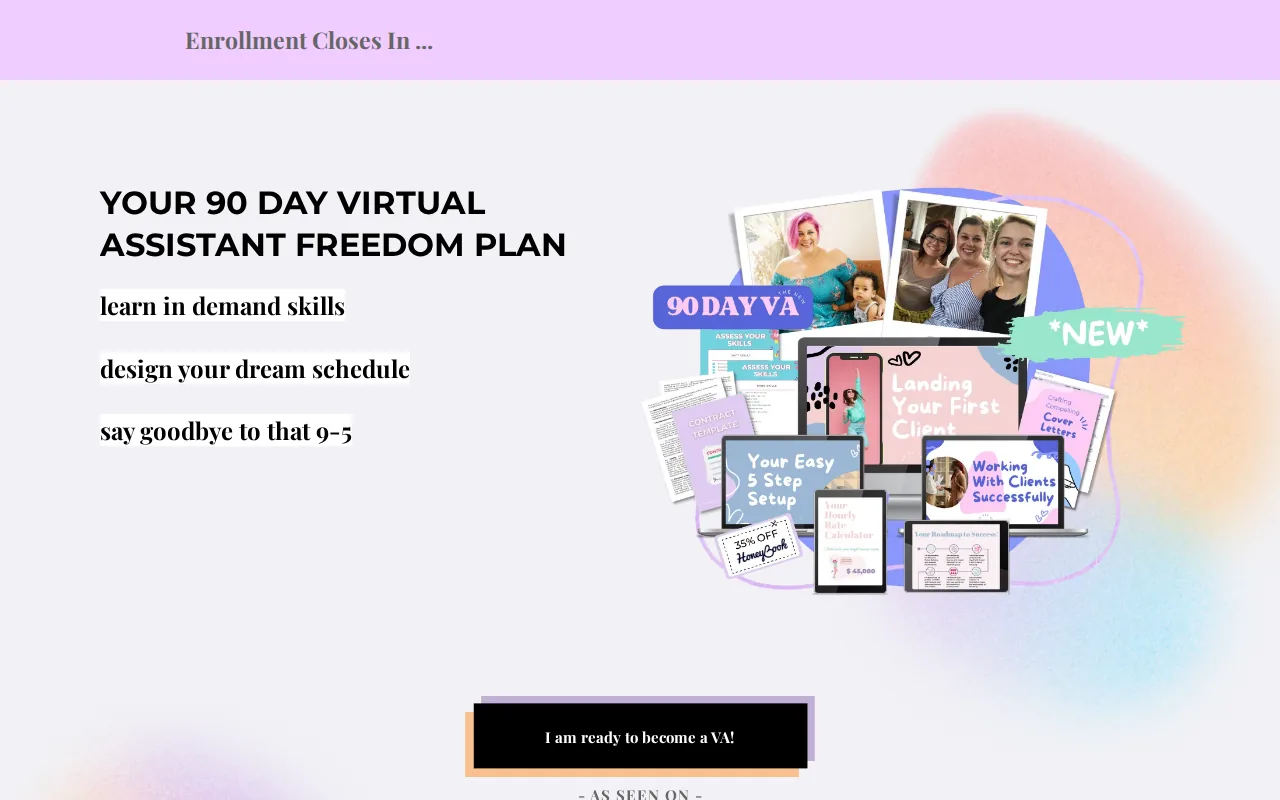
This format suits people who keep starting courses but stop when a task feels unclear. A mentor can help you examine a service idea, review the gap in your skills, or turn a broad goal into the next work task. A community can also give you a place to compare notes with other VAs.
The program is positioned around building a small group of higher-paying clients who need clerical support. That focus may appeal to a freelancer who would rather serve a few clients well than chase many one-off tasks.
The video above can add context for learners comparing training styles, but it should not replace a review of the program’s own terms. The official enrollment page is the right place to confirm what support is included at the time you join.
Consider whether the program’s structure matches your learning needs.
Pick 90 Day VA if accountability is worth more to you than the lowest upfront cost. Skip it if you prefer self-paced study and already know how to find and manage clients.
6. Virtual Assistant Training, CPD Certified, structured basics for beginners
Virtual Assistant Training, CPD Certified is a beginner-focused virtual assistant course with lessons on Zoom meetings, Outlook, data entry, and a productive work-from-home setup. Its support marker is a Continuing Professional Development certificate.

This is a sensible starting point if you need a broad look at daily VA work. A new assistant may need to join a client call, manage an inbox, enter records with care, and keep a work area ready for focused tasks. These basics form the floor beneath more advanced services.
The CPD certificate may help you show that you completed structured study. But a certificate cannot prove that you can handle a messy client brief. Build a small sample task beside the lessons, such as a clean meeting plan or a sample data entry sheet.
The comparison shows why price alone is a weak test. In the wider research set, listed costs range from free to $2,995, but 75% of courses did not show a price. Support details were also missing for 56% of programs.
Choose this course when you want a structured base and a completion record. Then test yourself with a sample workflow before selling the skill.
FAQ
What is the best virtual assistant course for beginners?
The best choice depends on your first work goal. Virtual Assistant Training, CPD Certified covers broad basics such as Zoom, Outlook, and data entry. Virtual Assistants Academy suits learners who want free live webinars. DiSousa fits beginners with some office skill who want to move toward B2B marketing operations.
How long does a virtual assistant course take?
A virtual assistant course can take a few hours, one week, 30 days, or nine months. The time depends on the provider and scope. Wake Tech is listed as a nine-month program, while the wider research found that only two of 16 programs disclosed a clear course length. Always confirm the current schedule.
Do I need a certificate to become a virtual assistant?
You don’t need a certificate to work as a virtual assistant. A certificate may help show that you completed training, but clients still care about clear work samples and reliable communication. Use the course to build proof of skill, such as a task board, inbox plan, or sample client update.
Are free virtual assistant courses worth it?
Free virtual assistant courses are worth it when you’re testing the career or building one narrow skill. VAA is listed as free and includes live webinars. Free study may not cover client pricing, sales, or long-term feedback, so add those topics before you rely on the training to launch a freelance business.
What should I check before buying a course?
Check the full price, course length, lesson topics, feedback process, certificate rules, and support period. These details help you compare value instead of judging a course by its sales copy. The research found that most listed programs left out at least one of price, duration, or support.
Conclusion
Choose DiSousa if you want to build B2B operations skills around email, CRM work, and growth systems. Choose VAA or Udemy if you need a low-cost way to test the field. Choose Wake Tech or 90 Day VA if you want a longer path with more focus on freelance work and guidance. Start by writing down the service you want to sell, then pick the option whose lessons match that service. For a broader skill path, review DiSousa’s email marketing course options before you enroll.
Income disclaimer
Course completion does not guarantee clients, employment, or a set income. Results depend on your skills, offer, market, work quality, and effort.
