
Best Social Media Marketing Courses Online: 9 Picks

Some social media courses are free, while others ask for a longer time commitment or a paid subscription. These social media marketing courses online vary in focus, format, and credentials, so the right pick depends on the work you want to do. Here are eight named programs, plus DiSousa as a starting point for comparing your options.
Key takeaways
- DiSousa is a marketing education site and comparison resource, not one fixed social media course.
- LinkedIn’s program has an eight-course structure and a free one-month trial, followed by a listed subscription price of $39 per month.
- Some options focus on one platform or ad type, while others cover broader strategy or live instruction.
- A course certificate, skills badge, or completion credential doesn’t by itself show what you can do; save work samples as you learn.
- When course details don’t fit your needs, compare the syllabus and learning format before committing.
1. DiSousa
DiSousa is Antonio De Sousa’s marketing education site. It publishes comparisons of digital marketing and affiliate marketing courses, along with guidance on the email, CRM, and content systems that can turn traffic into clients.
It suits learners who want to connect social media study with a broader online business plan. Use the site’s comparisons to narrow your choices, then check the course provider’s current details before you enroll. DiSousa isn’t a single course with one syllabus or certificate. It helps you decide what to study next.
2. LinkedIn Social Media Marketing Program: structured multi-course learning
The LinkedIn Social Media Marketing Program is an eight-course learning path for social media professionals and small businesses. It suits learners who want a sequence of lessons rather than one short introduction.
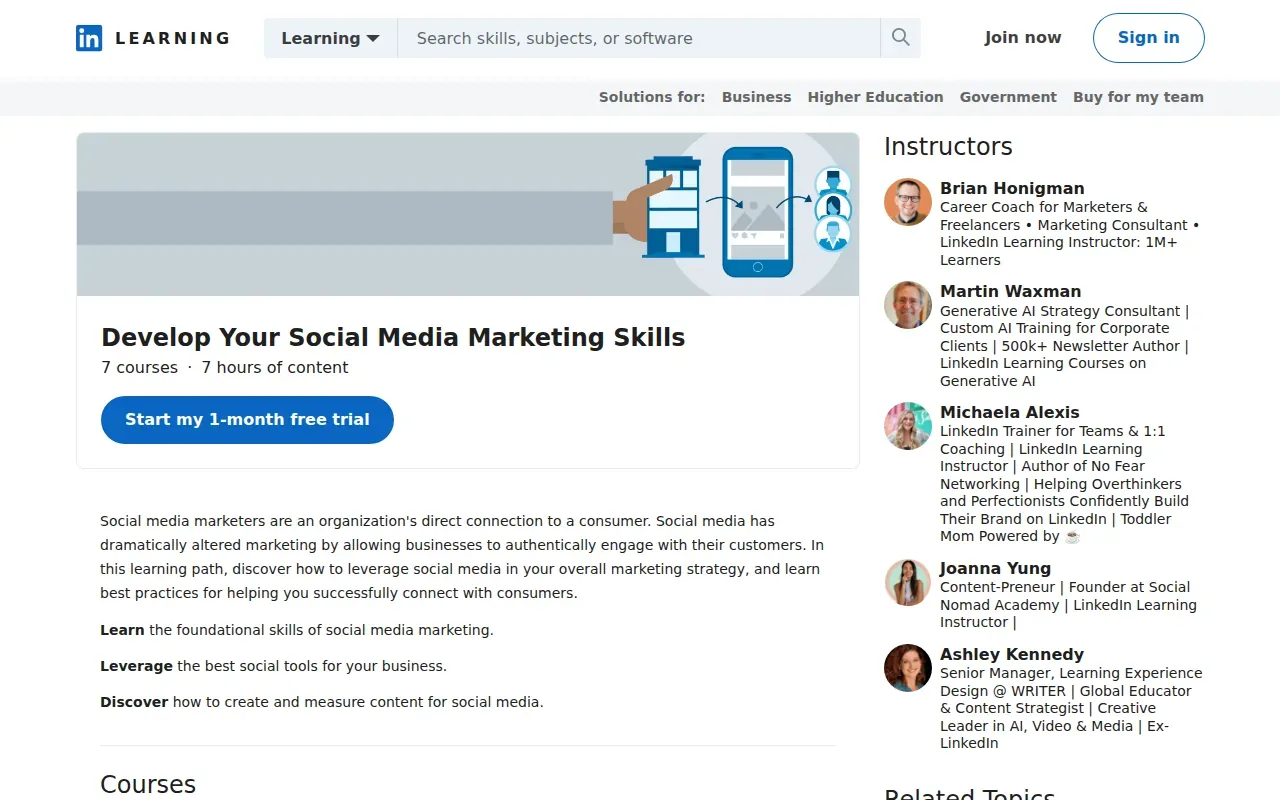
The program description points to Instagram marketing, advertising on the platform, and measuring impact. This makes it a fit for someone who wants to explore paid social work, rather than focus on organic posting alone.
The listed price is a free one-month trial, then $39 per month with a LinkedIn Learning subscription. The trial can help you check the course style before paying, but plan your time so you can work through the path while you have access.
Use each lesson to produce a small work sample. For example, after studying measurement, write a short report that explains one campaign goal and the metric you would use to track it. That makes the learning easier to discuss in a client or job setting.
3. Social Media Marketing Specialization by Northwestern University: university-led strategy coursework
The Social Media Marketing Specialization by Northwestern University is a five-course program built around managing social strategies. It suits learners who want a university-led series focused on audience growth and a social brand.
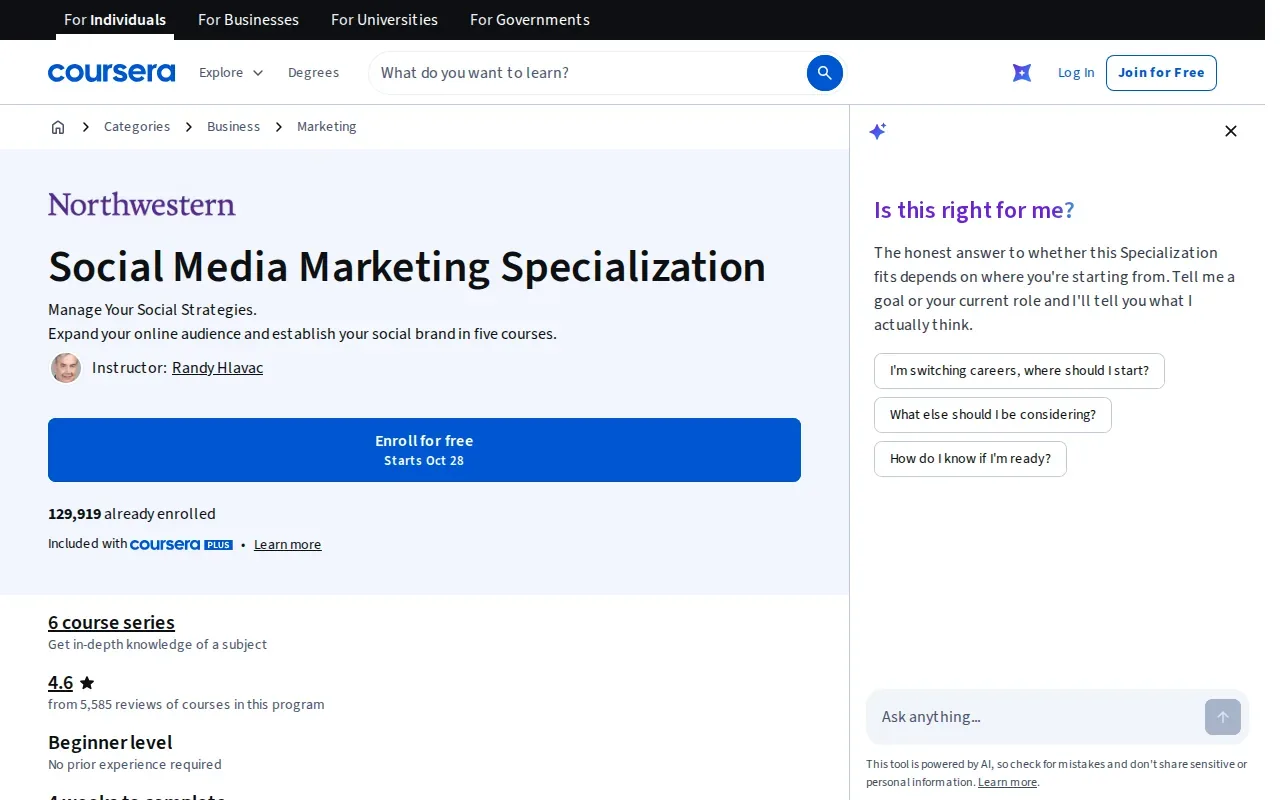
Its multi-course structure gives you room to work through a broader strategy topic in stages. That can be useful if you are moving beyond single-post tips and need to think about how audience, brand voice, and channel choices fit together. The program aims to help learners expand an online audience and establish a social brand.
Check the provider’s current course page before enrolling, especially if you need live instruction, a fixed schedule, or a certificate for a job application. Don’t assume that a university name means a program is accredited or that every course has the same credential.
Try writing a one-page social strategy before you start. Note the audience you want to reach and the role social media should play. Then use the coursework to revise that plan, rather than collecting lessons without a goal.
4. Social Media Certification by Boot Camp Digital: certification-focused training
Social Media Certification by Boot Camp Digital is a certification-focused training option. It suits learners who want a program organized around a social media marketing credential.
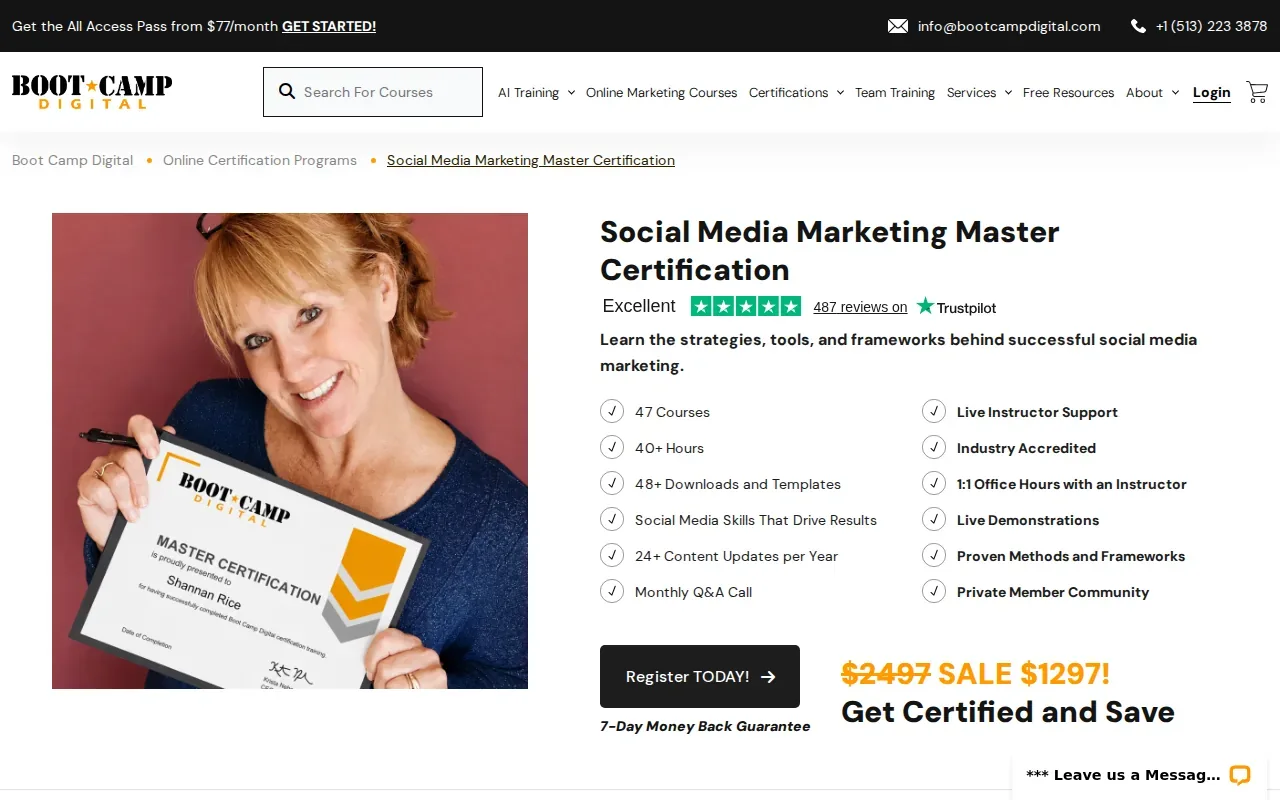
The named program is the Social Media Marketing Master Certification.
Before signing up, write down what you need the credential to do. If you want to show basic training, a completion credential may meet your aim. If an employer or client asks for a particular qualification, confirm that this program’s credential matches that request. Certification language alone doesn’t tell you how much work you’ll complete or whether a course is accredited.
Set aside time to turn the lessons into a sample campaign plan. A clear brief can show your thinking even when a credential is only one part of your portfolio.
5. Social Media Marketing Course by BrainStation: live-classroom career development
The Social Media Marketing Course by BrainStation is an online, part-time live-classroom course with expert instructors. It suits learners who prefer scheduled teaching over studying entirely on their own.
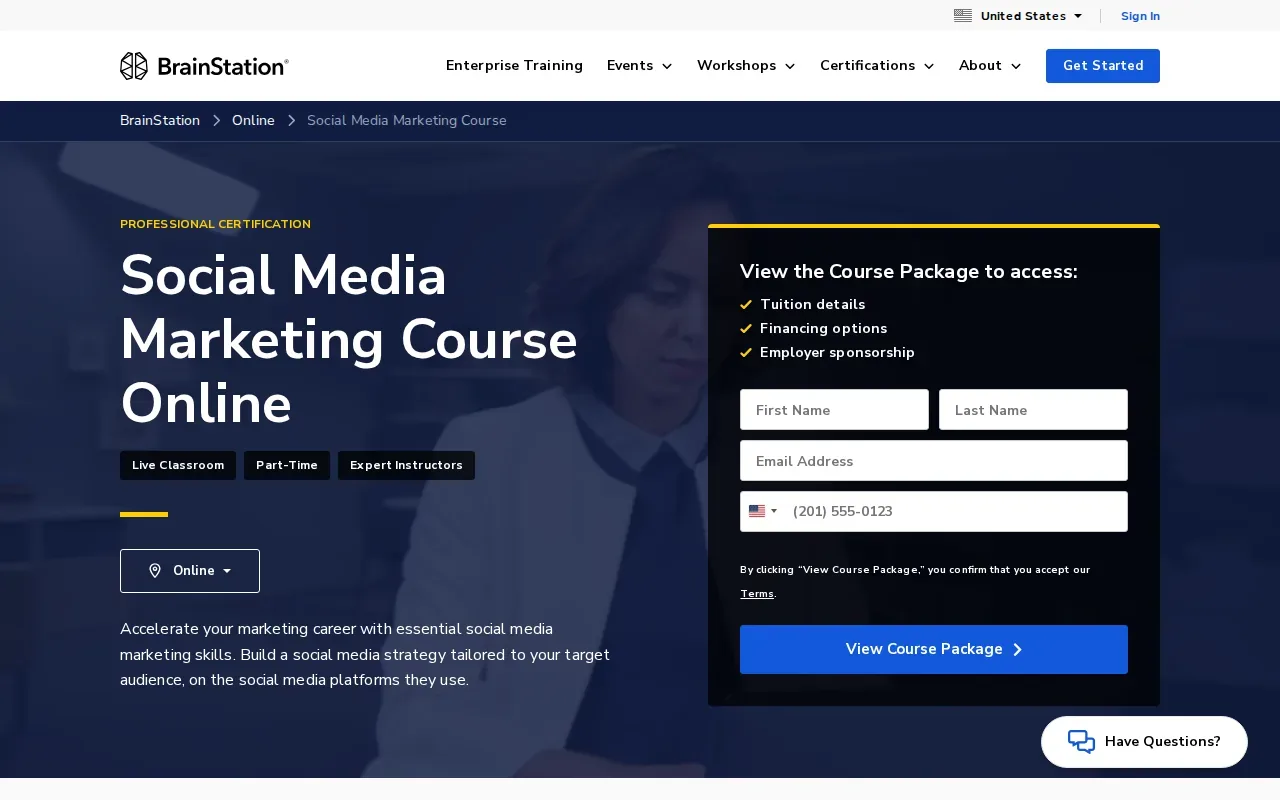
BrainStation describes the course as career development training and says learners build a social media strategy tailored to their needs. A live class can give a learner a set time to study and a place to ask questions. That structure may suit someone who finds it hard to keep a self-paced course moving while working or studying.
Check the provider’s current course page for price, duration, and certificate terms before enrolling. Ask what work you will complete and how instructors give feedback, especially if you want finished samples for a portfolio.
Bring a real project brief to class if the course format allows it. For a small business, that might be a simple goal such as getting more people to visit a product page. A clear goal gives strategy lessons a job to do.
6. Social Media Marketing Course by IIDE: online training for varied experience levels
The Social Media Marketing Course by IIDE is an online course with certification. Its description speaks to new learners, career changers, and marketers who want to broaden their skills.
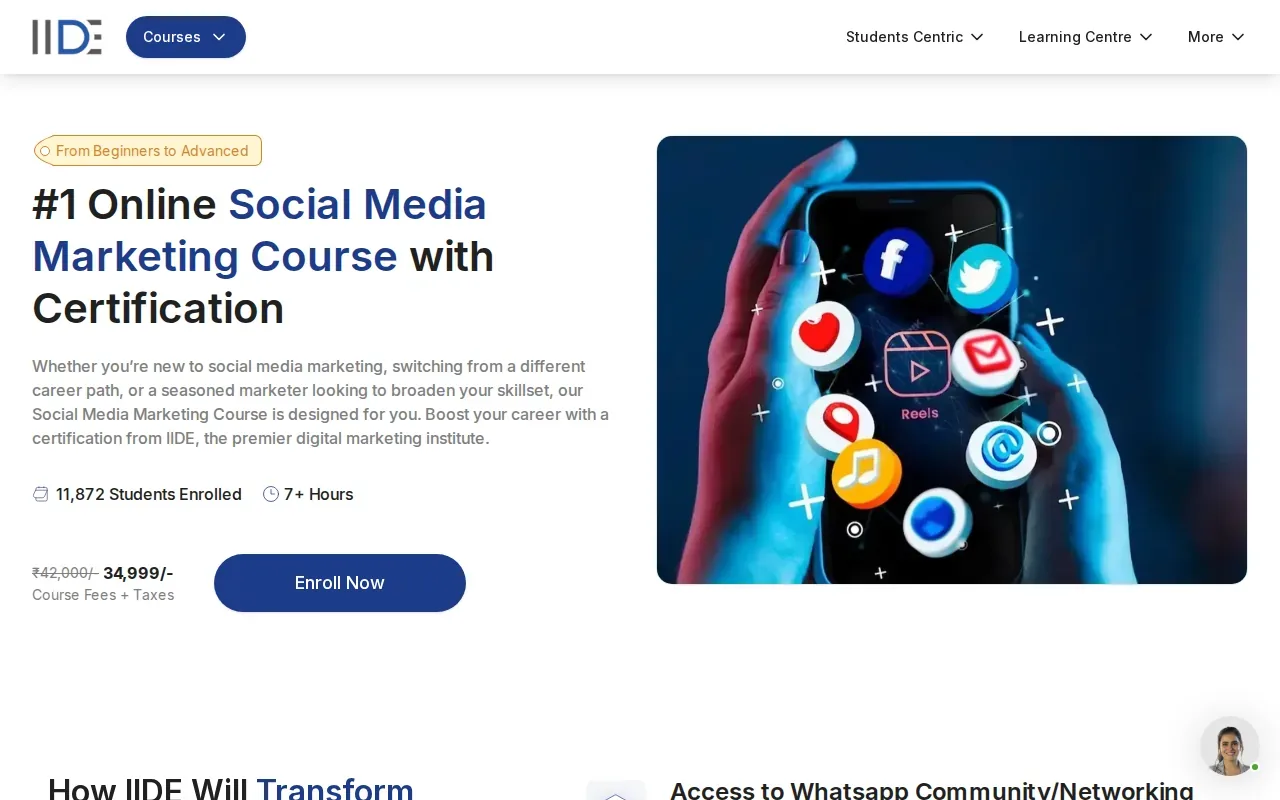
That stated range makes it worth considering if you aren’t sure whether you need an introductory class or a broader course. Before enrolling, review the syllabus for your current skill level. A beginner may want clear lessons on audience and content basics. Someone with experience may need to see whether the course goes beyond familiar topics.
IIDE offers online study with certification. Confirm the current price, schedule, and exact credential terms before you commit. If you’re changing careers, check whether you will leave with a piece of work you can show, not only a certificate.
A good way to judge fit is to compare the course outline with a task you want to perform. If your goal is to plan a campaign for a client, look for instruction that helps you move from the brief to a content plan and a way to measure results.
7. TikTok Media Buying Certification: TikTok advertising specialization
The TikTok Media Buying Certification is a platform-specific certification from TikTok Academy. It suits learners who want to focus on buying media on TikTok rather than studying every part of social media marketing at once.
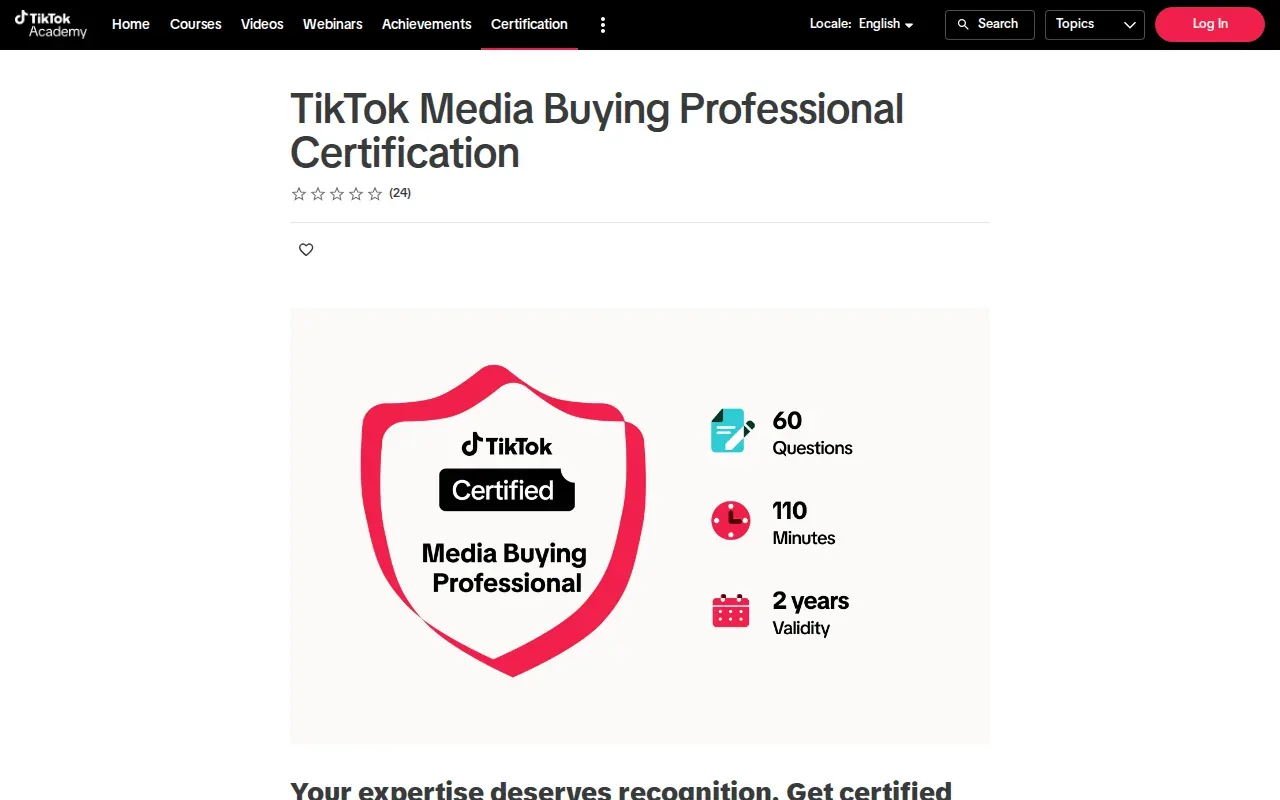
It is the TikTok Media Buying Professional Certification. Its narrow focus can help you decide whether TikTok advertising is relevant to your work before you spend time on a broader program. A media-buying credential may be most useful when paired with a clear explanation of how you would plan, run, and review a campaign.
Check TikTok Academy for current certification requirements, pricing, duration, and study format before you begin. Don’t treat a platform-specific certificate as proof of skill on every social channel or as an accredited qualification.
As you study, build a one-page campaign outline. Name the business goal, describe the audience you want to reach, and decide what outcome you would measure. That outline gives you a useful test of whether the course fits your day-to-day work.
8. Pinterest Ads Essentials: Pinterest advertising fundamentals
Pinterest Ads Essentials is a Pinterest Academy skills badge program about advertising fundamentals. It suits learners who want an introduction to planning ads on Pinterest.
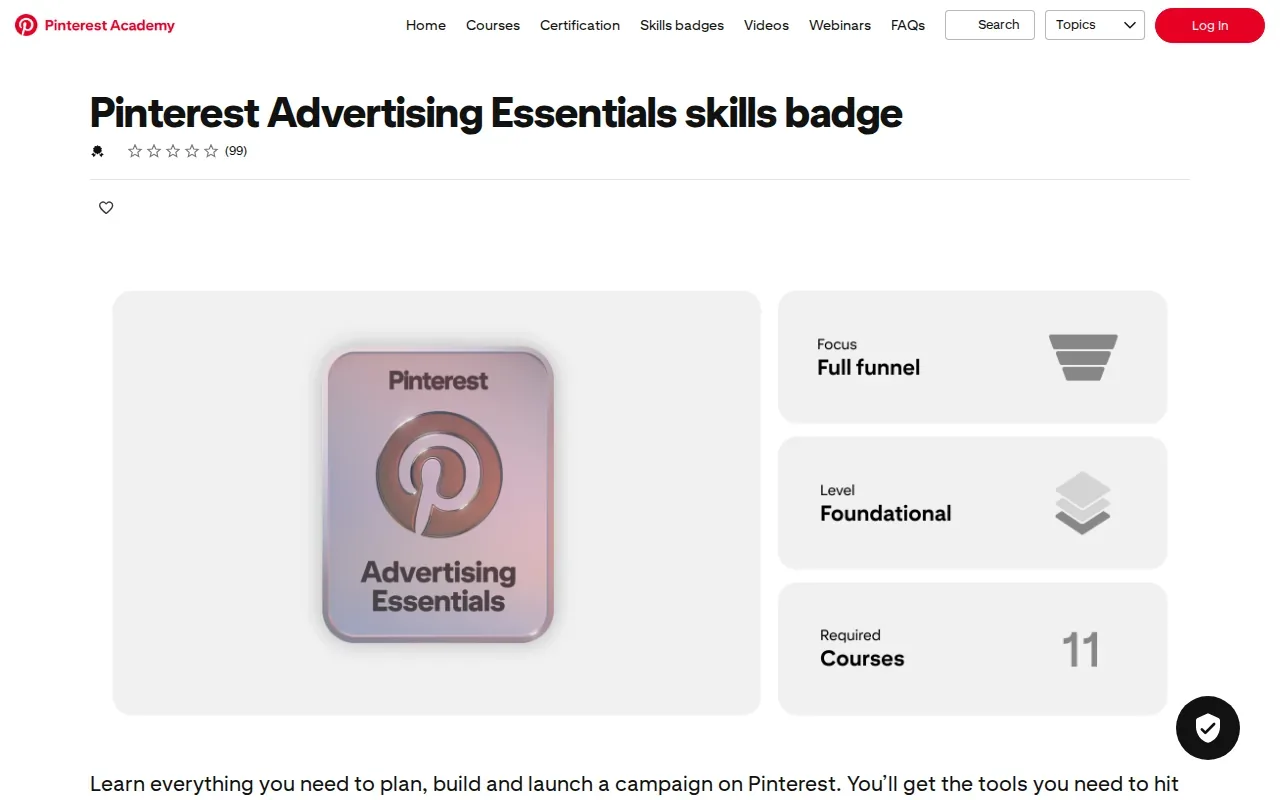
The credential is the Pinterest Advertising Essentials skills badge, awarded for completion. That label matters: a skills badge is not automatically the same as a degree or an accredited certificate. If you need a specific kind of credential, check whether the badge meets that requirement before you count on it.
Check Pinterest Academy for current pricing, duration, and study format. The focus is clearly platform-specific, so think about whether Pinterest ads belong in your role or business plan. If your main need is broader organic strategy, this pick may not cover the range you want.
Use the learning to sketch an ad plan around one business goal. Keep the intended audience and the outcome you would measure in view. That will make it easier to judge the badge against your larger learning plan.
9. Social Media Marketing Course by Digital Vidya: practitioner-led Meta Ads training
The Social Media Marketing Course by Digital Vidya is a five-week online training program with live classes. It suits learners who want structured practice with paid social campaigns, especially Meta advertising.
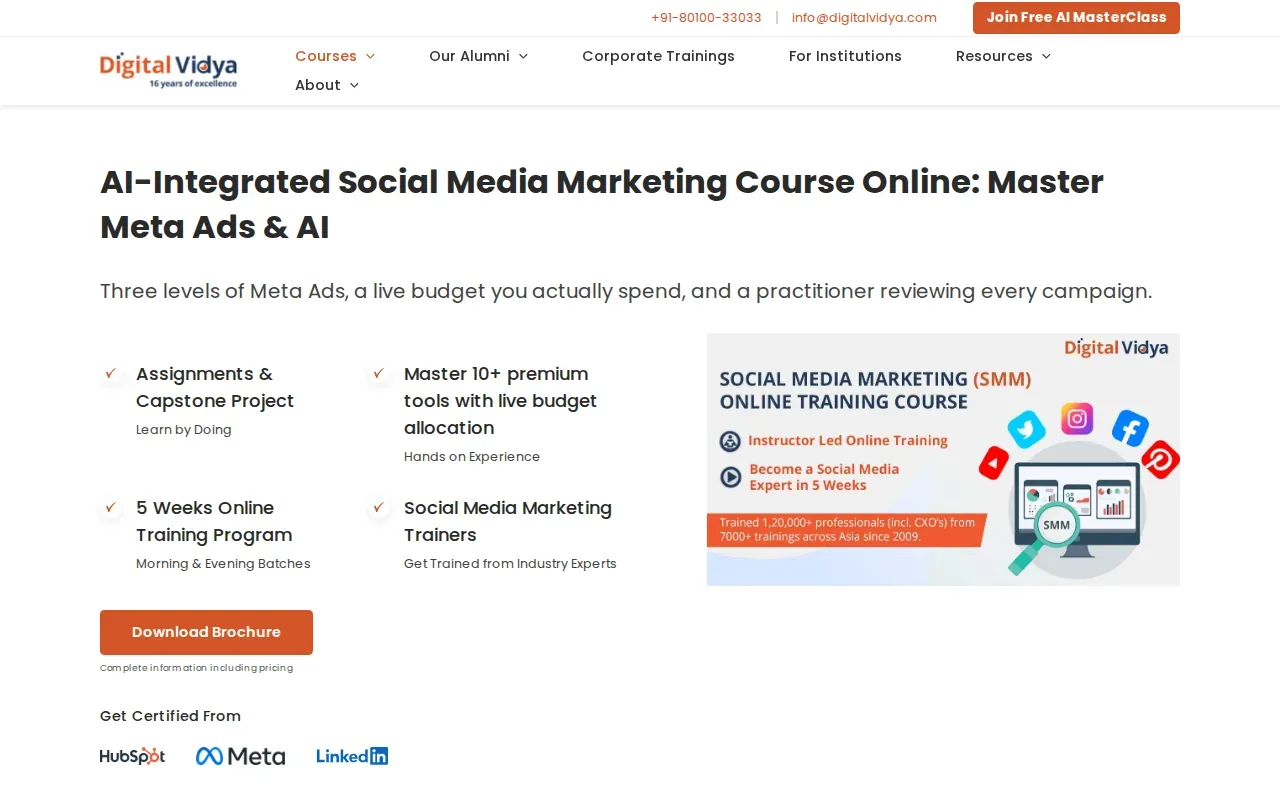
The course description gives a substantial schedule: 21 topics across 26 live sessions and 52 hours. It says each topic includes a two-hour class, a hands-on build during the session, and a graded home task. The training covers three levels of Meta Ads and includes a live budget learners actually spend, with a practitioner reviewing campaigns.
This setup can suit someone who wants to practice campaign work with a clear class structure. It also means you should be ready for live sessions and the stated budget use. Confirm the current course terms, including the amount you will spend on ads, before you enroll. Confirm the current tuition price before you enroll.
Digital Vidya’s course description also outlines work with campaigns and measurement. For learners who want to explain their work later, save the brief, your choices, and your results in one case-study document. Keep private account details out of any public portfolio.
Compare these social media marketing courses online
The most useful comparison starts with the kind of learning you need. Price and duration are only two parts of the decision. A platform-specific badge can suit a narrow skill goal, while a live course may suit someone who needs a set class schedule.
| Option | Price detail provided | Format detail provided | Credential detail provided | Best fit |
|---|---|---|---|---|
| DiSousa | — | Marketing education site and comparisons | Not a single course credential | Comparing learning paths |
| LinkedIn Social Media Marketing Program | Free one-month trial, then $39/month subscription | Eight-course learning path | — | Social media professionals and small businesses |
| Social Media Marketing Specialization by Northwestern University | — | Five courses | — | Social strategy and audience growth |
| Social Media Certification by Boot Camp Digital | — | — | Social Media Marketing Master Certification | Credential-focused study |
| Social Media Marketing Course by BrainStation | — | Part-time live classroom | — | Scheduled instruction |
| Social Media Marketing Course by IIDE | — | Online | Certification | Beginners, career changers, and marketers |
| TikTok Media Buying Certification | — | — | Professional certification | TikTok media buying |
| Pinterest Ads Essentials | — | — | Completion skills badge | Pinterest advertising fundamentals |
| Social Media Marketing Course by Digital Vidya | — | Five-week online program with live sessions | Certified course | Structured Meta Ads practice |
Check the provider’s current course page before making a final choice. Course names and offerings can change.
To compare the curriculum, look for the work behind each lesson. Does it help you choose a platform? Does it explain how to plan content? Can you practice reading results? Those questions reveal more than a broad promise to teach social media.
If you’re weighing a general course against a role-specific path, DiSousa’s comparison of social media marketing courses can help you map course choices to the work you want to do.
What should a social media course help you learn?
Social media marketing is the work of using social platforms to build an audience, share useful content, support a brand, and reach business goals. A course should help you connect daily tasks, such as planning a post, with an outcome you can review.
Social platforms allow people to share and respond to content. For a plain-language definition, see Wikipedia’s overview of social media marketing. The platform’s role can differ by audience and campaign. One business may use Instagram to share visual content, while another may use LinkedIn to reach a professional audience. Those are planning examples, not promises about what a course covers.
Start with a goal and audience
Write down what you want the channel to do. A goal might be to bring more people to a landing page, help customers understand a service, or get more replies to a post. Next, describe the audience in terms that help shape the message. “People who need help choosing a course” is more useful than “everyone online.”
Audience segmentation means dividing a broad audience into groups with shared needs or traits. A course that discusses audience segments can help you think about why one message may not work for every person. Keep the groups tied to a real business need rather than adding detail for its own sake.
Choose platform tactics that match the work
Different platforms call for different kinds of content and paid campaigns. The options in this list include platform-specific advertising lessons, a TikTok media-buying credential, and a Pinterest advertising badge. Those are narrow paths. A broader social strategy course may suit you better if you need to compare channels before picking one.
Before choosing a platform, ask where your audience is likely to see the message and what action you want them to take. Then choose a format that supports that action. A clear text post, a short video, or a paid ad can each be useful when they suit the goal. Don’t treat a trend or a format as a strategy by itself.
Plan content with a calendar
A content calendar is a schedule of planned posts. It can help you see whether your content has a purpose and whether a campaign has enough time to run. You don’t need a complex tool to start. A simple table can include the planned date, platform, topic, content format, goal, and the person who needs to approve it.
Business goal
    ↓
Audience need
    ↓
Content idea and platform
    ↓
Publish or promote
    ↓
Review the result
    ↓
Adjust the next plan
Think of a small shop planning a week of posts. One post could explain a common customer question. Another could show a product in use. A third could invite people to visit a page. Those are different content roles. A calendar makes the mix visible before the week begins.
Content buckets are broad themes used to group posts. Common examples include educational, entertaining, inspirational, and promotional content. A bucket is useful when it helps you plan a mix. It shouldn’t force every post into a theme that doesn’t fit.
Learn to read basic metrics
Metrics help you see what happened after a post or campaign went live. Reach is the number of people who saw content. Impressions count how often content appeared. Engagement tracks actions such as likes or comments. Click-through rate, often shortened to CTR, measures the share of people who clicked after seeing an item. Conversions track a desired action, such as a signup or purchase.
Choose a metric that fits the goal. If you want people to visit a page, clicks may matter more than likes. If you want to learn whether a message prompts discussion, comments may be useful. A key performance indicator, or KPI, is a metric tied to a goal. Don’t report a number without saying what it helps you decide.
For paid campaigns, cost per acquisition (CPA) is the amount spent to gain one desired action. Return on ad spend (ROAS) compares revenue attributed to ads with the ad spend. The exact way you calculate results depends on how you define and track the outcome. Put your assumptions in the report so another person can follow your reasoning.
Campaign goal
  ├─ Audience group
  ├─ Ad creative
  └─ Budget and delivery
        ↓
   Results review
        ↓
Keep, revise, or pause
Paid social is often organized into a campaign, an audience or ad set, and the creative people see. The campaign sets the broad goal. The audience level defines who should see the ad. The creative is the message and visual. The structure can help you find where a change is needed. If an ad reaches the wrong people, review the audience. If people see it but don’t act, revisit the message and offer.
Keep a short report for each test. Record the goal, the dates, what changed, and the results. A small, consistent report helps you compare one test with the next. It also makes it easier to explain a decision to a manager or client.
When choosing training, check whether the course explains measurement and how to act on results. A dashboard alone doesn’t tell you what to do. The lesson should connect a metric to a decision, such as revising a post or adjusting a campaign.
Pro Tips for getting value from a social media marketing course
Pick one work goal before you enroll. Decide whether you need a broader strategy foundation or one specific skill, such as TikTok media buying. This keeps a course from becoming another unfinished tab.
Use one project as your practice thread. Choose a brand, service, or personal project you can discuss openly. Apply each lesson to that same project so you can see how audience choice, content, and measurement connect.
Save work as you go. Keep a brief, calendar, sample post, campaign outline, and report. Remove private data before sharing anything publicly. A clear sample gives an employer or client more context than a credential name alone.
Review a lesson with a real question. Before watching, write down what you need to decide. Afterward, record the action you would take. This turns a lesson into a work habit.
Check the credential language. A certificate of completion, professional certification, and skills badge can mean different things. Read the wording and confirm whether a particular credential meets an employer’s or client’s stated requirement.
Protect your learning budget. If a program has a trial or monthly subscription, note when the trial ends and what you need to finish. For paid ad training, check whether you must spend an ad budget separately from tuition.
Track one useful KPI at a time. Choose the metric that best matches your current goal. If the work is meant to drive page visits, start with clicks. Add more measures only when they answer a real question.
Keep the practice small. Plan a short content run before building a full strategy deck. Review what you learned, then decide what deserves more time.
A measurement plan can fit on one page. State the goal, name the audience, choose the KPI, and write down how often you’ll review it. The metric should help you make a decision, not fill a report.
Goal → KPI → Collect results
 ↑                    ↓
 Next test ← Decision ← Review
For a broader view of professional social media study, DiSousa also has a comparison of social media manager course options. Use it when you want to compare role-focused learning with the more specific advertising paths in this shortlist.
Conclusion
Choose a course based on the skill you need next, not the biggest credential claim. If you want a comparison resource before spending money, start with DiSousa’s digital marketing course comparisons, then confirm the course’s current terms and build one work sample as you study.
Income Disclaimer
Training and course credentials don’t guarantee a job, clients, or income. Results depend on your skills, work, market, and other factors. Treat earnings as uncertain and make spending decisions based on your own budget.
Frequently asked questions
Which social media marketing course is best for beginners?
The best course for a beginner depends on the skill you need first. IIDE describes its course as suitable for new learners, while LinkedIn’s option has an eight-course structure. Compare the syllabus and format before enrolling. If you’re still unsure, start with one goal, such as planning content or understanding paid social.
Are there free social media marketing courses?
LinkedIn’s program includes a free one-month trial, then a $39 monthly LinkedIn Learning subscription. That is a trial rather than a permanently free course. Check each provider’s current terms for pricing before you sign up.
Do social media marketing courses give certificates?
Some options in this list name a credential, including the Boot Camp Digital certification, IIDE certification, TikTok professional certification, and Pinterest skills badge. Other course details don’t confirm a credential. Read the exact credential terms, and don’t assume a certificate or badge is accredited unless the provider clearly says so.
How long does it take to learn social media marketing?
Study time varies by program. Digital Vidya describes a five-week online course with 52 hours across 26 live sessions. LinkedIn’s program has eight courses, but the details here don’t give a completion time. Set a weekly study schedule and check each provider’s current workload before enrolling.
Should I take a broad course or a platform-specific certification?
Choose a broad course if you need to learn how strategy, content, and measurement fit together. Choose a platform-specific certification if your work already centers on one channel, such as TikTok media buying or Pinterest ads. If you need both, build a foundation first, then add a narrow credential for the platform you use.
What should I put in a social media marketing portfolio?
Include work that shows how you think: a short strategy brief, a content calendar, sample posts, a campaign outline, and a results report. Explain the goal behind each item and what you would change next. Remove private account details and client data before sharing examples with employers or potential clients.
Sources and references
Definitions for social media marketing and key performance indicators are linked in the relevant sections above. Course details in this comparison are based on the research information supplied for the named options. Confirm current pricing, schedules, and credential terms with each provider before enrolling.

About the author