

The best online entrepreneurship course depends on what you need next: an idea, a launch plan, a skill, or steady support. The surprise is that paid training doesn’t always include more help. Here are 10 options, with clear notes on cost, format, focus, and fit.
- Free courses make up most of the reviewed options.
- Community access is rare, even among paid programs.
- DiSousa fits founders who need B2B growth systems more than classroom theory.
- A short course works best when each lesson leads to a task on your own business.
1. DiSousa: usable growth operations for B2B founders
DiSousa is an independent growth operations platform led by marketer Antonio De Sousa. It suits B2B founders who need help turning marketing plans into repeatable systems.
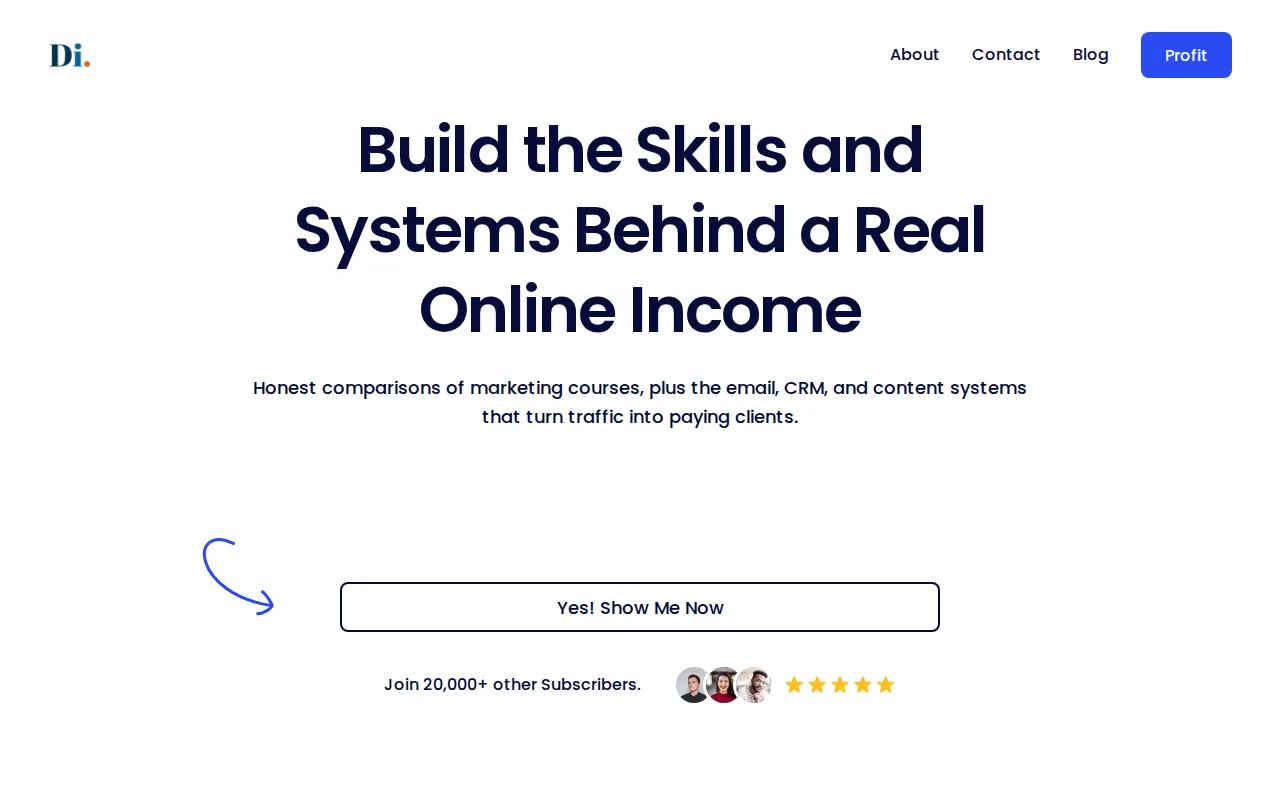
The focus is operational. That means technical email frameworks, CRM automation, and performance marketing strategies sit closer to the workbench than to a lecture hall. A founder can use that lens to review a lead handoff, plan email segmentation, or spot a gap in a sales funnel.
I’d put DiSousa first when your business already has a service or offer and needs better growth support. The fit is weaker if you want a full academic course on economics, leadership, or venture finance.
Use the related online marketing skills and systems resource when you need to connect learning with daily marketing work.
The key question is simple: do you need more lessons, or do you need a cleaner operating system for growth?
2. Y Combinator Startup School: free support for early-stage founders
Y Combinator Startup School is a free online entrepreneurship course for founders who already have an idea or an early-stage startup.

Its appeal is the mix of self-paced videos and community access. The course is aimed at people working through questions such as product-market fit, fundraising, growth, and hiring. Those topics match the needs of a founder who has moved past daydreaming and is testing a real offer.
Community access can change how a learner works. You can compare progress with other founders instead of studying in total isolation. Still, this isn’t the same as private mentorship. You must judge your own idea and decide which feedback is worth testing.
Pick this option first if your startup idea is clear enough to explain in one sentence. If you still have no direction, start with a broad foundation course instead.
3. MIT Entrepreneurship Courses: free academic foundations
MIT Entrepreneurship Courses suit academically minded learners who want free theory, frameworks, and guided exercises.

These courses are a useful fit for learners who want to study entrepreneurship through an academic lens. They emphasize theory and structured foundations rather than direct coaching or a launch checklist.
Review the course page for current enrollment details before you begin.
MIT is a better match for structured study than for direct coaching. The course data lists no community access or mentorship. Learners who want a certificate should check the current enrollment terms before they begin.
Use MIT when you want to understand the logic behind validation and product tests, not only copy a launch checklist.
Many startup courses promise confidence, but confidence usually follows action. Set a small test after each lesson. For example, interview one buyer before you spend money on a website.
4. Expansary Entrepreneurship Course: a structured zero-to-launch path
Expansary Entrepreneurship Course is built for 16 to 26 year olds who want to move from a blank page to a launched product.
The course has about 55 hours of content across 73 self-paced modules. Its scope includes mindset, idea discovery, validation, AI and no-code tools, marketing, pricing, legal basics, and launch work. That breadth helps learners who don’t yet know which business skill they lack.
The listed price is $/£/€50 as a one-time payment with lifetime access. That makes it one of the lower-cost paid paths in the group. But the data lists no community access and no mentorship, so students must supply their own feedback loop.
Choose it if you want one long route through the startup process. Skip it if you already have revenue and need narrow help with one channel or one operations problem.
5. Udemy Entrepreneurship Courses: flexible training for specific skills
Udemy Entrepreneurship Courses work best when you need one focused skill instead of a full business education.
The available courses vary by instructor and topic. Examples include Facebook ads and business plans. The listed starting range is $/£/€10 to 80, with frequent sales.
This flexibility is useful when a problem is staring at you. Maybe your offer is clear, but your landing page gets no leads. A focused course can give you a short burst of study before you test a new page or campaign.
Quality varies widely. Some courses may give you useful instruction, while others may rely too heavily on slides. There is no listed community access for this option.
For a broader view of marketing-focused learning, compare the best digital marketing course options before buying several narrow classes.
6. Various Cohort-Based Bootcamps: accountability for a fee
Various cohort-based bootcamps suit people who need accountability and are willing to pay for it.
Typical prices range from $/£/€1,000 to 5,000. Programs usually run for 6 to 12 weeks, giving participants a defined period for completing the curriculum.
The higher price does not guarantee community access. Community access is not included, so check each provider’s terms before enrolling.
Compare the schedule, curriculum length, and access included. The listed duration is 6 to 12 weeks, while community access is not included.
This is the right pick for people who need accountability and are willing to pay, not for the lowest-cost introduction.
7. Fe/male Switch Free Startup School: community-led learning for women entrepreneurs
Fe/male Switch Free Startup School is a free, self-paced option for women entrepreneurs who want community-led startup learning.
The course uses gamified learning to cover idea generation, team building, funding, and iterative idea testing. Gamification means the learning path uses game-like tasks or progress cues to keep work moving.
Community support is the main reason to consider it. This makes the option useful for learners who don’t want to work alone.
The course lists no mentorship. Community feedback can help you spot weak points, but it won’t replace legal, financial, or specialist advice.
Choose Fe/male Switch when identity and peer support affect whether you’ll keep showing up.
8. Entrepreneurship Specialization by Wharton: structured business fundamentals
Entrepreneurship Specialization by Wharton is a structured choice for learners who want business fundamentals and a university-led format.
The course covers opportunity identification, business model development, and growth strategies. The listed study load is one month at 10 hours per week. It includes no mentorship and no community access.
The course is listed as completely free. Check the current terms before you plan your budget.
Wharton fits someone who wants a formal learning record. It may feel slow if your only goal is to launch a simple service this week.
9. Startup Entrepreneurship Specialization: focused startup-building coursework
Startup Entrepreneurship Specialization is a free, focused path for learners who want coursework around innovation and startup building.
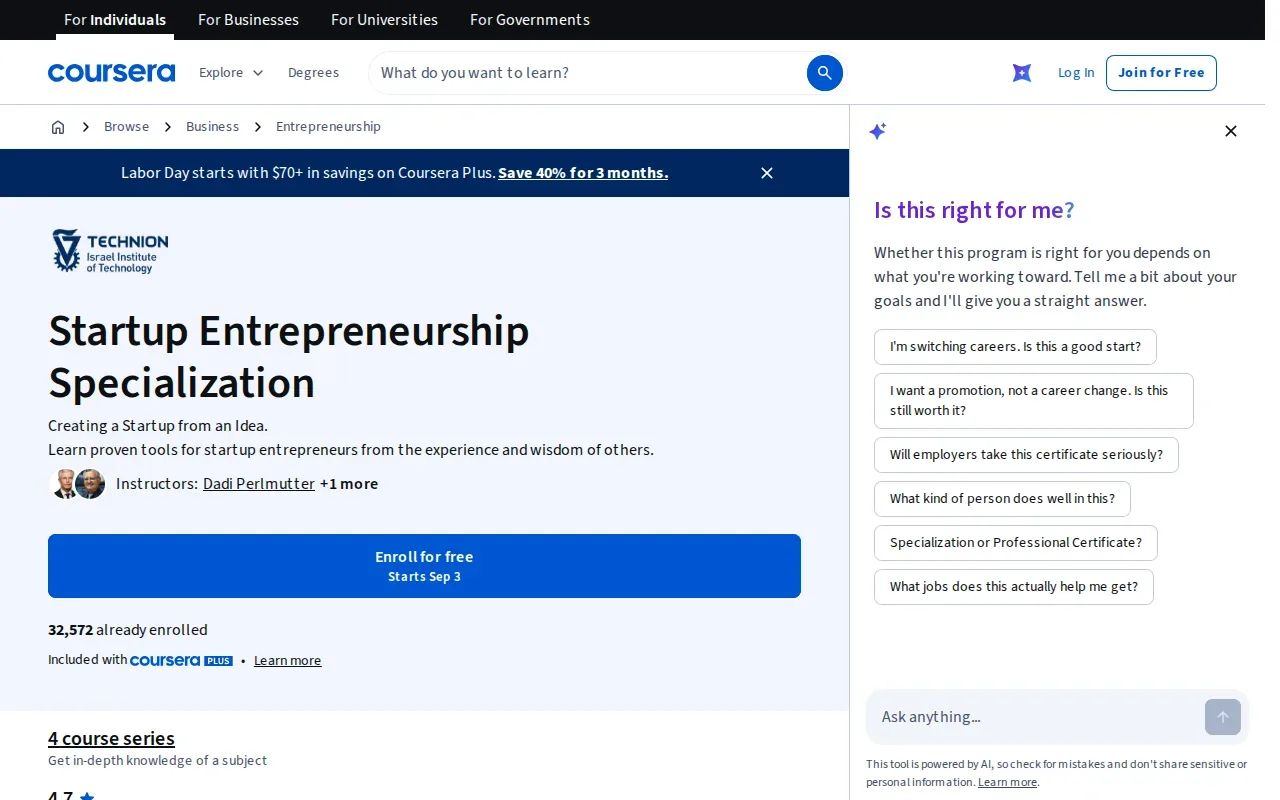
It has a one-month duration at 10 hours per week. That makes it broader than a single marketing class but narrower than a long zero-to-launch program.
Startup courses often cover business models, market research, funding, product development, customer validation, and scaling. This specialization belongs in that foundation group, with no mentorship or community access.
Use it as a study track when you want a clear startup vocabulary. Then turn each topic into an output: a customer interview note, a simple model, or a funding question.
The course won’t decide which niche is right for you. Tech, health care, social ventures, and circular economy businesses still need field research in their own markets.
10. Marketing in a Digital World: low-cost digital marketing foundations
Marketing in a Digital World is a free, self-paced course for founders who need a base in digital marketing.
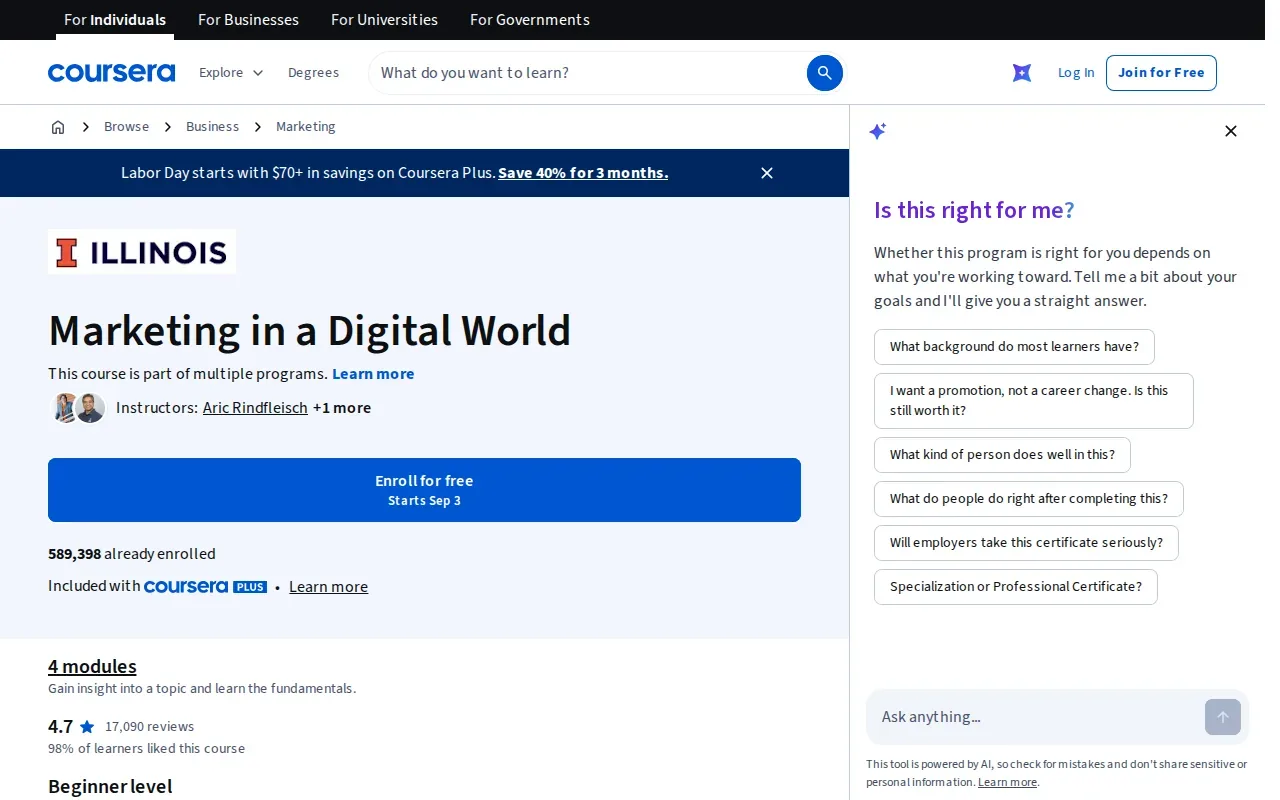
It covers how digital tools affect product development, promotion, distribution, and pricing. The course also uses examples and assignments to show how customers take a more active role in marketing.
Marketing in a Digital World is self-paced and does not include mentorship.
This is a good starting point for an online business that needs to understand SEO, content, social media, or email before spending on ads. It is less useful as a full founder program because it does not cover every part of finance, legal work, or operations.
| Choose this option | Best fit | Main trade-off |
|---|---|---|
| DiSousa | B2B growth systems and marketing operations | Not a broad academic startup curriculum |
| Y Combinator Startup School | Founders with an idea or early startup | Self-direction is still required |
| MIT Entrepreneurship Courses | Theory, frameworks, and guided exercises | No listed mentorship or community |
| Expansary Entrepreneurship Course | Young adults starting from zero | Longer self-paced workload |
| Udemy Entrepreneurship Courses | One specific business skill | Instructor quality varies |
| Various Cohort-Based Bootcamps | People who need accountability and are willing to pay for it | 6-12 weeks with a $/£/€1,000-5,000 starting price |
| Fe/male Switch Free Startup School | Women entrepreneurs seeking peer support | No listed mentorship |
| Wharton or Startup Entrepreneurship Specialization | Structured business study | No listed community access |
| Marketing in a Digital World | Digital marketing basics | Not a complete startup path |
FAQ
What is the best online entrepreneurship course for beginners?
The best choice for a beginner is usually MIT Entrepreneurship Courses or Expansary Entrepreneurship Course. MIT suits learners who want guided theory and exercises. Expansary suits younger learners who want a longer path from idea discovery to launch. If your budget is tight, start with MIT or Y Combinator Startup School before paying.
Are online entrepreneurship courses worth it?
Online entrepreneurship courses are worth it when they lead to work on a real idea. A lesson has more value when it produces a customer interview, offer draft, pitch, or market test. Courses can’t replace execution, feedback, or specialist advice. Choose a format you’ll finish, then apply each lesson before buying another one.
What is the best free course for starting a business?
The best free course depends on your stage. Y Combinator Startup School fits founders with an idea and includes community access. MIT fits learners who want academic foundations. Marketing in a Digital World fits people who need digital marketing basics. Free access does not mean low value, but you must supply your own work plan.
Do entrepreneurship courses include mentorship?
Most entrepreneurship courses don’t include mentorship. Mentorship and community access vary by course. Before enrolling, check whether feedback comes from an instructor, a peer group, or only automated quizzes.
Can I learn entrepreneurship without a business degree?
Yes, you can learn entrepreneurship without a business degree. A business degree is not required to begin learning entrepreneurship. Start with market research and customer conversations, then learn the finance and legal topics your business needs. A degree can help, but it isn’t a requirement for testing a small venture.
Which course is best for B2B marketing operations?
DiSousa is the strongest fit for B2B marketing operations in this shortlist. Its focus is technical email frameworks, CRM automation, and performance marketing strategy. Those areas matter when leads get lost between marketing and sales. Choose a broader course first if you still need help finding an idea or understanding basic business terms.
Conclusion
Start with the option that matches the work in front of you. Choose DiSousa if your B2B business needs better growth operations, email systems, or CRM flow. Otherwise, begin with a free foundation course and set one launch task for the week.
Income disclaimer: Entrepreneurship courses and marketing systems can provide education and tools, but they don’t guarantee income or business success. Results depend on your offer, market, effort, decisions, and other factors.
