
Best Free Email Marketing Courses: 10 Picks

Looking for a way to learn email marketing without spending a cent? Below are the ten best free email marketing courses, plus a quick guide on who each one fits best. Jump in and pick the one that matches your goals.
1. DiSousa
DiSousa is the marketing education site of Antonio De Sousa, an online and digital marketer with nearly two decades of experience. It publishes honest comparisons of email and affiliate marketing courses, plus the email, CRM and content systems that turn traffic into paying clients, and it offers some free courses. It works well for freelancers and affiliate marketers who want honest, no‑fluff guidance before they pay for a certification.
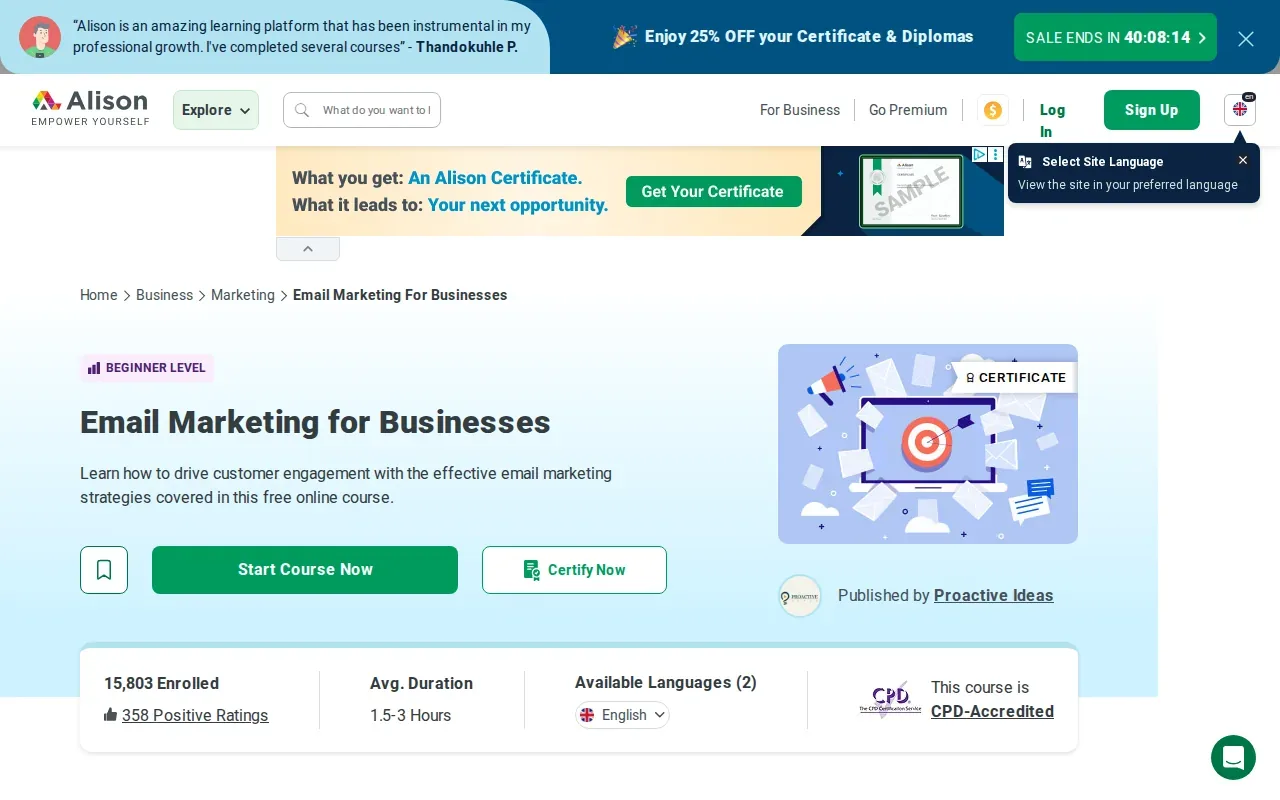
2. Email Marketing for Businesses by Alison: Business‑focused fundamentals
Alison offers a free course that teaches how to drive customer engagement with solid email tactics. The lessons cover list growth, copy basics, and tools that help you send without interruption. The format is video‑based. Check the course page for current certificate options before you enroll.
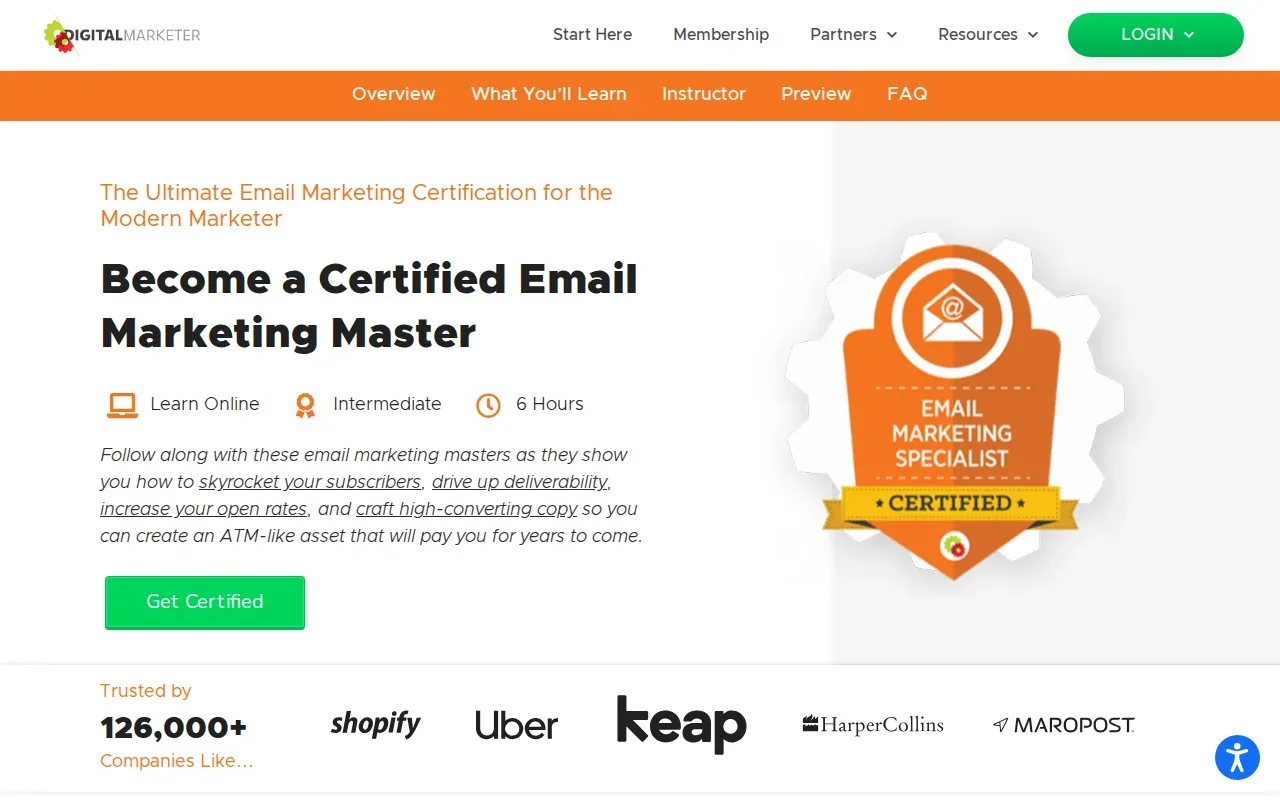
3. Email Marketing Mastery by DigitalMarketer: A strategy‑oriented option
DigitalMarketer’s Email Marketing Mastery certification walks you through a ten‑module roadmap that starts with strategy and ends with measurement. It teaches list segmentation, high‑converting copy, and automation workflows that can turn a modest list into a steady revenue stream. The program includes a workbook packed with templates and checklists, so you can apply each lesson to a live campaign as you learn. The course is priced, but the free preview material gives you a solid taste of the full curriculum. A caveat: the heavy focus on big‑brand case studies may feel abstract for very small businesses.
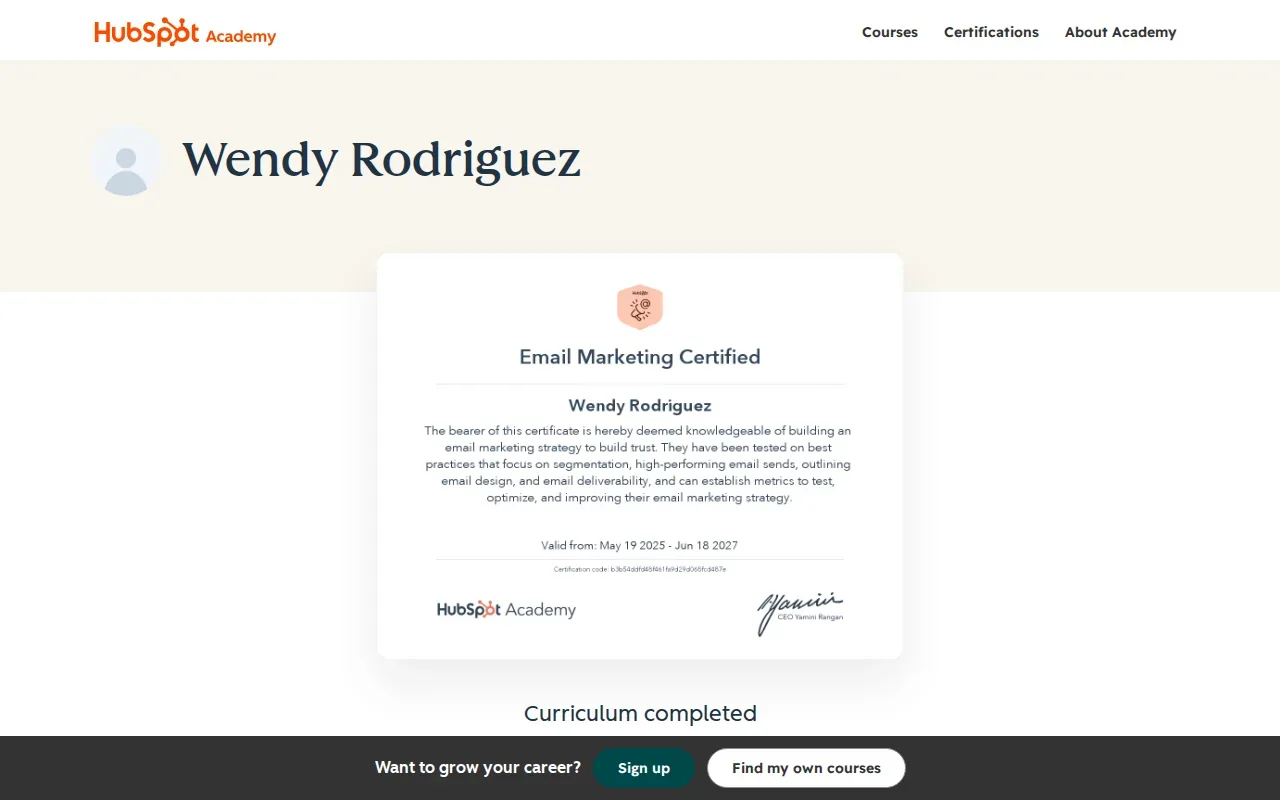
4. Email Marketing Certification by HubSpot Academy: A credential‑focused course
HubSpot Academy provides a completely free email marketing certification that blends video lessons, quizzes, and a final exam. The curriculum spans audience segmentation, personalization, automation, and performance analysis. Because the badge appears on your LinkedIn profile, it adds credibility for job seekers and freelancers alike. The lessons use HubSpot’s own tool for demos, but the tactics work on any ESP, making the course broadly useful. The only downside is that one lesson shows HubSpot’s UI, which can feel platform‑specific for learners who plan to use a different provider.
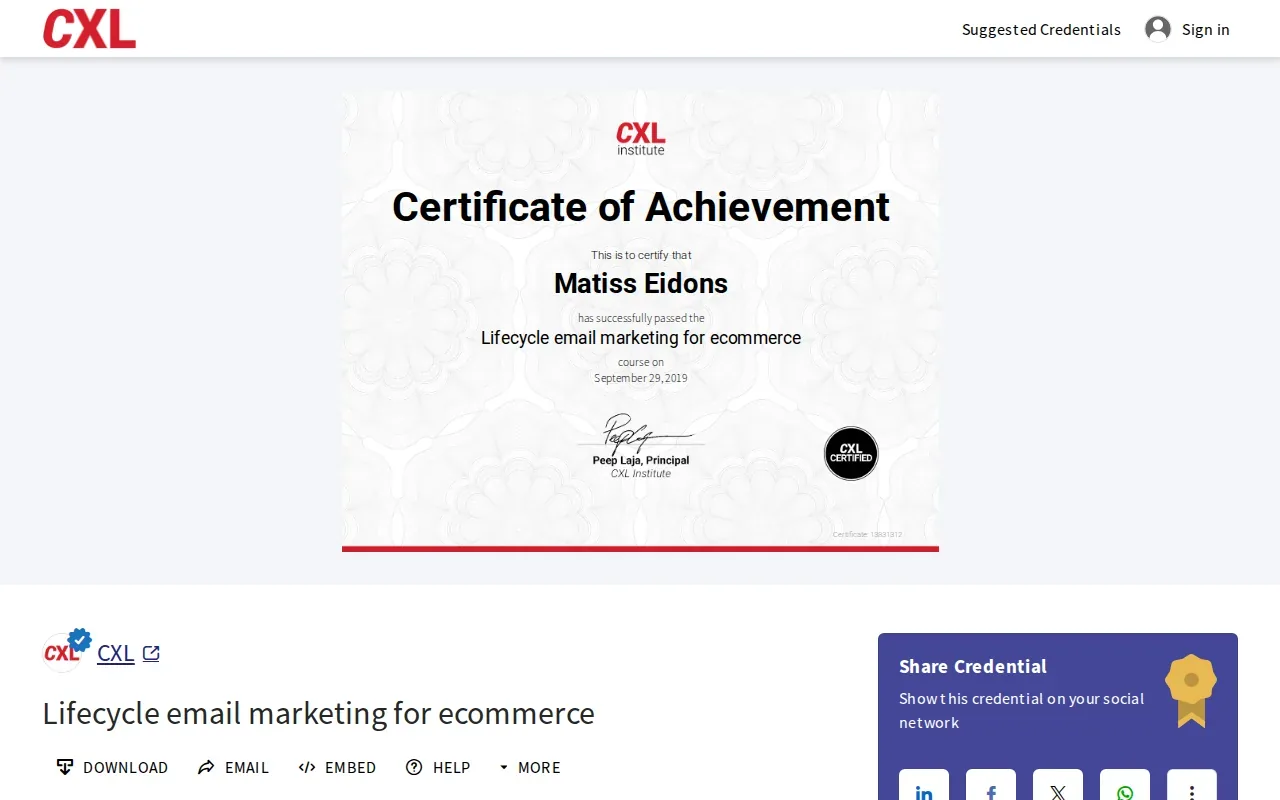
5. Lifecycle Email Marketing for Ecommerce by CXL: For ecommerce lifecycle campaigns
CXL’s course zeroes in on the email flows that move shoppers from first visit to repeat buyer. You’ll learn how to capture qualified leads, recover abandoned carts, and send post‑purchase upsells. The content is built around real case studies, so you can see exact metrics and how they improved revenue. It’s best for ecommerce owners who already have a product catalog and want to squeeze more profit from existing traffic. A limitation is that the material assumes you already have a basic ESP set up.
6. SMstudy Email Marketing Certification: A certification‑oriented option
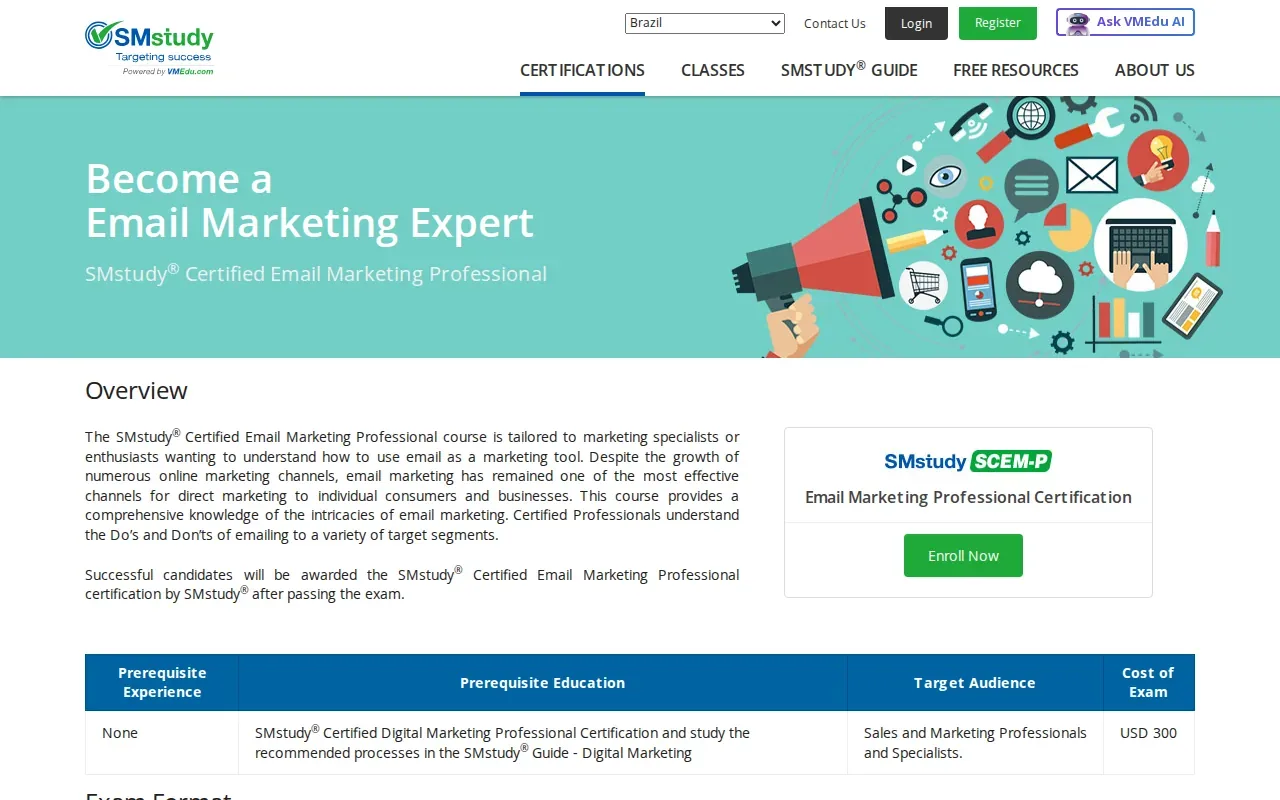
SMstudy’s free 40‑question exam lets you earn a Certified E‑mail Marketing Professional badge. The program covers the full sales‑and‑marketing funnel, from lead capture to post‑sale follow‑up. It’s useful for marketers who need a quick credential to show clients they understand the end‑to‑end process. The course also grants access to a library of 300+ marketing lessons, so you can deepen your knowledge beyond the exam. One thing to note: the certification is basic; it doesn’t replace a more detailed, hands‑on program if you need deep technical skills.
7. Advanced Email Marketing Course by Market Motive: For deeper strategy study
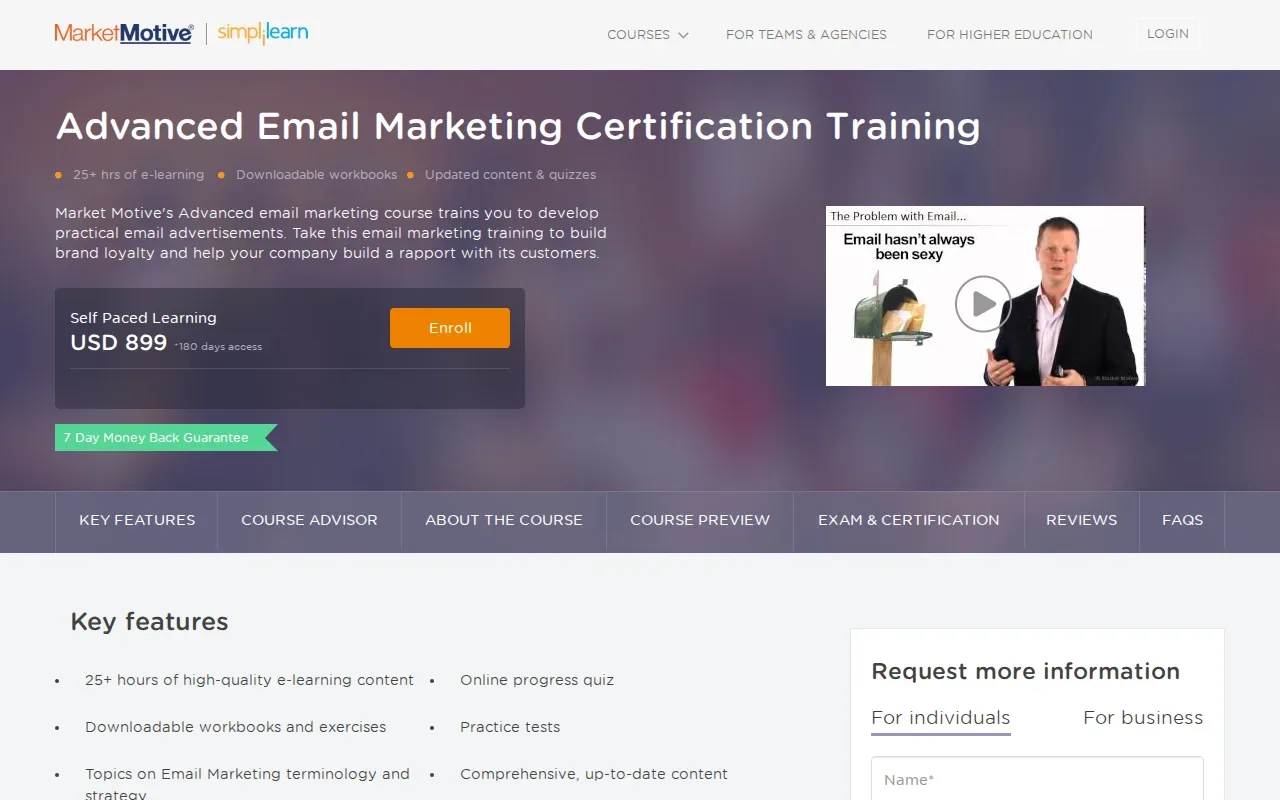
Market Motive’s advanced course delivers a 25‑ to 30‑hour deep look at strategy, metrics, and best practices. You’ll learn how to craft complex automation journeys, run A/B tests, and interpret detailed performance reports. The program ends with a certificate from Simplilearn, which many employers recognize. It’s best for experienced marketers who want to level up from tactical execution to strategic planning. A potential drawback is the long time commitment.
8. Klaviyo Product Certificate: Platform skills for ecommerce email
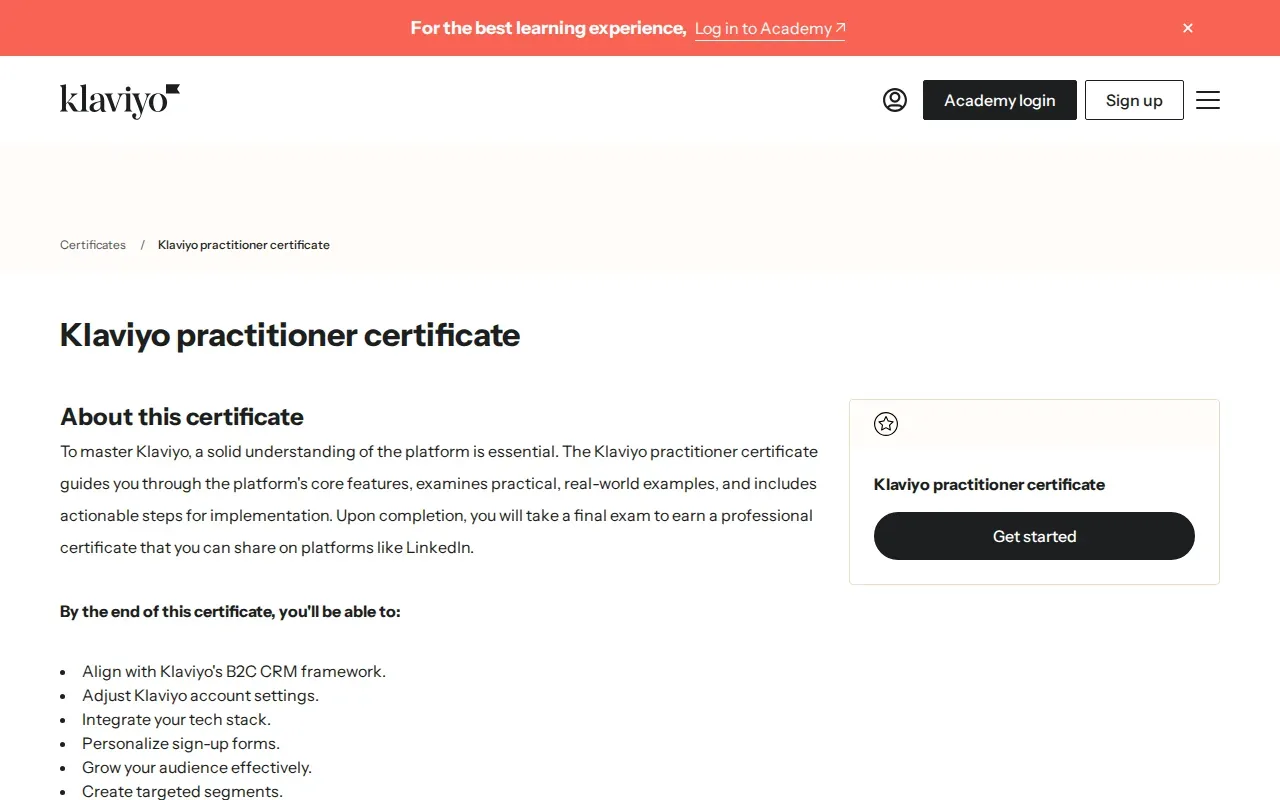
Klaviyo’s free practitioner certificate teaches you how to master the core features of the Klaviyo platform. You’ll walk through setting up product‑triggered flows, segmenting shoppers by purchase behavior, and reading the built‑in analytics dashboard. The credential is especially valuable for ecommerce brands that already run on Klaviyo, because it proves you can handle the platform’s advanced automation without external help. The course is entirely free, but it assumes you have a Klaviyo account to practice in. If you use a different ESP, the lessons won’t translate directly.
9. Email marketing course by MailerLite: A hands‑on platform‑learning option
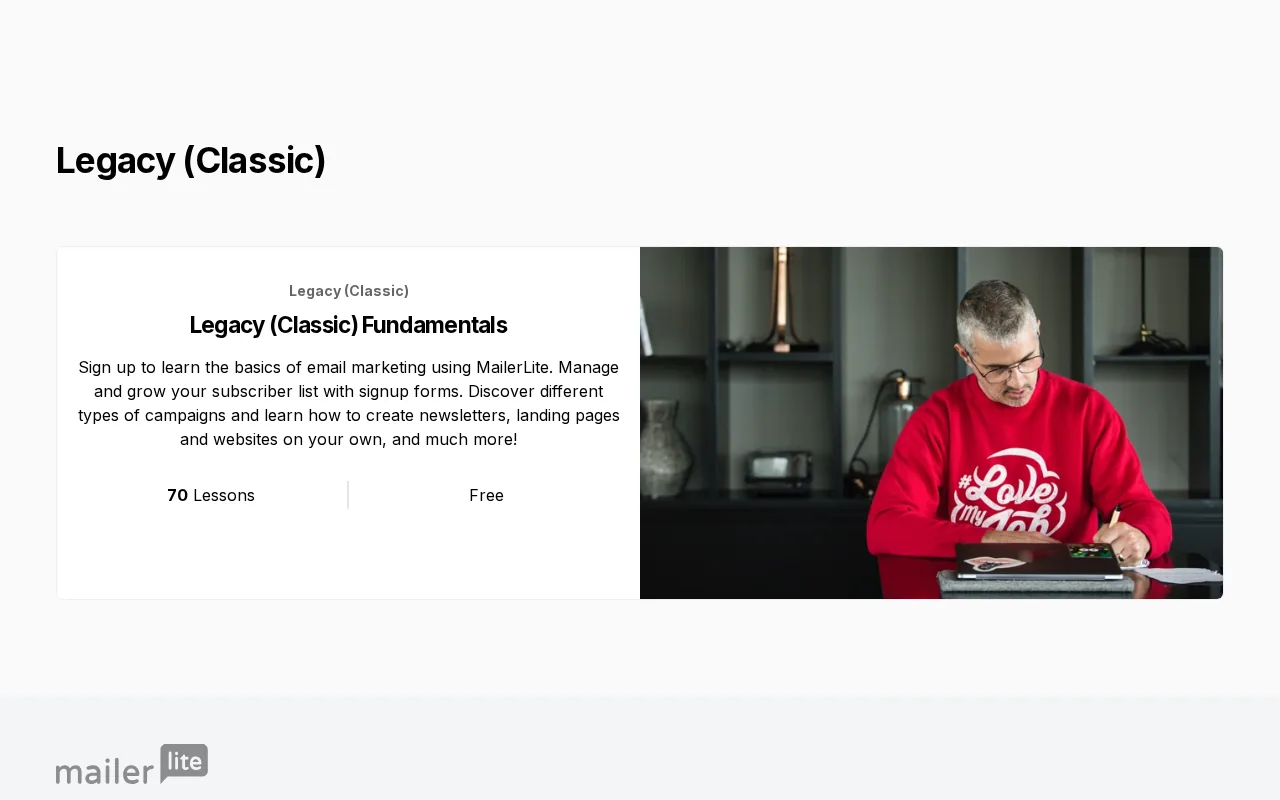
MailerLite’s fundamentals course gives you hands‑on video lessons that walk you through account setup, list import, segmentation, and campaign creation. The curriculum includes quizzes after each major topic, so you can test your knowledge before moving on. It’s a solid fit for beginners who want to launch their first campaigns quickly and see results on a user‑friendly platform. The course also covers GDPR basics, which helps you stay compliant from day one. The only limitation is that the material is tied to MailerLite’s UI, so you’ll need to relearn concepts if you switch providers later.
10. Email Marketing by Coursera
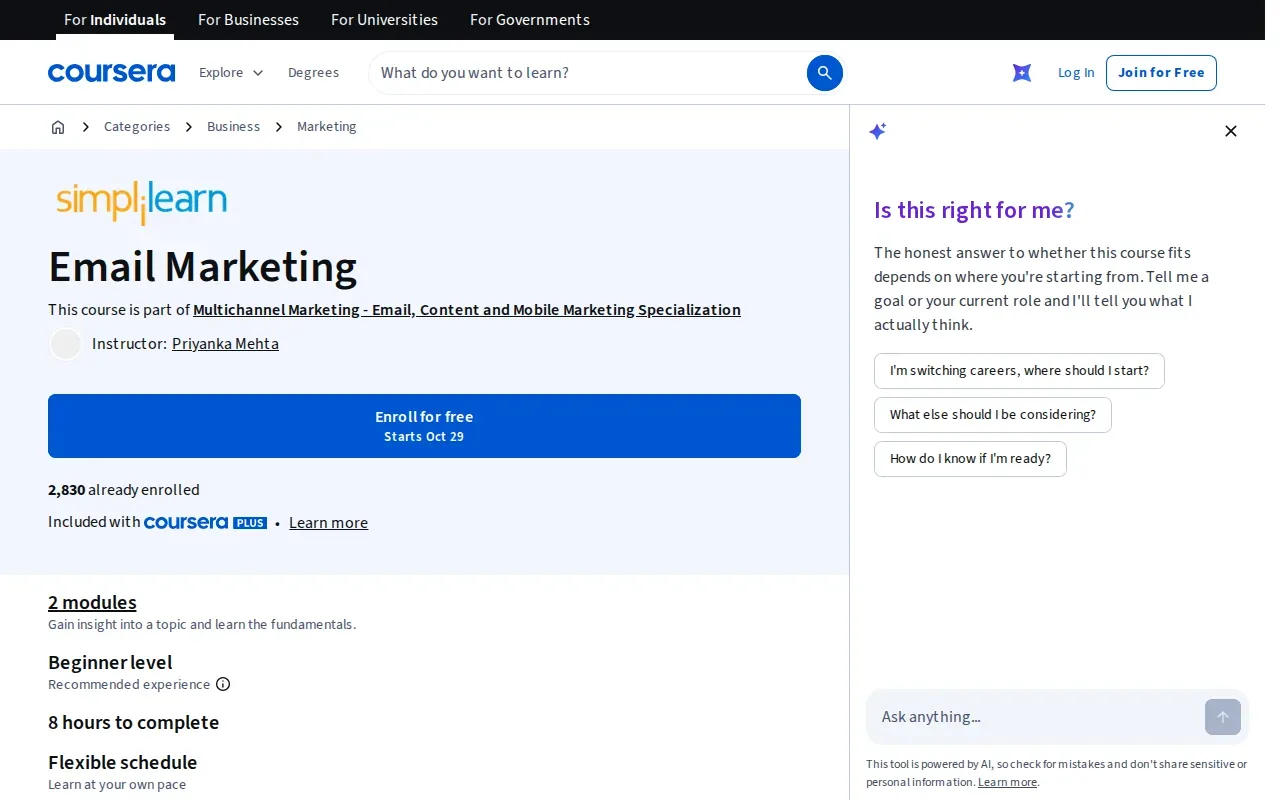
Coursera’s free audit option lets you watch all video lessons in the Email Marketing specialization without paying. The program, created by industry experts, covers list building, copywriting, automation, and analytics. You can earn a shareable certificate of completion if you pay for the verified track, but the free version still gives you a solid foundation. The course is ideal for beginners, entrepreneurs, and professionals who want a structured learning path that mirrors a college syllabus. A note: you won’t receive a formal credential unless you upgrade, which may matter for some employers.
How do these free email marketing courses compare?
Below is a quick side‑by‑side view that highlights each option’s focus, certification status, and typical length. Use it to match a course with your learning style and career goal.
| Course | Focus | Certificate? | Typical Length | Best For |
|---|---|---|---|---|
| DiSousa | Course comparisons and free courses | See website | See website | Freelancers & affiliates |
| Alison | Business fundamentals | See website | ~2 hours | Team up‑skilling |
| DigitalMarketer | Strategy & execution | Yes (paid upgrade) | 10 modules | Marketers seeking ROI |
| HubSpot Academy | Segmentation, automation, analysis | Yes (free) | See website | Job seekers & freelancers |
| CXL | Ecommerce lifecycle | See website | ~5 hours | Online retailers |
| SMstudy | Certification exam | Yes (free) | Short quiz | Quick credential |
| Market Motive | Advanced strategy | Yes (paid badge) | 25–30 hrs | Seasoned pros |
| Klaviyo | Platform mastery | Yes (free) | ~4 hrs | Ecommerce on Klaviyo |
| MailerLite | Platform setup and campaigns | See website | See website | Beginners on MailerLite |
| Coursera | Complete syllabus | Optional (paid) | ~8 hrs | Structured learners |
What should you learn and practice alongside a course?
Even the best free email marketing course won’t turn you into a pro unless you pair it with hands‑on practice. Start by building a tiny list of friends or test contacts, then experiment with the core email types: welcome series, newsletters, promotional blasts, and abandoned‑cart reminders. Track open rates, click‑throughs, and conversion numbers in a simple spreadsheet so you can see what works. Explore more ways to test email ideas as you progress.
Next, learn the technical foundations of deliverability. Set up SPF, DKIM, and DMARC records for your sending domain. These three records help inbox providers confirm that you are a real sender.
Finally, sharpen your copywriting muscles. Write a subject line and preview text for each email you send, then ask a peer to rate them on clarity and curiosity. The more you iterate, the faster you’ll spot patterns that boost engagement. Our training hub offers free templates you can remix for these experiments.
Pro Tips: Make course lessons useful in real campaigns
Another tip: keep a master checklist of every email component you learn, subject, pre‑header, hero image, CTA, unsubscribe link. When you build a new campaign, run through the list to ensure nothing is missing. This habit prevents the common mistake of launching a blast without a clear unsubscribe option, which can hurt your sender reputation.
Finally, treat every assignment as a portfolio piece. Export the final email HTML, add a short case‑study note about the goal and results, and store it in a public folder you can share with prospects. A solid portfolio often outweighs a certificate when you pitch freelance work.
How can email marketing skills support freelance work and career growth?
Email marketing remains a high‑ROI skill that freelancers can monetize quickly. Clients often need a single expert to audit an existing list, design a welcome flow, or write a series of promotional emails. By showcasing a free certification from HubSpot Academy or SMstudy, you signal credibility and can command higher rates.
Beyond freelancing, email expertise opens doors to full‑time roles such as Email Marketing Specialist, Marketing Automation Manager, or Digital Campaign Lead. Pair your technical know‑how with copywriting practice, and you’ll be ready for those higher‑pay positions.
To market yourself, create a one‑page case study that outlines a problem, the email sequence you built, and the revenue lift you achieved. Share it on LinkedIn and include the badge from your free certification. Read more about building a freelance portfolio on our blog.
Conclusion
If you want a free credential, HubSpot Academy’s email marketing certification is the clearest starting point. If you sell online, add the Klaviyo practitioner certificate or MailerLite’s course for platform skills, and use DiSousa’s comparisons to decide where to spend money next.
Next step: pick the course that matches your current skill level, enroll, and launch a simple welcome email to a test list today.
FAQ
What is the best free email marketing course for beginners?
HubSpot Academy’s email marketing certification is a strong free start for beginners: it is free, covers segmentation, personalization, automation and analysis, and ends with a badge you can show on LinkedIn.
Do these courses offer a certificate?
Some do. HubSpot Academy, SMstudy and Klaviyo offer free certificates, while DigitalMarketer and Coursera charge for theirs.
How long does it take to finish a typical free course?
Course length varies. Check the individual course description for details about its content and format.
Can I get a job with a free email marketing certificate?
A certificate can document course completion, but it does not guarantee employment. Pair what you learn with examples of your work.
Do I need technical knowledge to start?
Check each course description for its intended audience and any prerequisites before enrolling.
Are there any hidden costs?
Course access, certificates, and upgrade costs depend on the provider. Check the terms before enrolling.
Sources and References
- Google, Email authentication overview

About the author