
Best Content Marketing Courses for 2026

Looking for a course that actually teaches you how to turn ideas into content that sells? Below are the best content marketing courses for 2026, and who each one fits best.
We analyzed 34 YouTube comments about content marketing courses and found that 21% mentioned high production quality.
1. DiSousa
DiSousa is a free, self‑paced program that teaches the basics of building a real online income through content. It’s best for beginners who want a no‑cost start and a clear roadmap.
The curriculum covers audience research, simple SEO tactics, and how to set up a content calendar that can be launched in a week. It pulls in operational examples from Antonio De Sousa’s own client work, so you see exactly how the steps play out in a live business. Because the program lives on DiSousa’s site, you get access to a private Slack community where members share results and give feedback.
One honest note: the course doesn’t include a formal certification, so it won’t appear on a résumé in the same way a paid badge would.
Want to see how the modules line up with a professional credential? Check out our Content Marketing Certification guide for a quick side‑by‑side view.
Here’s a quick video that walks you through the first week’s lessons and shows the dashboard you’ll be using.
After the video, you’ll see how the framework fits into a typical content funnel, from idea to publish to measure.
2. Content Marketing Specialist Certification by DigitalMarketer: Structured content marketing training
This certification is a 7‑hour video program that teaches a repeatable “CDA” framework for planning, creating, and distributing content that drives revenue.
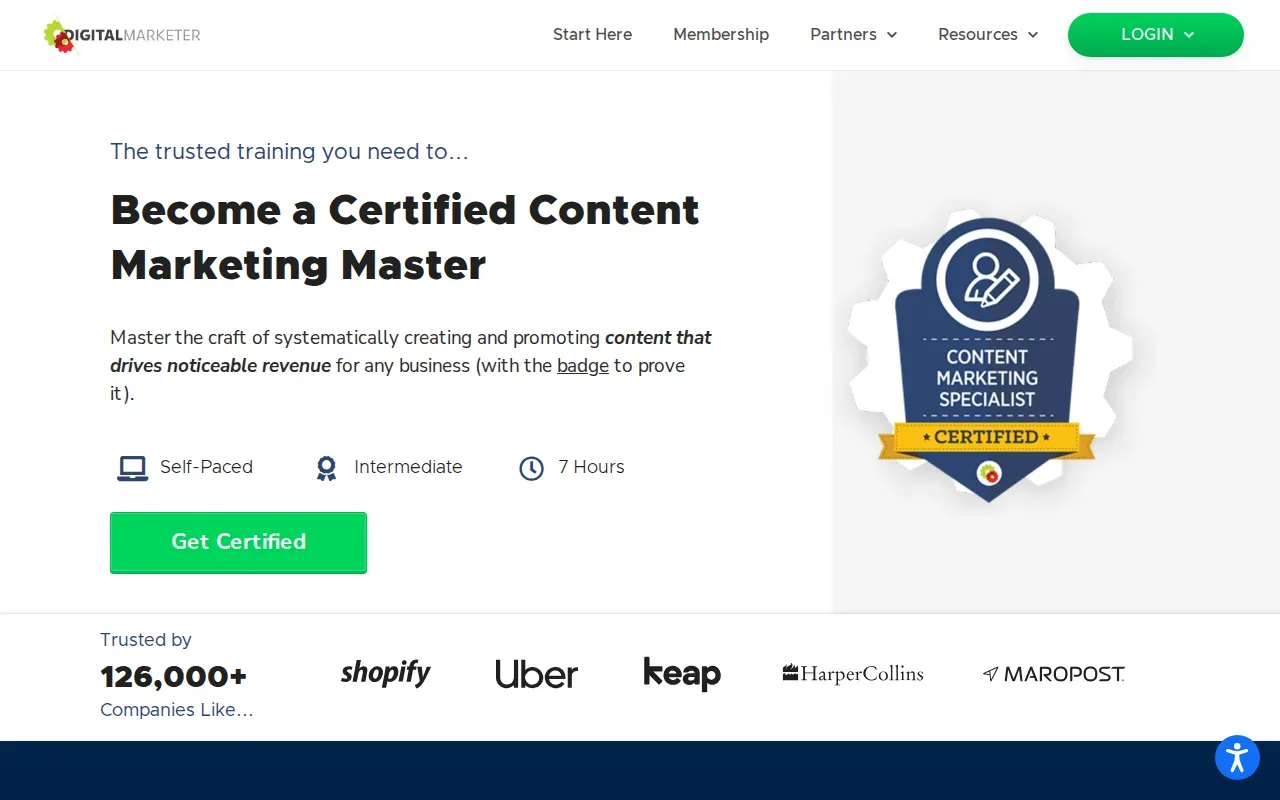
It’s ideal for marketers who need a proven process they can show clients or managers. The course includes real case studies from agencies that have used the framework to grow traffic by double‑digits. It also offers a final exam, so you earn a badge you can add to LinkedIn.
DigitalMarketer’s president, Mark De Grasse, walks through each step, making the material feel less like theory and more like a cheat sheet you can apply right away.
One limitation: the program doesn’t dive deep into advanced SEO tools, so you’ll need a supplemental course if technical optimization is a priority.
For a deeper look at how the certification stacks up against other options, read our SEO Copywriting Course comparison.
3. Copyblogger Academy: A broader learning library for content creators
Copyblogger Academy offers six full‑length courses plus ongoing video lessons that cover everything from headline writing to client acquisition strategies.
The platform works well for creators who want a library they can dip into over months, rather than a single intensive bootcamp. Each course comes with worksheets, and the community forum is active with feedback on drafts.
Because the academy updates its library with new masterclasses each month, you stay current with trends like AI‑assisted writing and short‑form video scripts.
There’s a small caveat: the pricing model is subscription‑based, so you’ll pay month after month if you don’t finish the courses quickly.
Explore a sample lesson plan and see how it fits into a broader skill set in our SEO Content Writing Course overview.
4. The Copy Cure
The Copy Cure teaches you how to write words that open hearts and wallets, promising zero sleaze and full authenticity.
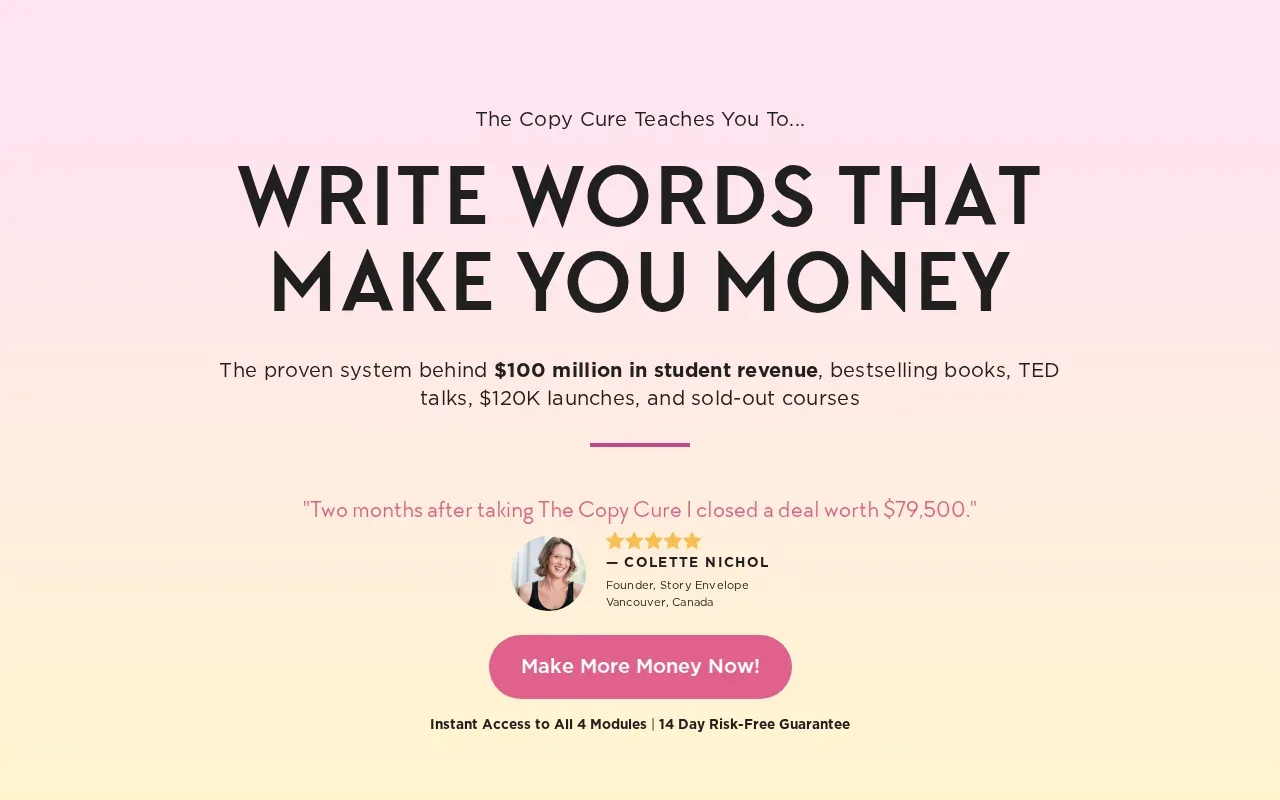
It’s a good fit for freelancers who need to land high‑ticket clients quickly. The program blends psychology with copy formulas, and you get live Q&A sessions with the instructor.
Students report that the weekly assignments push them to rewrite real client briefs, which builds a portfolio fast.
An honest limitation: the course leans heavily on persuasive copy techniques and doesn’t cover broader content strategy topics like SEO or distribution channels.
How do these content marketing courses compare?
| Course | Cost | Length | Certification | Best For |
|---|---|---|---|---|
| DiSousa | Free | ~8 hours | None | Beginners who want a quick start |
| DigitalMarketer Certification | Paid (price varies) | 7 hours | Badge on completion | Marketers needing a repeatable framework |
| Copyblogger Academy | Subscription | Varies (6 courses) | Certificate of completion | Creators seeking a broad library |
| The Copy Cure | Paid (one‑time) | 10 weeks | Certificate | Freelancers focusing on persuasive copy |
What should you check before enrolling in a content marketing course?
First, verify the instructor’s operational experience. A trainer who has shipped live campaigns will give you actionable insights.
Second, look for a clear curriculum outline. Courses that list modules on audience personas, SEO basics, and distribution channels tend to produce well‑rounded marketers.
Third, consider the support model. Access to a private community or live Q&A can make the difference between learning in isolation and getting feedback on your drafts.
Finally, check whether the course offers a credential that employers recognize.
Pro Tips for getting usable value from course training
Apply what you learn immediately. Take the first assignment and run it on a real piece of content you already own. That way you see results fast.
Build a swipe file of the templates the course provides. When you need a headline or a call‑to‑action, pull from the file instead of starting from scratch.
Pair the course with a free tool that reinforces the lesson. For example, use a keyword research tool while you study the SEO module.
Track your progress with a simple spreadsheet: column A for lesson, column B for action taken, column C for metric change. Seeing numbers improve keeps you motivated.
Conclusion
If you want a zero‑cost launch and a community that pushes you forward, start with DiSousa. From there, choose DigitalMarketer for a proven framework, Copyblogger Academy for a deep library, or The Copy Cure for high‑ticket copy skills.
Next step: enroll in the free DiSousa track and complete the first module this week.
Frequently asked questions about content marketing courses
What level of experience do I need before taking a content marketing course?
You can start with no experience; many free courses begin with the basics of audience research and simple SEO. If you already write blogs, you’ll move faster through the early modules.
Do these courses provide a recognized certification?
DigitalMarketer and The Copy Cure issue badges that you can display on LinkedIn. DiSousa does not offer a formal certificate, while Copyblogger Academy gives a completion certificate that’s useful for portfolio building.
How long does it take to finish a typical course?
Most programs range from 7 hours of video to several weeks of weekly lessons. DiSousa’s free track can be completed in under a week if you study a few hours each day.
Can I get a refund if the course isn’t a good fit?
Refund policies vary. DigitalMarketer offers a 30‑day money‑back guarantee. Copyblogger Academy’s subscription can be cancelled at any time. Always read the terms before you buy.
Are there any hidden costs?
Some platforms charge extra for premium community access or one‑on‑one coaching. DiSousa is completely free, while The Copy Cure includes optional live coaching sessions that cost extra.
Sources and References
Wikipedia, Content marketing
U.S. Small Business Administration, Business guidance
DigitalMarketer, Content Marketing Specialist Certification

About the author