
Want a credential that shows you can plan, create, and measure content that moves the needle? In the next few minutes you’ll learn how to pick the right content marketing certification, what to look for in the curriculum, and how to turn the badge into real results.
Step 1: Define What You Need the Certification to Do
First, write down the concrete outcome you expect. Are you aiming to boost a freelance portfolio, prove expertise to a hiring manager, or give a whole team a shared language?
If the goal is career credibility, a recognized badge matters more than the number of hours you log. If you need a quick, collaborative boost for a team, a low‑friction program that lets you start right away is a better fit.
Think about the audience that will see the badge. Recruiters often skim LinkedIn profiles, so a credential from a well‑known body can earn a quick glance. Teams that work on internal projects care more about usable frameworks they can apply the next day.
Here’s a quick way to map need to type:
- Job‑search credibility → formal, accredited program
- Team alignment → short, collaborative course
- Skill refresh → free, up‑to‑date modules
Once you know the outcome, you can filter the sea of options. For a formal credential that carries weight with hiring managers, the Content Marketing Institute’s AMA‑backed program is the only one that offers an official American Marketing Association badge, but it costs $1,395.1
For a fast, no‑price start that still gives you a badge you can paste on a resume, DiSousa’s simple collaboration track is a solid entry point. It doesn’t lock you into a long‑term commitment, and there’s no hidden accreditation hurdle.
Read more about how to map goals to certifications in our Best Digital Marketing Courses For 2026 guide.
Step 2: Compare Content Marketing Certification Options
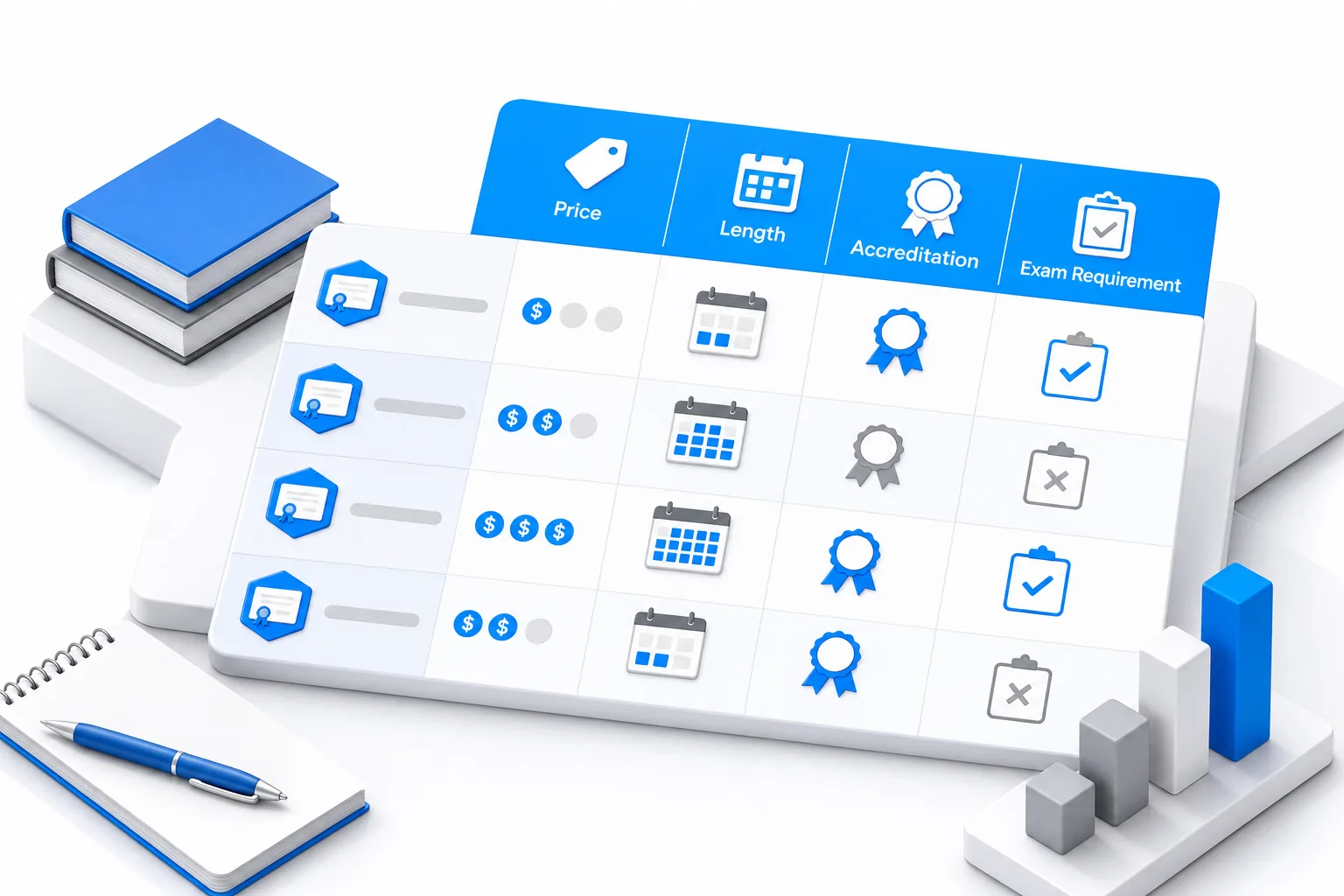
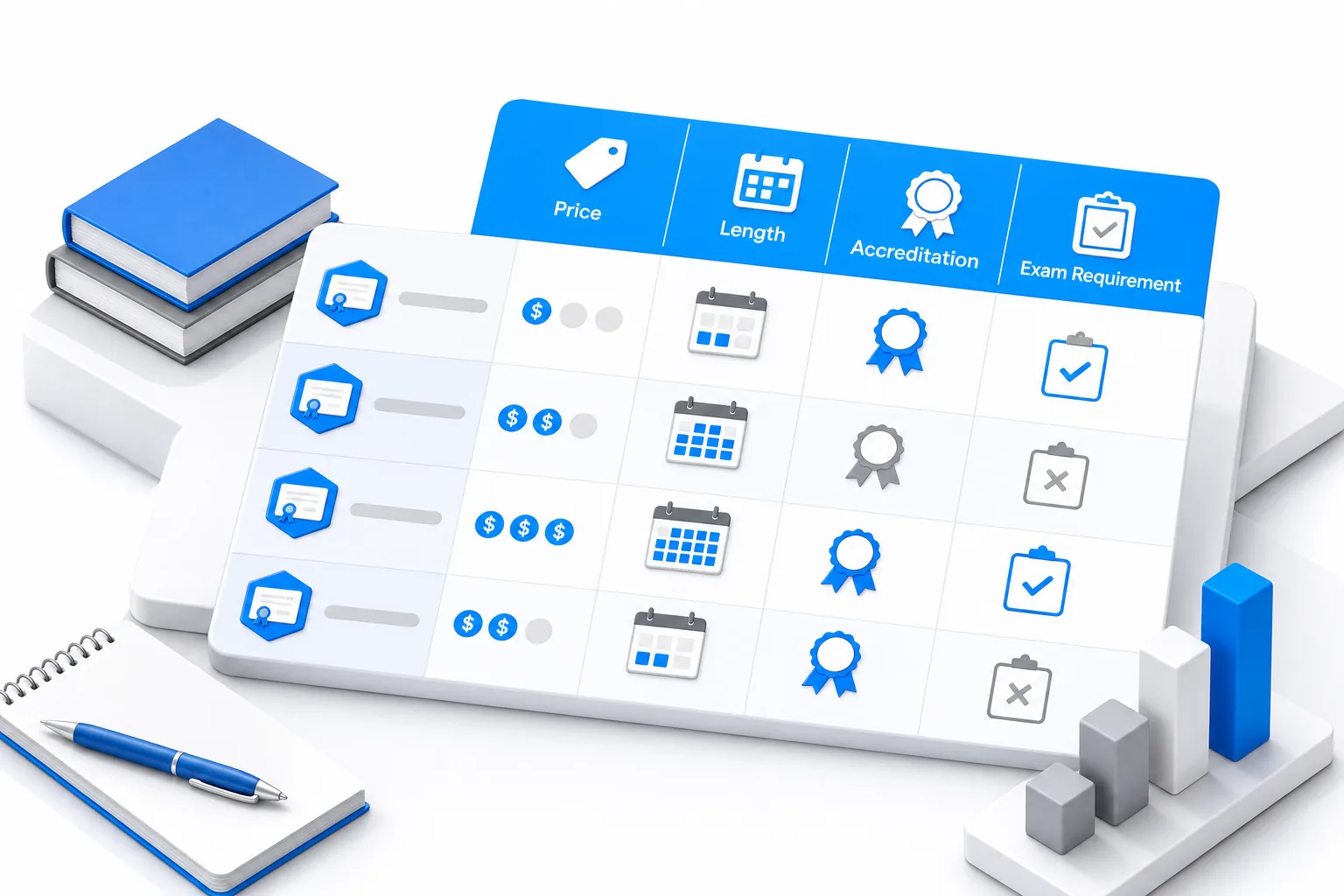
Now that you know what you need, line up the real contenders. Below is a quick matrix that highlights the most common decision points: price, length, accreditation, and assessment style.
| Program | Price | Length | Accreditation | Exam |
|---|---|---|---|---|
| DiSousa Simple Collaboration | Free | Self‑paced | None | No |
| HubSpot Content Marketing Certification | Free | ~6 hours | None | Yes |
| Content Marketing Institute (AMA‑backed) | $1,395 | ~15 hours | American Marketing Association | Yes |
| DigitalMarketer | — | — | — | Final certification exam |
Notice how only the CMI program lists an official AMA credential. That’s a key differentiator if you need a credential that hiring managers recognize across industries.
The HubSpot option is a strong free alternative. It covers the whole content lifecycle, but it doesn’t provide an external accreditation.
DigitalMarketer includes a final certification exam, which can be useful for learners who want a formal assessment.
A copywriting-focused certification can be useful for freelancers who want to demonstrate persuasive writing skills.
Our own DiSousa track is built for teams that want to start collaborating right away without worrying about price tags or exam logistics.
For deeper planning, consider how a credential fits your content investment priorities.
Consider how certification options align with your professional goals and preferred learning format.
Explore how the different formats line up with your goals in our Digital Marketing Bootcamp: How to Choose One article.
Step 3: Check the Curriculum, Assessment, and Usable Work
The syllabus tells you whether you’ll spend time on strategy or just on tactics. Look for modules that cover research, audience mapping, SEO fundamentals, AI‑assisted content creation, and measurement.
DiSousa’s curriculum is organized into four short modules that walk a team from strategic research to distribution, with AI tools woven throughout. The focus on real‑world toolkits means you can apply what you learn to a live campaign the same week.
HubSpot’s free program includes eight video lessons, a quiz, and a final exam that tests end‑to‑end workflow knowledge. It’s solid for beginners but stops short of deep AI integration.
CMI’s AMA‑backed path dives into governance, audience strategy, and a final 100‑question exam that requires an 80% pass mark. The depth is useful for senior marketers who need to lead cross‑functional teams.
DigitalMarketer includes a final certification exam. Compare its assessment requirements with your goals.
Copyblogger Content Marketing Certification is another option to compare.
An AI-focused track may offer a middle ground between free and premium options.
An on-demand certificate is another format to compare.
When you compare the curriculum, ask yourself: Does the program give you a capstone project you can showcase? Does it include up‑to‑date AI tools? Does it end with a clear assessment you can pass without excessive retakes?
Here’s a tip: If a course promises “AI‑driven content creation” but only mentions ChatGPT in a single slide, treat it as a red flag.
Step 4: Enroll, Finish the Assessment, and Use the Credential
Now that you’ve chosen a program, it’s time to sign up. Most platforms let you create an account with an email address and then walk you through a payment (if any) or a free enrollment.
For paid paths like the CMI AMA certification, you’ll receive a link to an LMS where you can track progress. The exam is usually 100 multiple‑choice questions, two hours long, and you need an 80% score to pass.2
Free tracks such as DiSousa or HubSpot let you start immediately. You’ll usually finish a short quiz at the end of each module, and the badge appears in your profile once you complete the final test.
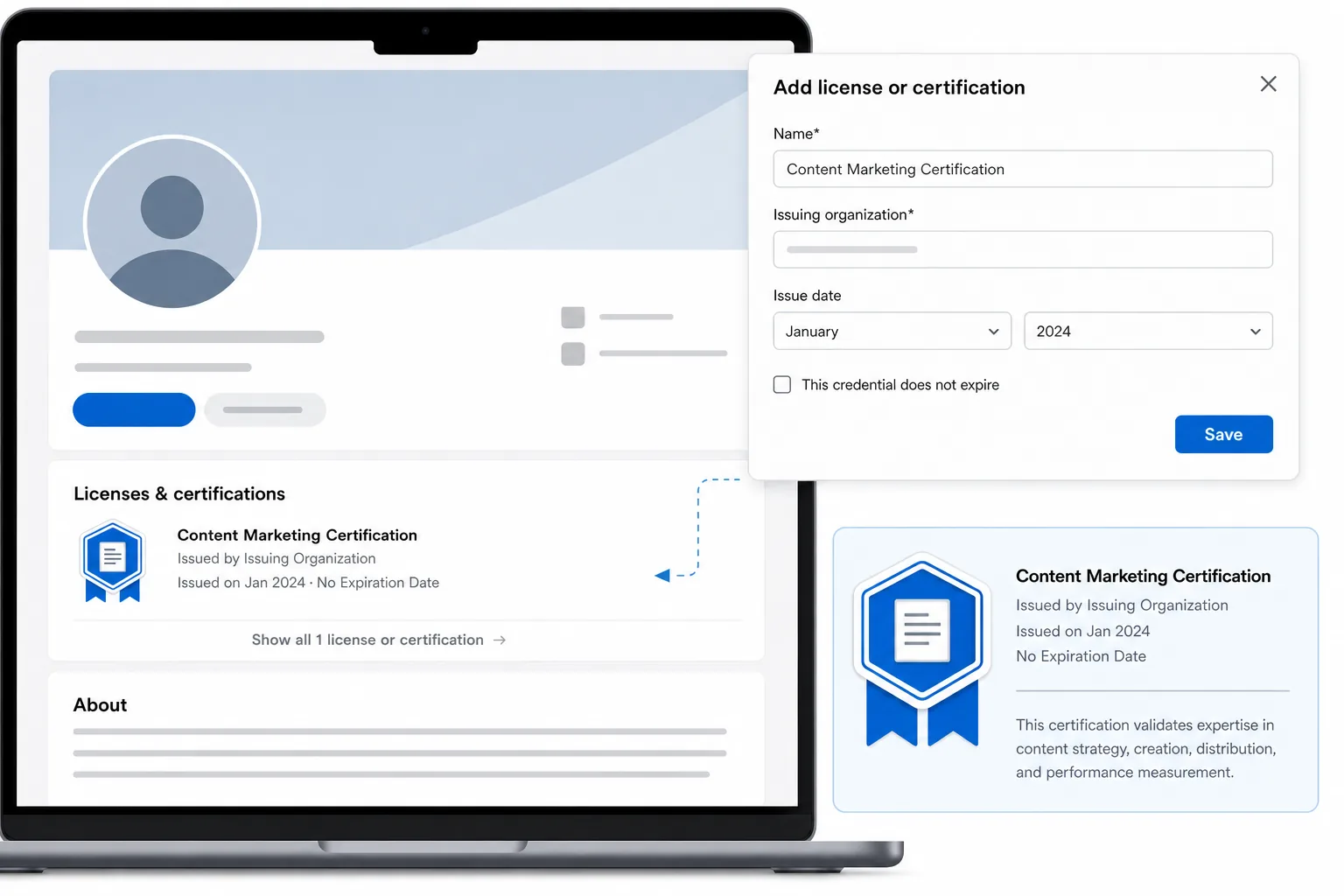
After you earn the badge, add it to your LinkedIn profile, attach it to your email signature, and sprinkle it into your resume’s certification section. Employers and clients often filter for keywords like “content marketing certification,” so visibility matters.
Don’t forget to keep the credential current. Some programs require renewal every three years or a set number of continuing‑education units.
Need a quick guide on where to place the badge? Check out our Best SEO Certification Courses For 2026 article for placement tips.
Frequently Asked Questions About Content Marketing Certification
What is a content marketing certification?
A content marketing certification is a credential that proves you understand how to plan, create, distribute, and measure content that drives business results. It usually involves completing a set of lessons and passing an assessment.
Do I need a certification to get a content marketing job?
Not always, but many employers view a recognized badge as evidence of structured learning. It can give you an edge, especially if you’re shifting from another field.
Are free certifications worth my time?
Free programs can teach solid fundamentals and provide a shareable badge. They are great for beginners or as a supplement to paid, accredited courses.
How long does it take to earn a certification?
Time varies. Free options like HubSpot take about six hours. Paid, accredited programs such as the AMA‑backed CMI course span roughly 15 hours of video plus exam time.
Can I use a certification to raise my rates as a freelancer?
Yes. Adding a recognized badge to proposals and your portfolio signals competence, which can justify higher pricing for clients.
Do certifications need to be renewed?
Some do. Requirements vary by credential, while many free badges never expire.
Conclusion
If you need a quick, team‑friendly start without price or accreditation hurdles, begin with DiSousa’s simple collaboration track. For a formal, AMA‑backed credential that carries weight with recruiters, invest in the Content Marketing Institute program.
Next step: pick the path that matches your goal, enroll today, and add the badge to your LinkedIn profile within a week.
