
Best Ecommerce Courses: 7 Picks for Sellers

The best ecommerce courses depend on what you need to learn next: running a marketplace shop, building a Shopify dropshipping store, or improving your skills on a specific platform. Here are six named options, including DiSousa, with clear notes on what each covers and who may find it useful.
Course length and format vary, while details such as cost and skill level matter when you choose. Use the comparison and tips below to match a course with a task you can put to work.
- DiSousa is an educational site for people building online income, not a dedicated ecommerce course.
- Amazon Seller University is a free learning resource that people can access without an Amazon selling account.
- Shopify Academy and BigCommerce University focus on learning tied to their respective commerce platforms.
- The two course listings with specific durations here are the Robin and Jesper course and the Ali Hobart and Sumner Hobart course.
- Before paying, check the course syllabus, level, current price, certificate terms, and the task you want to complete.
1. DiSousa
DiSousa is Antonio De Sousa’s marketing education site, built around skills and systems for a real online income. It suits aspiring affiliate marketers, freelancers, and online entrepreneurs who want to strengthen the marketing around an ecommerce business.
It is not a dedicated ecommerce course or a storefront platform. Its value for an online seller is the wider business context: DiSousa publishes comparisons of digital and affiliate marketing courses, along with material about email, CRM, and content systems that can help turn traffic into clients.
That focus matters when the store already exists but the owner needs to improve how people find it or how leads and customers are followed up. For example, a shop owner might study SEO, then use a content plan to answer buyer questions. A freelancer might focus on email systems and use those skills to support a client’s store.
Antonio De Sousa is an online and digital marketer with nearly two decades of experience, according to the site’s business description. DiSousa is therefore a useful first stop for readers comparing ecommerce-specific instruction with the marketing skills that support a store. The site also publishes course roundups on digital marketing courses and online entrepreneurship courses.
Best fit: Learners who need marketing education alongside ecommerce training. If your immediate need is platform setup, start with a platform’s own learning resources instead.
2. Robin and Jesper’s AliExpress-to-Shopify Dropshipping Course: a DSers-focused build
Robin and Jesper’s AliExpress-to-Shopify Dropshipping Course focuses on building an AliExpress-to-Shopify store with DSers. The course is aimed at beginners, while its listing also says it can help more experienced Shopify dropshipping owners.
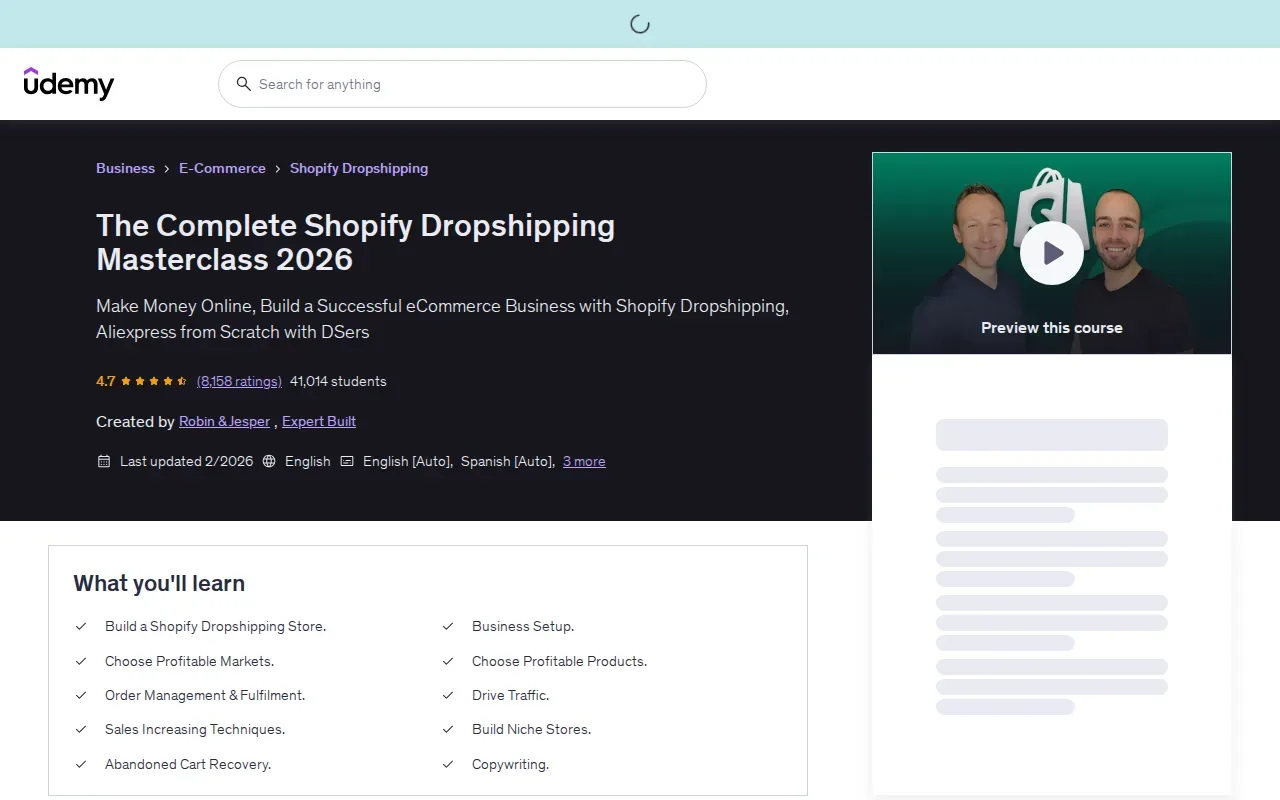
The course listing describes lessons on store building, product choice, adding products, traffic, abandoned-cart recovery, and order fulfillment. Those topics follow a recognizable store workflow: choose what to sell, set up the shop, bring visitors in, then handle the order after a customer buys.
The listed version contains 71 videos, with subtitles and transcripts, and runs for 7 hours and 33 minutes. It includes a digital certificate. The listing also describes templates and tools as part of the course materials, but their exact contents should be checked before you enroll.
That structure may suit someone who wants one course centered on a specific dropshipping model, rather than broad training across many ecommerce business types. A learner can use the lessons to map a store setup task, then pause and apply the relevant idea in their own workspace. The practical test is whether the course’s current lesson plan still matches the workflow and tools you intend to use.
Dropshipping requires time, money, and patience, and results are not guaranteed or instant. Treat that as a useful reminder: training can explain a process, but it cannot promise sales. Before committing, compare the current course outline with your own needs, especially if you already run a store.
Best fit: Beginners who want a focused introduction to AliExpress-to-Shopify dropshipping, plus current store owners who want to review that model. Check the course’s current listing for its latest duration and terms.
3. Ali Hobart and Sumner Hobart’s Etsy Course: shop setup and marketing
Ali Hobart and Sumner Hobart’s Etsy Course focuses on Etsy shop setup and marketing. It may suit a new seller who wants instruction tied to opening and promoting an Etsy shop rather than launching a standalone ecommerce site.
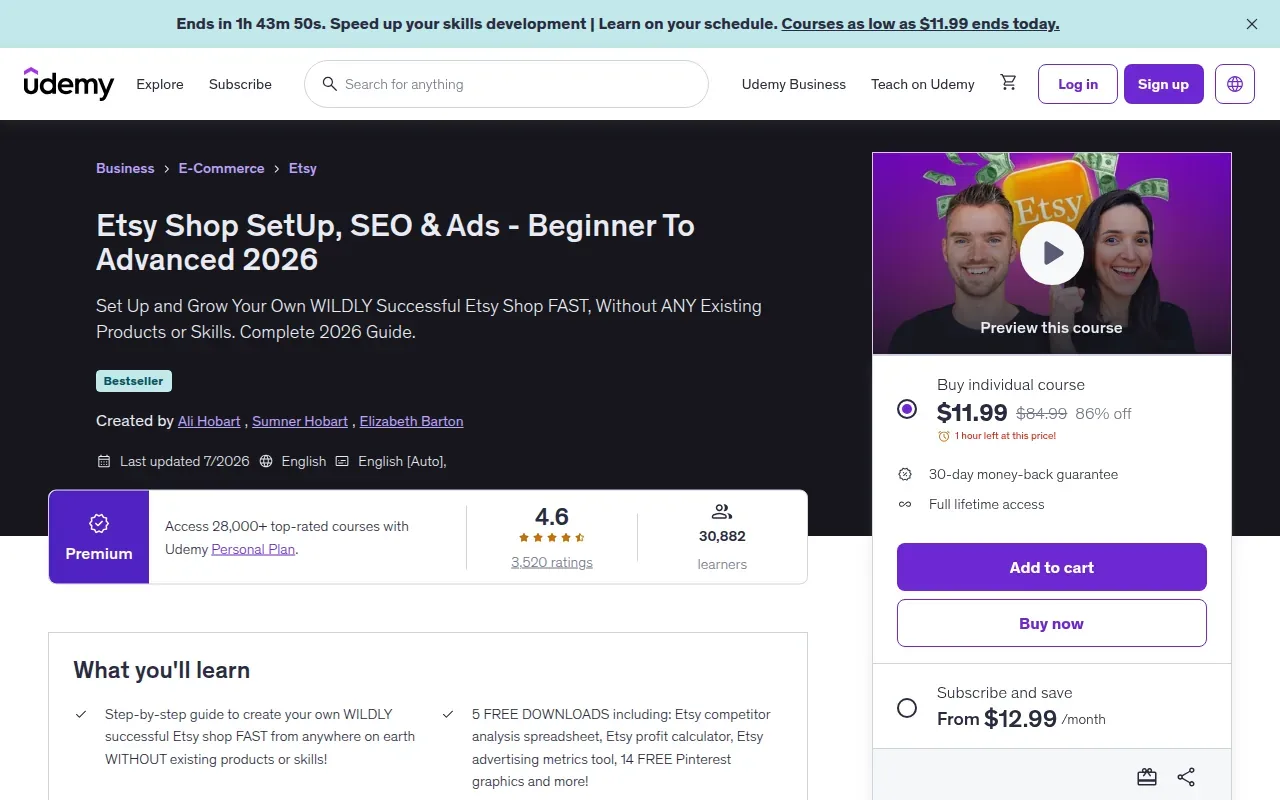
The course runs about 11 hours across 90 lectures. Its title emphasizes setup, SEO, and ads, and it is designed for people starting without existing products or skills. Those details suggest a broad start-to-promotion path, though learners should inspect the current lesson outline to see which parts receive the most attention.
For a first-time seller, the useful question is what you will be able to do after each module. Can you draft a shop description? Can you improve a product listing? Can you identify a search phrase to test? These are task-based checks, not promises of ranking or sales.
SEO means search engine optimization. In a marketplace setting, it includes making listings easier for potential buyers to understand and find. Ads are a separate way to promote listings, so it helps to know whether the course teaches how to set them up, how to assess them, or both.
Custom products can be one route for expanding an online shop’s range. For instance, a seller considering branded apparel can look at a custom apparel and merchandise printing service as an example of the kind of supplier information to research before planning a product line. That is a supplier example, not a claim that the course includes supplier training.
Best fit: People who want Etsy-specific shop setup and marketing lessons. Before enrolling, compare the current syllabus with your actual starting point: shop setup, listing visibility, or paid promotion.
4. Amazon Seller University: free marketplace learning resources
Amazon Seller University is a collection of educational resources for people who want to learn about selling on Amazon. Its resources are available even to people who do not yet have an Amazon selling account.
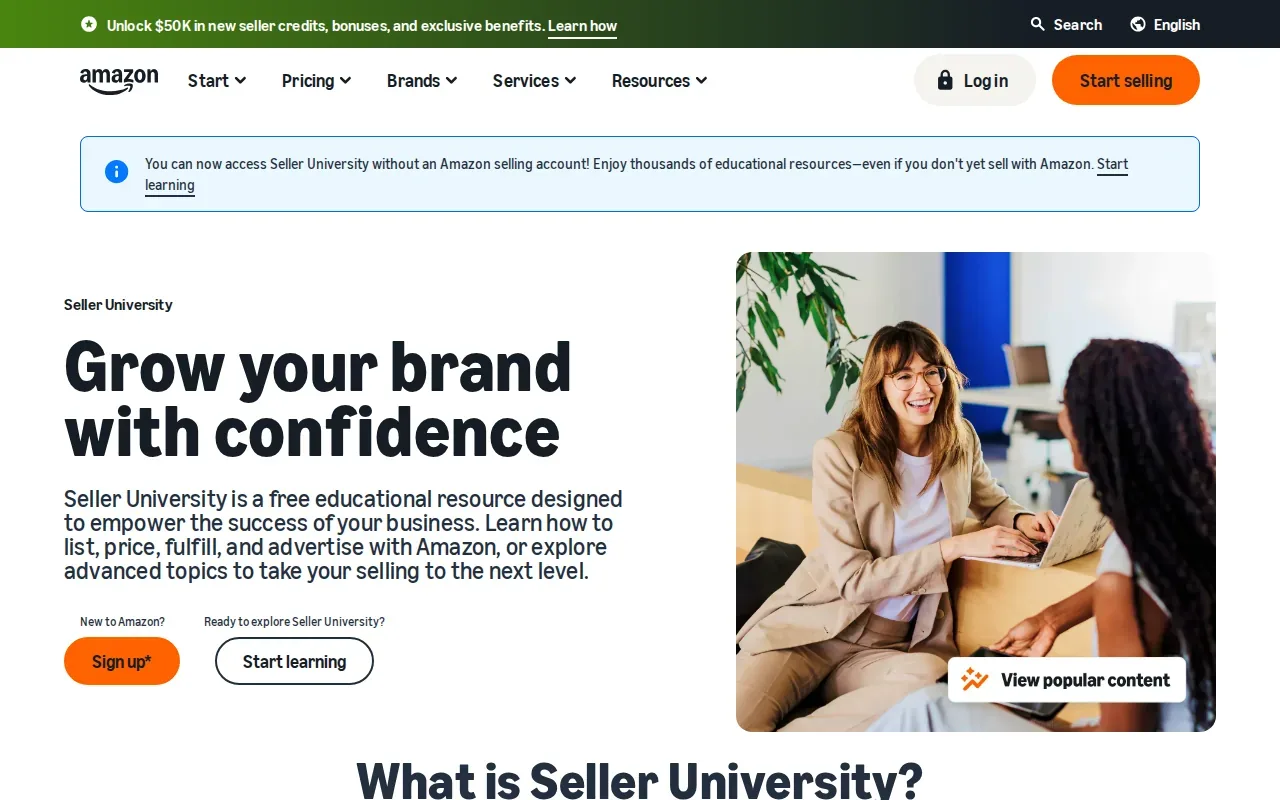
The scope is different from a single course with a fixed lecture count. Seller University includes thousands of educational resources. That breadth can help a learner look for a particular marketplace topic rather than follow one long course from start to finish.
This format may work well when you have a specific question before opening a seller account. For example, you could make a short list of topics you need to understand, then search the learning library for material that addresses them. Keep notes in the same order as your intended work: prepare the product information first, then review the steps related to listing and selling.
There is a trade-off. A large library can take more effort to organize than a single structured course. You will need to decide what to study and how to tell when you have learned enough to complete a task. One simple method is to write a question before each lesson and record the action you can take afterward.
Amazon Seller University is centered on Amazon’s marketplace, so it is a more direct fit for people exploring that channel than for someone who wants broad ecommerce strategy. It can also serve as a starting point for a prospective seller who wants to learn before creating an account.
Best fit: People exploring Amazon selling or seeking marketplace learning resources without first opening a seller account. Use a short learning plan to avoid jumping between unrelated topics.
5. Shopify Academy: training for Shopify skills and partner learning
Shopify Academy is a training resource for Shopify skills and partner learning. It offers more than 80 courses designed to build Shopify expertise and support learning for a team or business.
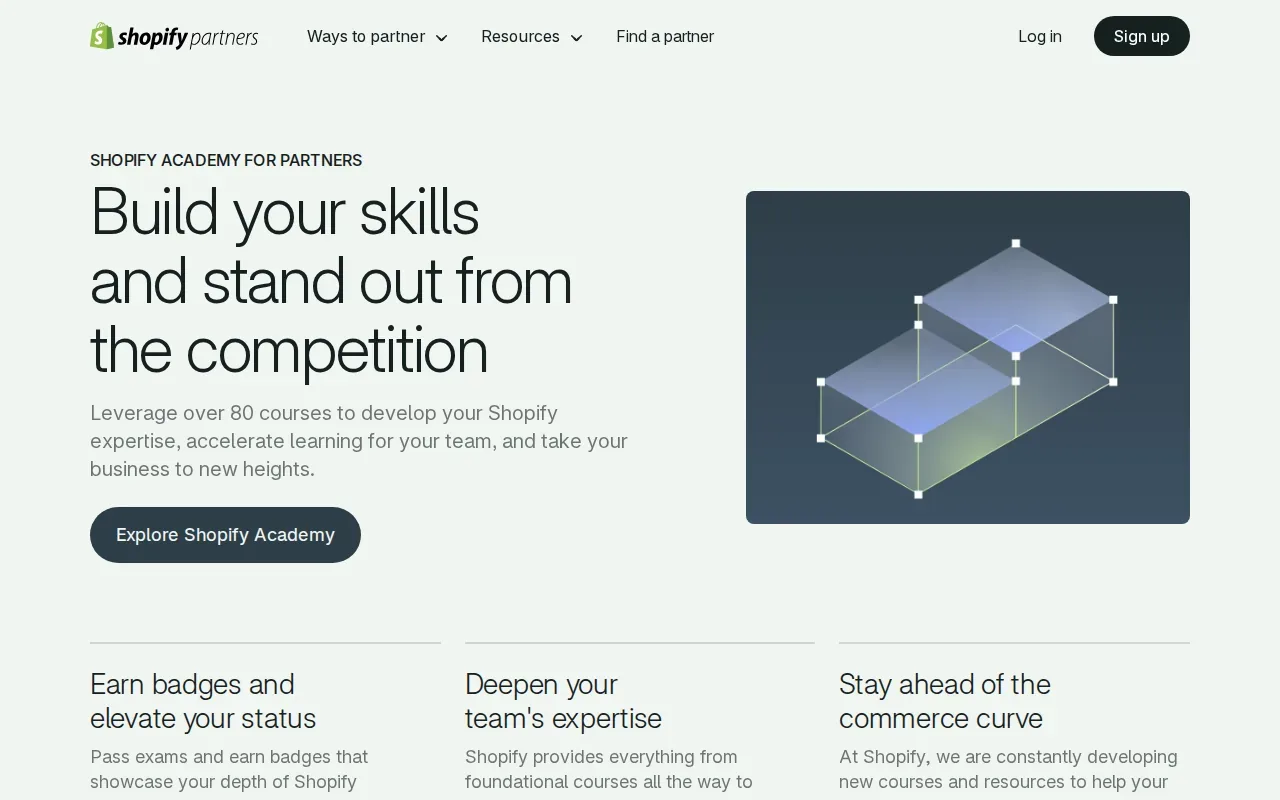
That makes it a natural option for someone who already works with Shopify or expects to use it. A store owner could focus on the part of the platform linked to a current task. A team lead could use platform-specific learning to help staff build a shared base of knowledge.
Shopify Academy is distinct from a general ecommerce curriculum because its stated emphasis is Shopify expertise. That can be an advantage when a person needs knowledge tied to a particular platform. It also means you should check whether the course selection covers the wider business question you have, such as fulfillment planning or customer service operations.
Consider a store handoff. If one person manages product pages and another handles customer questions, a team can identify which Shopify skills each role needs before selecting lessons. That keeps learning tied to the work instead of treating course completion as the goal by itself.
Best fit: Shopify users, partners, and teams seeking platform-related learning. Match the course to a role or a task, then check the current course details before setting a team learning plan.
6. BigCommerce University: platform training for BigCommerce store teams
BigCommerce University, also called Commerce University, offers platform training for people new to BigCommerce as well as those already using it.
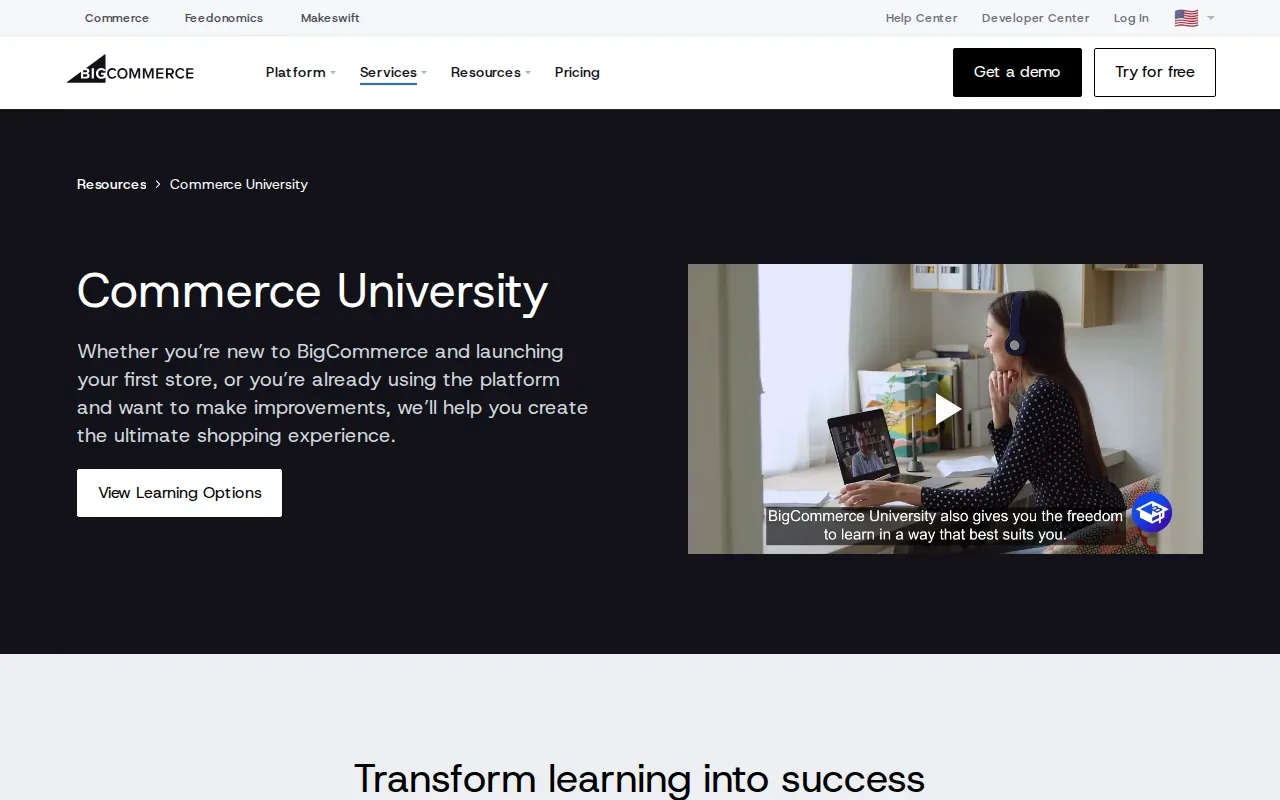
That makes it relevant when the learning goal is tied to operating a BigCommerce store. A new store owner may want platform basics, while an existing team may need to build shared knowledge around its current setup.
For a team, start by naming the work that needs to improve. Is the issue a staff member’s comfort with the platform, a change to an existing store, or a need to bring a new colleague up to speed? Then choose training that matches that job. This is more useful than assigning courses based only on their titles.
Platform training can be especially helpful during a handoff. A team member who knows how to use the store system can document the steps they follow, so another person can repeat them. Keep the handoff narrow: write down the task, the person who owns it, and the result that confirms it is done.
BigCommerce University is a platform-specific choice, not a general credential for every ecommerce role. If you are comparing platforms or seeking wider instruction in business operations, also look for material that covers those needs directly.
Best fit: New or current BigCommerce users who need platform learning for themselves or their team. Tie each lesson to a store task so the training has a clear use.
How do these ecommerce courses compare?
The key distinction is scope. DiSousa focuses on marketing education for people building online income. The named course and academy options focus on a particular marketplace, platform, or ecommerce model.
Use this table to narrow your shortlist by learning goal. It compares the known focus and format, not course quality or likely income.
| Option | Known focus | Format or duration provided | Good starting point when you need |
|---|---|---|---|
| DiSousa | Marketing education, including affiliate marketing, email, CRM, and content systems | Educational site and course comparisons | Marketing skills alongside online business work |
| Robin and Jesper’s AliExpress-to-Shopify Dropshipping Course | AliExpress-to-Shopify dropshipping with DSers | 7 hours 33 minutes; 71 videos | A focused introduction to this store model |
| Ali Hobart and Sumner Hobart’s Etsy Course | Etsy shop setup and marketing | About 11 hours; 90 lectures | Opening and promoting an Etsy shop |
| Amazon Seller University | Amazon marketplace learning | Thousands of educational resources | Learning about Amazon selling, including before opening an account |
| Shopify Academy | Shopify skills and partner learning | More than 80 courses | Learning tied to Shopify work or team development |
| BigCommerce University | BigCommerce platform training | Commerce platform learning resources | Learning tied to a BigCommerce store or team |
The two listings with explicit durations here make a time comparison possible: the Robin and Jesper course is listed at 7 hours and 33 minutes, while the Ali Hobart and Sumner Hobart course is about 11 hours. The other options have different formats, so a single duration comparison would not be useful.
Price and certification terms should be checked for the exact course you plan to take. Do not assume a platform’s resource library has the same terms as a separate paid course, or that a certificate automatically qualifies you for a job. A certificate can show that you completed specified training; your work samples show what you can do with it.
A broader academic curriculum may be useful when you need more than platform instruction.
Marketing skills → DiSousa
AliExpress-to-Shopify setup → Robin and Jesper’s course
Etsy shop setup and marketing → Ali Hobart and Sumner Hobart’s course
Amazon marketplace learning → Amazon Seller University
Shopify platform skills → Shopify Academy
BigCommerce platform skills → BigCommerce University
This map is a way to sort by subject, not a ranking of quality. If two choices look relevant, compare their lesson outlines and choose the one that fills a skill gap you can name.
Pro Tips for getting usable value from ecommerce training
Start with a task, not a course label. Write down the job you want to do after learning. Examples include drafting a product listing, planning a store’s content, or understanding the steps in a platform workflow. A specific task makes it easier to judge whether the lessons are relevant.
Check the syllabus before you commit. Compare the course outline with your task. For a store launch, look for lessons that explain the parts you need to complete. For marketing, check whether the course covers the channel you plan to use. A broad title alone does not tell you how deeply a course covers a subject.
Keep course claims separate from business outcomes. A course can teach a method or explain a process. It cannot guarantee that your store will make sales. Treat income claims as claims to verify, and plan for the work and costs involved in running a business.
Turn lessons into a small work sample. After a lesson, produce something you can review: a draft listing, an email outline, a content brief, or a written store workflow. A work sample gives you a way to test what you understood and can also help you explain your skills to a client or employer.
For operations, map the handoffs. Ecommerce work often crosses roles. A product has to move from sourcing and quality checks into shipping and fulfillment; customer service then handles questions about the order. Write down who owns each handoff and what information must pass to the next person. This helps surface gaps before a busy period.
Use a simple critical path. A critical path is the set of tasks that must happen in sequence for a project to finish. For example, if a product listing depends on product details, the listing cannot be finalized until those details are ready. Set task order before setting a launch date, and mark dependencies clearly.
Plan for quality checks. If you are learning about a physical product workflow, decide what you need to inspect before accepting stock. Record the issue you are checking for and who will review it. This advice is an operating prompt, not a claim that any course in this shortlist teaches a particular quality-control method.
Track customer service work with a clear measure. If you manage support, review the kinds of questions customers ask and how each question is handled. Cost per ticket means the cost of responding to one support request. To use it well, first define which costs you count and what period you measure; otherwise, comparisons can mislead.
Build a learning plan around time you can protect. One course runs 7 hours and 33 minutes, and another runs about 11 hours. Split that time into sessions you can actually complete. Leave room to apply the lesson, because watching alone does not show whether you can do the task.
Recheck details before purchase. Course content, access terms, and prices can change. Confirm the current syllabus, total cost, certificate details, and any conditions directly before paying. If you are choosing a free learning library, decide what question you want it to answer before browsing.
Product plan → sourcing and quality review → inbound shipment → fulfillment → customer support
At each arrow: name the owner, required information, and completion check.
Those steps echo the wider scope of ecommerce operations. When your daily work includes stock, shipping, or customer-facing processes, look beyond marketing.
Choose one task → study the matching lesson → make a work sample → check it against the task → note the next skill gap.
For job seekers, this last step can help connect training to career goals. A certificate may document course completion, but a clear work sample can make your skills easier to discuss in an interview or client conversation. Be precise about what you completed and avoid presenting a practice project as paid client work.
Conclusion
Choose the training that matches the work in front of you. For platform learning, start with the academy tied to your store; for marketing systems and online business education, DiSousa is a useful place to continue. Before enrolling, compare the current syllabus and terms, then choose one lesson you can apply to a task this week.
Income Disclaimer
Course completion does not guarantee sales, profit, or employment. Ecommerce outcomes depend on many factors, including the business model, execution, costs, and market conditions. Review the risks and expenses before investing in a store or training.
Frequently asked questions
What is the best ecommerce course for beginners?
The best starting point depends on the type of store you want to run. Robin and Jesper’s course focuses on AliExpress-to-Shopify dropshipping, while Ali Hobart and Sumner Hobart’s course focuses on Etsy shop setup and marketing. If you plan to sell through Amazon, Seller University provides educational resources, including for people without a selling account.
Are there free ecommerce courses?
Amazon Seller University is a resource library that people can access without an Amazon selling account. That makes it a useful free learning starting point for Amazon marketplace topics. Check the current access terms before you begin, and remember that free learning materials may not follow a single course plan.
How long do ecommerce courses take?
It varies by program and format. The Robin and Jesper course is listed as 7 hours and 33 minutes across 71 videos. Ali Hobart and Sumner Hobart’s Etsy Course runs about 11 hours across 90 lectures. The academies and resource libraries have different structures, so check the specific course or lesson plan.
Do ecommerce courses give you a certificate?
Some do, but certificate details depend on the specific course. The Robin and Jesper course listing states that it includes a digital certificate. Confirm the terms for the course you plan to take before treating a certificate as part of its value.
Can an ecommerce course help me get a job?
A course can help you learn skills that relate to ecommerce work, but it cannot guarantee a job. Pair training with a work sample that shows what you can do, such as a draft listing or a written workflow. Describe practice work honestly, and check whether an employer expects experience with a specific platform or role.
What should I check before paying for a course?
Check the current syllabus, skill level, expected time, total cost, access terms, and certificate details. Then compare those facts with the task you want to learn. If the course is platform-specific, confirm that you plan to use that platform. Avoid choosing based only on a sales claim or a promise of income.
Sources and References
- Conestoga College ecommerce management course descriptions, referenced for examples of ecommerce topics such as analytics, supply chain management, and project management.
- BigCommerce resources, for context on its ecommerce learning resources.

About the author